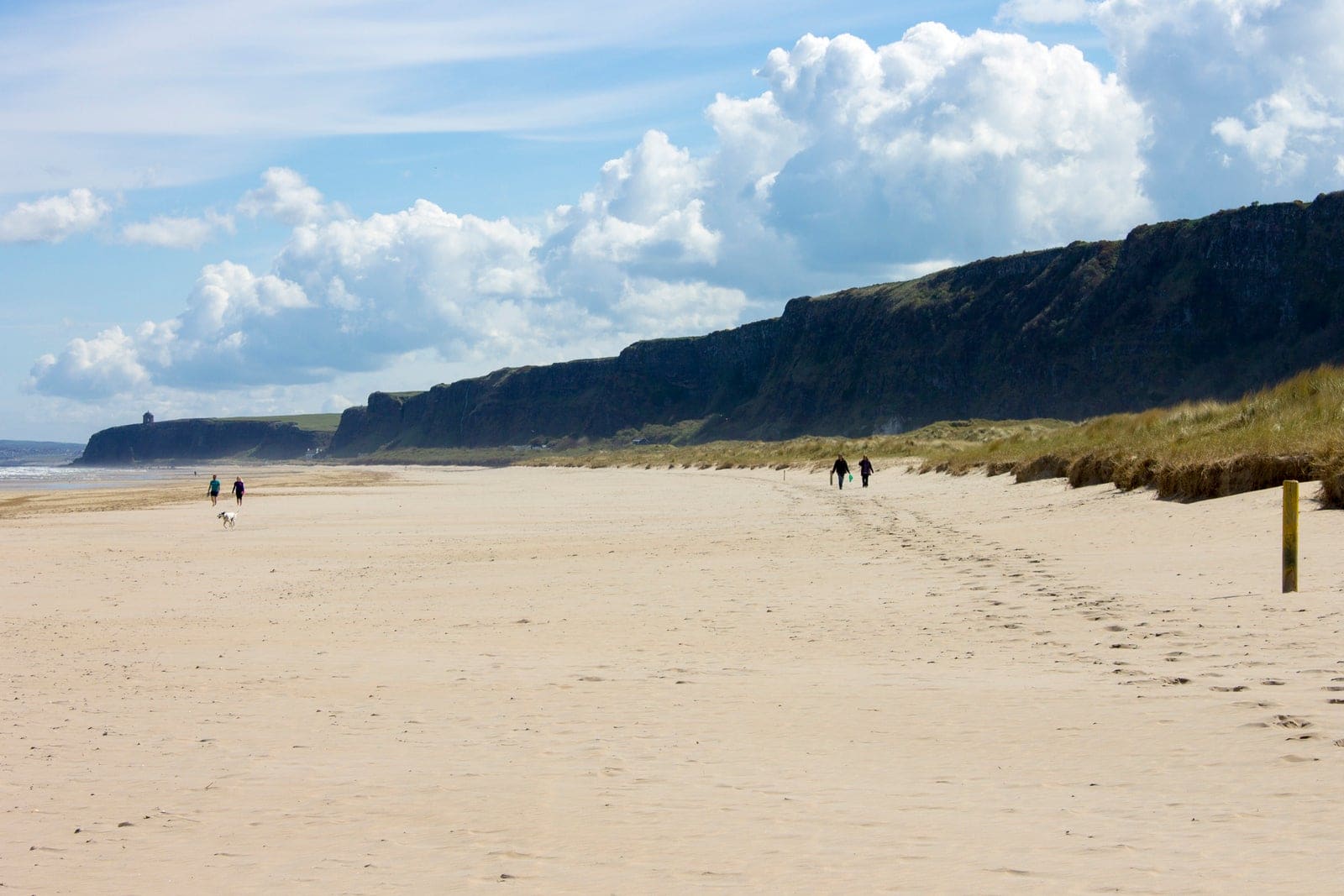
A Coastline That Stays Under the Radar
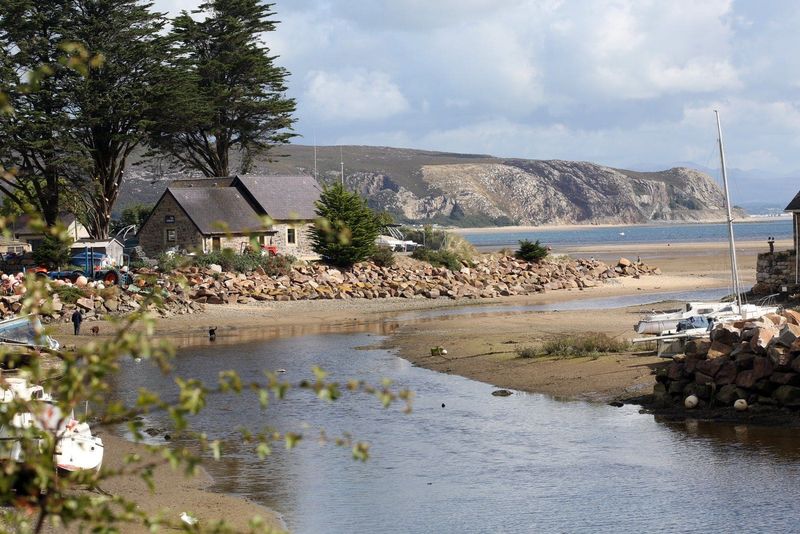
Northern Ireland's beaches don't get the same attention as its cities or the Giant's Causeway, which means stretches of sand that would draw crowds elsewhere remain relatively peaceful. The counties of Down, Antrim, and Derry hold dozens of beaches, many backed by dune systems thousands of years old and cliffs carved into shapes that resemble animals.
Getting there is straightforward. Flights connect Belfast to London, Manchester, and Glasgow, while ferries run from Liverpool and Cairnryan. From the capital, the coast is an easy drive.
Several beaches hold Blue Flag status, a designation that requires high water quality and clean facilities. Others sit within conservation areas or nature reserves managed by the National Trust. The range runs from equipped resort beaches with surf schools and cafes to remote bays with no facilities at all.
Long Stretches and Limestone Formations
Benone Beach in County Derry runs for seven miles, making it the longest in Northern Ireland. It stretches from Portstewart Strand to Magilligan Point, with views across to Donegal. The beach offers all-terrain wheelchair loans and has lifeguard services in July and August. Limavady, the nearest town, sits about fifteen minutes away by car.
Whiterocks Beach near Portrush draws surfers year-round, but the real draw is the eroded limestone cliffs behind the sand. Natural formations include Elephant Rock and Lion's Paw, carved by wind and water over centuries. Board hire is available in summer, and Portrush itself has several other beaches plus sections of the Causeway Coast Way for walking.
Whitepark Bay sits in a more secluded spot along the same coast, closer to the Giant's Causeway than most resort towns. White sand sweeps for over two miles between two small fishing villages, Portbradden and Ballintoy. Ancient dunes back the beach, and limestone cliffs frame both ends. There are no facilities, which keeps crowds thin, though rip currents make swimming risky. Ballintoy had a population of 150 in the 2011 census and its harbour appeared in Game of Thrones as Lordsport.
Mountains Meet the Sea
Tyrella Beach in County Down sits in Dundrum Bay, a two-kilometer stretch backed by dunes and overlooked by the Mourne Mountains on one side and St John's Point lighthouse on the other. The beach holds Blue Flag status and lies within a conservation area. Downpatrick, the nearest town, is said to be the burial place of St Patrick and has a cathedral, abbey, and the Down County Museum.
Murlough Beach also sits near the Mourne Mountains, at the foot of Slieve Donard, Northern Ireland's highest peak. The surrounding area became the region's first nature reserve in 1967 and is now managed by the National Trust. A 6,000-year-old dune system and network of paths complement the four-mile coastline. The Dundrum Coastal Path is a popular walking route. Newcastle, two miles southwest, has its own beach with a promenade and two open-air swimming pools.
Smaller Bays and Village Beaches
Helen's Bay near Bangor combines calm, clean water with gently sloping sand, making it popular with swimming clubs and families. The village includes Crawfordsburn Country Park, which has woodland and footpaths. Bangor itself, four miles away, became Northern Ireland's newest city in May 2022 as part of Queen Elizabeth's Platinum Jubilee civic awards. The city has a castle and marina.
Ballycastle Beach in County Antrim runs from the marina to Pans Rocks, a fishing spot about a mile away. It's quieter and more accessible than some other northern beaches, with views out to Rathlin Island. Regular ferries make the thirty-minute crossing. The town sits near the Giant's Causeway and close to the Nine Glens of Antrim, a series of valleys.
Castlerock Beach in County Londonderry offers golden sand and some of the region's oldest dunes. The 0.7-mile stretch sits in the Binevenagh Area of Outstanding Natural Beauty and holds Blue Flag status. The Surf Shack offers lessons and rentals, plus coffee and snacks. Boardwalks connect the shore to Castlerock village, which is known for its eighteen-hole championship golf course.
What Makes the Coast Work
The variety matters. Families with young children can choose beaches with lifeguards and nearby amenities. Surfers and watersports enthusiasts have multiple options with equipment hire. People looking for solitude can find bays with nothing but sand and cliffs.
The landscape shifts along the coast. Some beaches sit in enclosed bays with mountains behind them. Others open onto long views across to Scotland or Donegal. Limestone cliffs appear in the north, while dune systems dominate other sections.
Access is generally good, with several beaches offering inclusive equipment like all-terrain wheelchairs. Most have parking nearby, though facilities vary widely. Resort towns like Portrush provide full services, while remote spots like Whitepark Bay have none.
The region's weather is unpredictable, which keeps tourism lighter than in southern Ireland or mainland UK coastal areas. That same unpredictability means the beaches rarely feel overrun, even in summer.