A Season for Shelter
When August temperatures climb and crowds thicken along the Seine, Paris museums become more than cultural destinations. They turn into refuges. Cool galleries, dim lighting, and the kind of quiet that only old stone buildings can hold. This year the timing works especially well: several major exhibitions close mid-month, while permanent collections remain open for those who know their value.
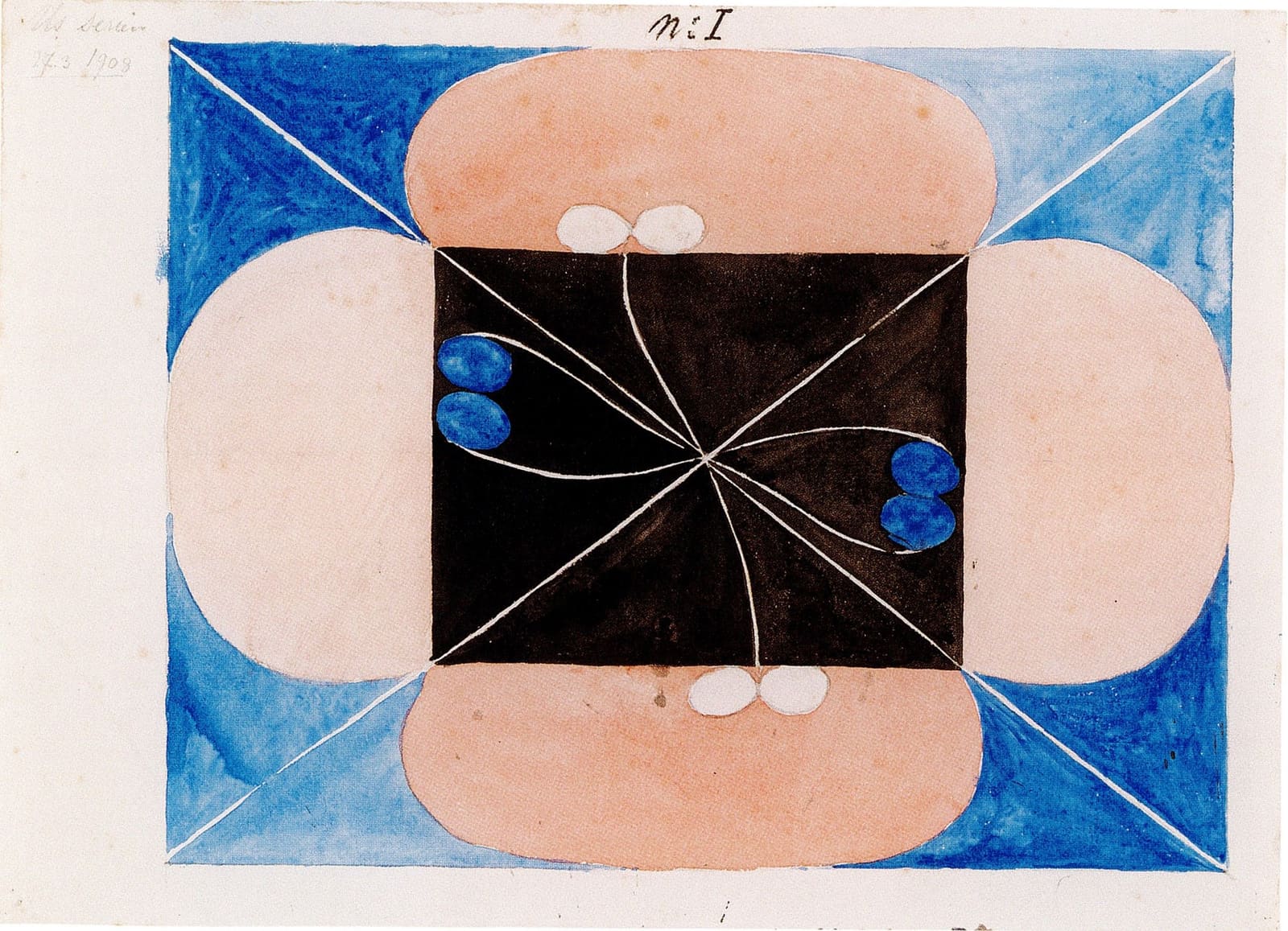
Alexander Calder's mobile sculptures hang at Fondation Louis Vuitton until 16 August, marking a century since the American artist arrived in Paris and shifted from painting to the kinetic work that made his name. Nearby, the Grand Palais hosts France's first monographic show on Hilma af Klint, the Swedish painter who created radical abstractions in secret while her public work stayed safely figurative. Her hidden canvases, unseen until two decades after her death, run through 30 August.
The exhibitions reflect a broader pattern. Paris in summer has always drawn visitors, but the city's museums have learned to balance blockbuster shows with quieter, steady draws. Some of the most rewarding visits involve no special exhibition at all.
Permanent Collections That Earn Their Keep
Musée de l'Orangerie sits in the Jardin des Tuileries, a compact building that feels more like a private gallery than a major museum. Claude Monet's Water Lilies fill two oval rooms, eight massive canvases that wrap around visitors in a way that flattens the usual museum distance between viewer and art. Natural light pours through high windows, changing the paintings by the hour. Monet donated the series to France after World War I as a gesture toward peace; the museum opened to the public in 1927.
The space still works. Crowds thin out in late afternoon, and the paintings reward long looking. Monet painted them late in life at his home in Giverny, revisiting the same pond and lilies across years. The repetition shows. Each canvas holds slightly different light, different density, different mood.
Nearby on rue de Thorigny, Musée National Picasso occupies the Hôtel Salé, a 17th-century mansion in Le Marais. The collection includes 5,000 works: paintings, sketches, photographs, letters. The current exhibition, La Collection, reframes Picasso's output by placing it alongside artists he worked with and responded to. It runs through 12 March 2027, which means no rush. The surrounding Marais neighbourhood holds smaller galleries like Perrotin and David Zwirner, worth a walk if the museum crowds grow dense.
Musée Rodin offers another kind of escape. The building itself, a rococo mansion near the Eiffel Tower, opened as a museum in 1919. Auguste Rodin's sculptures fill the interior rooms, but the real draw in August is the garden. Shaded paths, scattered sculptures, benches that invite sitting. It is one of the few museum spaces in central Paris where lingering feels natural rather than indulgent.
New Voices and Overlooked Figures
At Palais de Tokyo, British artist Cathy de Monchaux presents her first major French retrospective. Fifty works span four decades, all of them tactile, unsettling, designed to make viewers reconsider how they approach art objects. The show runs until 13 September as part of a broader season titled Normes Corps, which translates roughly to Body Norms. The programming leans political, which fits the institution's history of supporting work that challenges rather than comforts.
Musée de Montmartre takes a different angle with its show on Adya and Otto van Rees, a Dutch couple who moved to Paris and became central figures in the early 20th-century avant-garde. They knew Picasso, Braque, Mondrian. They worked across painting, textiles, and mixed media. Then they faded from view. The exhibition, which includes more than 100 works, tries to correct that erasure. It closes 13 September.
The van Rees show reflects a wider trend in European museums: revisiting artists who were active, influential, and then forgotten. Often these are women, or couples where the woman's work was subsumed under her partner's name. Sometimes they are simply figures who did not fit neatly into the narratives that art history preferred.
Chiaroscuro and Contemporary Art
At Bourse de Commerce, the Pinault Collection explores chiaroscuro, the interplay of light and shadow that dominated European painting in the 16th century. The exhibition stretches the definition, showing how contemporary artists use similar contrasts in sculpture, photography, performance, and conceptual work. One hundred pieces fill the building, but the standout occupies the Rotunda.
Japanese artist Fujiko Nakaya created a fog sculpture using dense water vapour. Visitors walk into the cloud, which obscures sight and muffles sound, or they watch from a gallery above as others appear and vanish. The piece runs until 14 September, two weeks longer than the main chiaroscuro show, which closes 24 August.
The Bourse de Commerce itself merits attention. A former commodities exchange, the circular building was renovated by architect Tadao Ando and reopened in 2021 as a contemporary art space. The restoration kept the original structure while inserting a concrete cylinder inside the Rotunda, creating a building within a building. It is one of the few recent museum projects in Paris that feels genuinely new rather than politely updated.
Fashion as Archive
La Galerie Dior, on rue François 1er, functions as both museum and brand archive. Christian Dior started as a gallerist before turning to fashion, and his designs carried that visual training. The gallery holds sketches, photographs, original garments, and objects that influenced his work: botanical specimens, art books, fabric samples.
Current creative director Maria Grazia Chiuri has continued that thread, commissioning artists and centering women's perspectives in the brand's recent output. The gallery reflects that approach, positioning fashion design as a practice in conversation with broader visual culture rather than separate from it. Entry costs 12 euros, and the space closes on Tuesdays.
Leandro Erlich and Fondation Cartier
Leandro Erlich's touring exhibition landed at the Grand Palais after stops in Tokyo, Milan, and Miami. His work demands participation. Visitors scale tilted Parisian facades, walk through optical illusions, interact with sculptures that shift depending on angle and movement. Many pieces were created specifically for this retrospective, which runs through 6 September. Tickets start at 19 euros.
Fondation Cartier moved last October from its longtime home to Place du Palais-Royal. The new space opened with an exhibition surveying 40 years of the foundation's collection, more than 600 works by over 100 artists. The show emphasizes movements that resist hierarchical structures in art-making, blending design, architecture, and contemporary practice. It closes 23 August, and the foundation is shut on Mondays.
When to Visit
August in Paris tests patience. Lines form early, air conditioning varies, and by midday the heat makes walking between museums a chore. Early mornings work best, or late afternoons after 4 p.m. when day-trippers begin heading back to hotels. Many museums close Mondays or Tuesdays, so checking schedules before setting out saves wasted trips.
Permanent collections offer flexibility that temporary shows do not. Monet's Water Lilies will be there next month and next year. The Calder retrospective will not. Balancing the two makes for a more sustainable visit, especially in heat. And some of the best moments come from unplanned stops: a small gallery in Le Marais, a courtyard garden, a museum cafe where the air is cool and the seating uncrowded.