A Peninsula Out of the Shadows
Only three out of every 100 foreign travellers to Greece visit the Peloponnese, despite the peninsula sitting just hours from Athens. That ratio is likely to shift. Christopher Nolan's adaptation of The Odyssey, shot partly in the southernmost Messinia region, has put the peninsula's landscapes on cinema screens worldwide this year. But the film is arriving at a moment when the Peloponnese was already preparing to welcome people back.
The peninsula, roughly the size of Slovenia, is bordered by three seas and laced with 860 miles of coastline. For decades it remained a well-kept secret, overshadowed by island destinations and the capital. Post-war displacement, a devastating financial crisis in 2008, and steady emigration drained population from rural villages. Some settlements shrank to single digits or emptied entirely.
Now a combination of infrastructure, private investment, and grassroots effort is reversing that tide. The Peloponnese Trail Network, launched in the past three years, links nearly 1,200 miles of ancient footpaths across the peninsula's five administrative regions. It is the largest hiking network in Greece, and it connects travellers directly to the small communities that have been waiting for attention.
Trails Through History
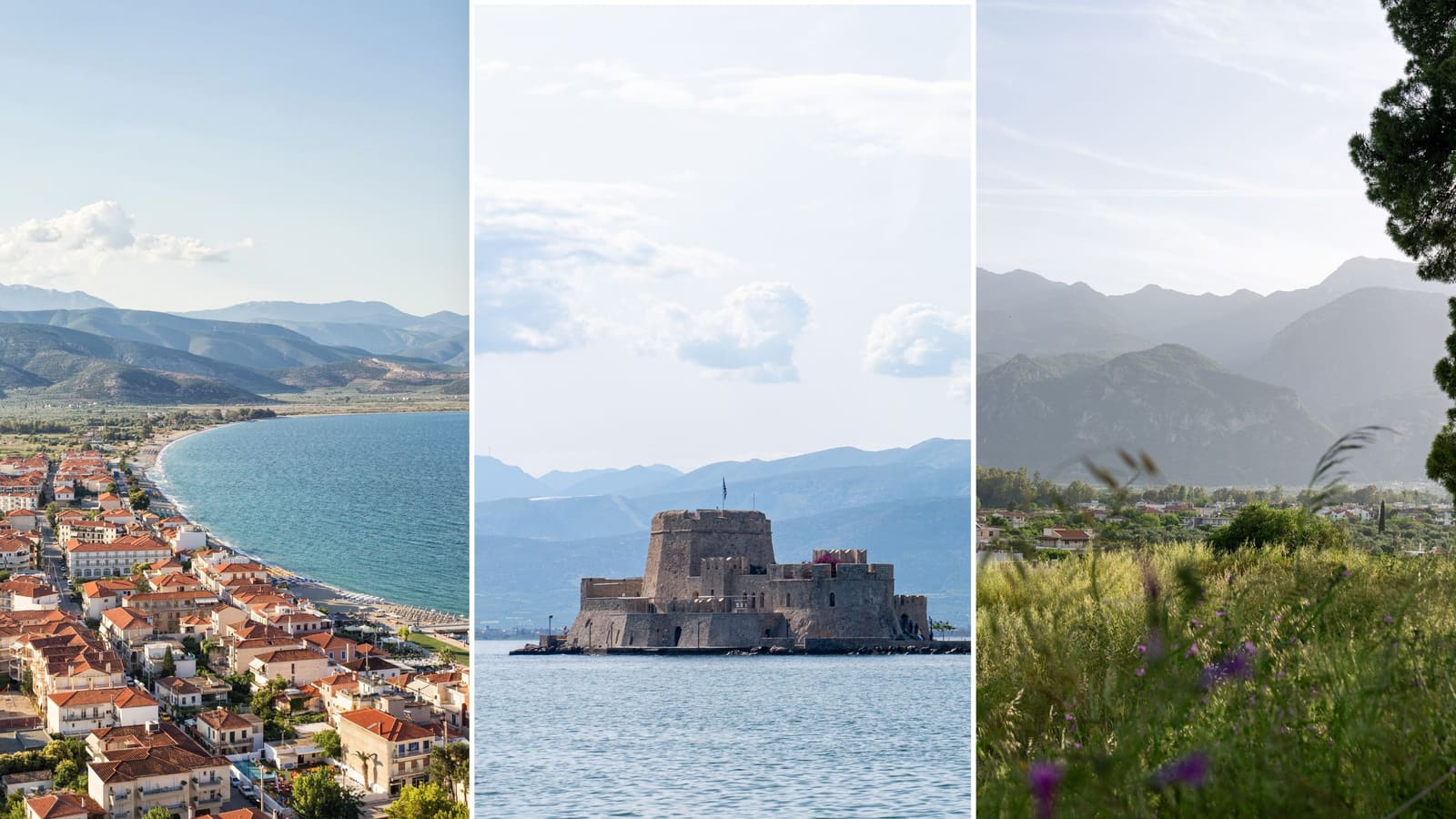
Eleven official trails have opened so far, most of them outside Messinia. The 64-mile Argolis Trail in the northeast passes the ancient theatre of Epidaurus, a fourth-century BC sanatorium where performances were prescribed as therapy. Further along, Ottoman-era stone steps climb to Palamidi, a Venetian fortress overlooking the town of Nafplio, Greece's first capital after independence.
The 143-mile circular Parnon Trail winds through the southeast, crossing a mountain range so massive it is visible from Athens on clear days. The path threads through lemon and olive groves, then climbs past wild rosemary, thyme, and oregano into cedar forests. Hairy pink flax, a relative of the plant once used to make boat sails, blankets sections of the trail in delicate pink.
Remote chapels and shepherding villages dot the route. The town of Leonidio, population 4,000, sits tucked between red limestone cliffs and has become a destination for world-class climbers in recent years. The trail offers a way to reach places that remained isolated until modern roads arrived in the 1950s.
Languages and Looms
Leonidio is home to a rare community. Residents here are Tsakonians, direct descendants of ancient Spartans who maintained a distinct dialect through millennia of geographic isolation. The Parnon mountain range kept outside influence at bay until the mid-20th century, allowing the language to survive. Today fewer than 2,500 of the 10,000 Tsakonians still speak the Bronze Age dialect, most of them elderly.
Efforts to preserve it are underway. Author and educator Eleni Manou has published children's books in Tsakonian and runs language workshops. An annual July festival translates traditions into contemporary formats, and street signs in Leonidio now appear in both Tsakonian and modern Greek.
In the nearby village of Geraki, another tradition is being passed down. Women have woven continuously on vertical looms here for 5,000 years, creating kilims with geometric patterns representing the sun, the tree of life, and other symbols of fertility and abundance. The craft, part of Greece's National Intangible Heritage, nearly disappeared. Five years ago, one weaver remained.
Today students travel from across Greece and Europe to learn at Geraki Weaving, one of only two places offering free instruction in the practice. The looms produce large heirloom rugs using techniques unchanged since antiquity, and the workshop has become a gathering point for people determined to keep the skill alive.
Infrastructure and Investment
The peninsula's accessibility improved dramatically in the early 2000s with new highways and tunnels that shortened the journey from Athens. A decade ago, Costa Navarino opened as an eco-retreat in Messinia, founded by local ship captain Vassilis Constantakopoulos with the goal of transforming his birthplace into a travel destination and stemming the outflow of residents to the capital.
The property now leases land to W Hotels and Mandarin Oriental, which opened in 2022 and 2023. Four Seasons and Six Senses are expected to follow in 2027. The influx of international hospitality brands has brought jobs and infrastructure, but it has also raised questions about how development will interact with the slower pace and tight-knit communities that drew many residents back in the first place.
Nikos Stakias is one of those returnees. After two decades working in hospitality across England, Cyprus, and Athens, he came home to the Peloponnese for its quality of life. For the past three years he has been part of the team building the trail network, a community-led project designed to connect visitors with villages rather than bypass them.
A Homecoming in Progress
The Peloponnese has played an outsized role in Greek history. The Mycenaean civilisation began here in Argolis. The Byzantine Empire's last stronghold, Mystras, stood in the peninsula's interior. Greece's fight for independence from the Ottoman Empire started on this land, and Nafplio became the new nation's first capital.
But the 20th century brought devastation. World War II, a brutal civil war, and waves of emigration left scars. The 2008 financial crisis forced another generation to leave. Villages like Vamvakou in Laconia dwindled to nine year-round residents. Lasta in Arcadia emptied completely.
Vamvakou now counts 30 residents, thanks to a revival project run by four young entrepreneurs with roots in the village. In Arcadia, social entrepreneur Maria Monastirioti left Athens to work with rural women on agro-tourism and gastronomic experiences, including workshops on making trachanokeftedes, fermented milk pasta balls.
The trail network is the latest piece of a decades-long effort to bring people back. It offers a way to experience the peninsula on foot, moving slowly through landscapes that have remained largely unchanged. Olive groves stretch toward the Taygetus mountains. Sheep bells echo on hillsides. Emerald water laps against uninhabited islands in the Argolic Gulf.
The Peloponnese is going through a homecoming of its own, one that began long before Hollywood arrived. The trails are simply opening the door.