One Train, One Morning
Shippea Hill station operates on a schedule that defies modern expectations. One train stops here each weekday, just after seven in the morning. Saturdays bring two services. Sundays, none at all. The latest passenger statistics show 76 people used the station over twelve months, a figure that places it among Britain's least-traveled stops.
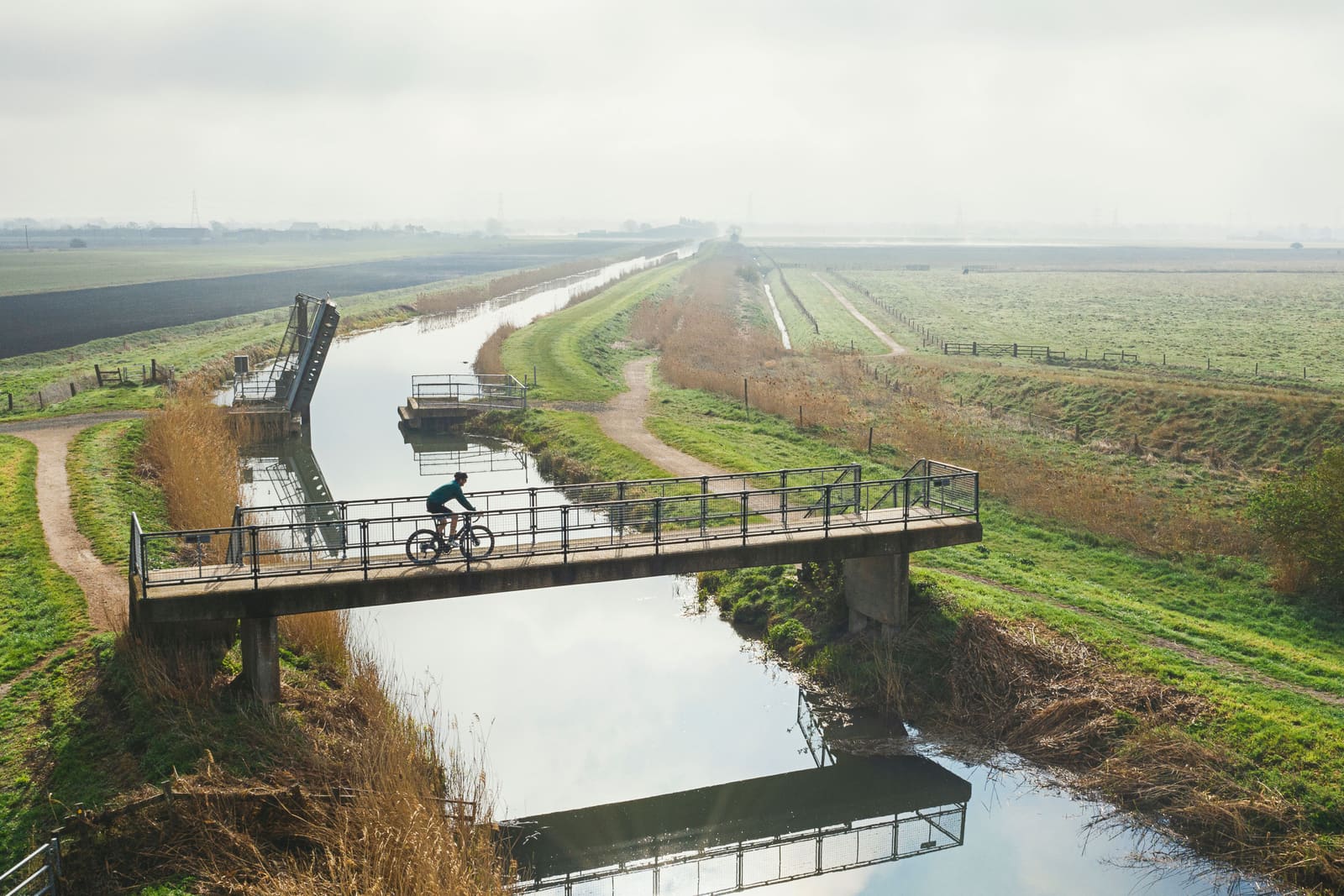
The reason for such sparse service is straightforward: there is almost nothing here. No village, no hamlet, not even a cluster of homes near the platform. Just flat fields, drainage ditches, and the occasional heron picking through the Fenland expanse. The station sits in a landscape so quiet that distance and time feel difficult to measure, where a line of poplars in the distance never seems to draw closer no matter how long you walk.
Why It Exists at All
Shippea Hill opened in 1845, built primarily as a freight depot rather than a passenger hub. The station served the surrounding farms, moving potatoes, onions, sugar beet, and other crops grown in the rich, dark peat soil. Historical accounts suggest that produce labeled as coming from Shippea Hill fetched better prices than goods from the less appealingly named Burnt Fen nearby. Early twentieth-century maps show tramways extending from the station yard into the fields, hauling harvests toward markets across England.
The freight traffic is long gone, but the station remains. Closing a railway station in the UK requires an Act of Parliament, a process so cumbersome that rail authorities often choose to maintain service, however minimal, rather than navigate the bureaucracy. Shippea Hill is not alone in this limbo. Stations like Elton & Orston, Barrow Haven, and Stanlow & Thornton operate with similarly skeletal schedules, serving tiny populations or, in some cases, almost none at all. These are known as "ghost stations," kept alive by administrative inertia rather than demand.
An Engineered Landscape
The Fens around Shippea Hill are the product of centuries of human intervention. After the last Ice Age, rising seas and poor drainage created wetlands thick with reeds, sedge, and peat. For much of history, this was a world of mist and water, home to eels and wildfowl, difficult to cross and dangerous to settle.
That changed with the arrival of engineers determined to turn wetland into farmland. In the seventeenth century, Dutch engineer Cornelius Vermuyden led efforts to drain the Fens, using sluices, embankments, and pumps to push back the water. The work succeeded, transforming the region into some of Britain's most productive agricultural land. But the engineered landscape carries a sense of absence, as if the water and wildness removed still haunt the flat, orderly fields.
Some of the original Fen environment survives. Wicken Fen, a 600-acre reserve managed by the National Trust, offers a glimpse of what the region once looked like. Reed beds, slow-moving waterways, willow, and buckthorn fill the reserve, along with a black timber windmill used historically as a wind pump. Boardwalks guide visitors through the undrained fen, where dragonflies hover and marsh harriers glide overhead. The hum and rustle of life in damp places contrasts sharply with the silence of the surrounding farmland.
Eight Miles to Civilization
The nearest town of any substance is Ely, eight miles from Shippea Hill. The journey feels longer, a gradual return to human activity after the emptiness of the Fens. Ely Cathedral dominates the skyline, a Norman structure with an octagonal tower that rises from the flat landscape like a stone monument. The narrow streets around the cathedral hold cafes, bookshops, and the small-scale bustle of a market town.
Ely offers a reminder of what Shippea Hill is not: a place where people gather, where commerce happens, where life unfolds at a recognizable pace. The station, by contrast, exists in a state of suspension, maintained by legal and logistical inertia rather than necessity. The loudest sound in this part of the Fens each day is the morning train, over by half past seven. After that, silence returns for another twenty-four hours.
A Peculiarly British Oddity
There is something distinctly British about a railway station that serves almost no one yet continues to operate. Shippea Hill is not useful in any practical sense, save perhaps to the resident of a single farmhouse two miles away. Yet it endures, a piece of infrastructure that refuses to disappear despite its obsolescence.
The station is a product of agricultural history, drainage engineering, and parliamentary procedure, all layered into one quiet platform in the middle of nowhere. It is easier to keep the trains running, however infrequently, than to dismantle the legal framework that keeps the station open. And so Shippea Hill remains, a stop on a line that connects two points but serves almost nothing in between, a monument to bureaucracy and the ghosts of freight trains that once hauled potatoes across the Fens.