More Than Stone Faces
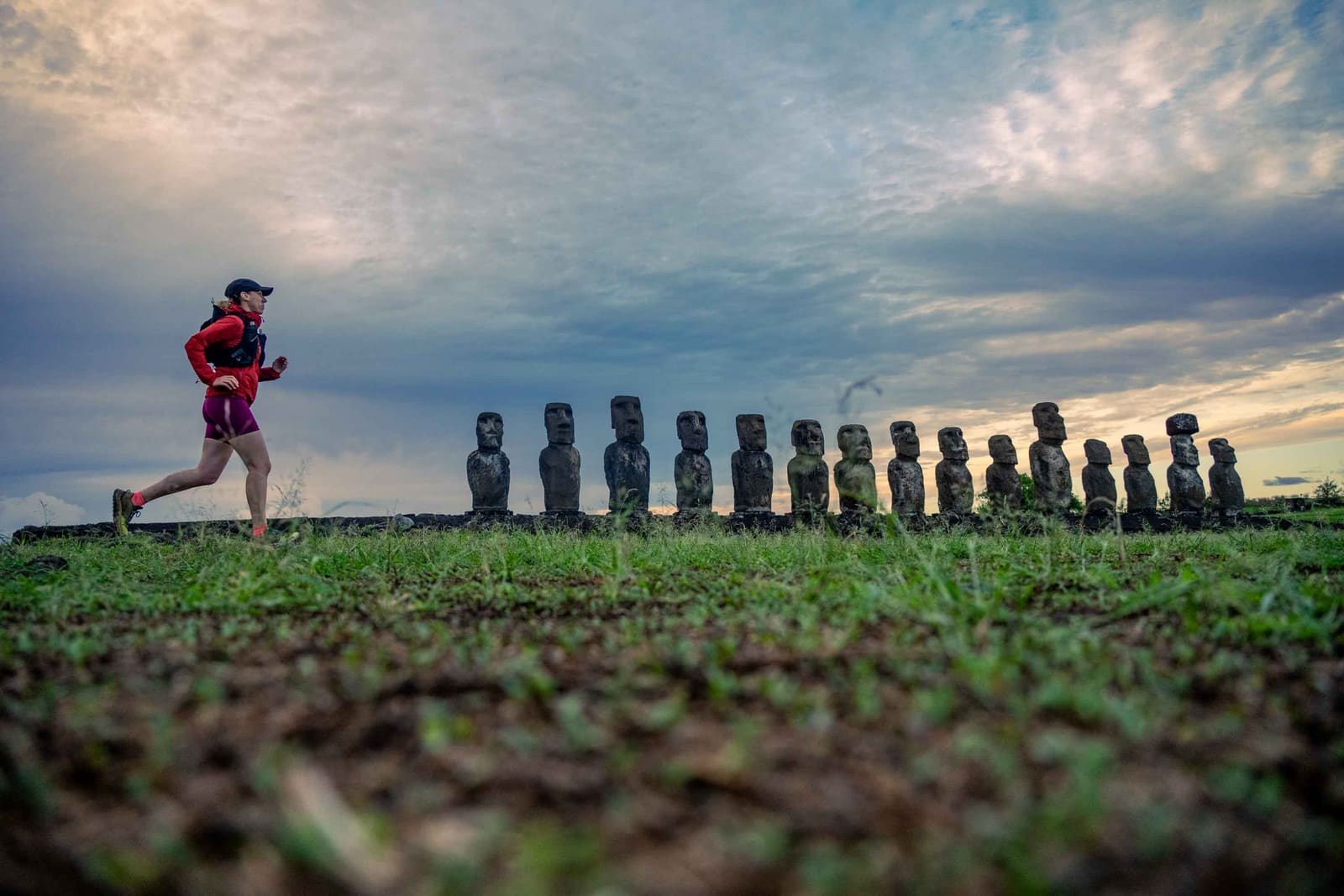
Most visitors arrive on Rapa Nui expecting moai. The nearly 900 monolithic statues scattered across the island have defined its global image for generations, drawing travellers from every continent to this remote speck in the Pacific. But a running and hiking event held recently on the island offered participants a different encounter altogether: the chance to see Rapa Nui not as a static archaeological showcase, but as a place where people live, work, and push back against forces reshaping their home.
The event took runners and hikers across volcanic terrain, past ancient ceremonial platforms, and through landscapes that double as both sacred sites and everyday surroundings for the island's Indigenous residents. Along the route, competitors began to notice something the postcard images rarely convey. The island is small, its resources finite, and its population under pressure.
A Community Shrinking Under Tourism's Weight
Rapa Nui is home to fewer than 8,000 people, the majority of whom identify as Rapa Nui. The island lies more than 3,500 kilometres from the Chilean mainland, making it one of the most isolated inhabited places on Earth. That isolation once protected the community; today, it complicates nearly every aspect of daily life, from importing food to managing waste.
Tourism has grown steadily over the past two decades. Before the pandemic, annual visitor numbers regularly exceeded 100,000, a figure that dwarfed the resident population by more than tenfold. The island's single airport, built and expanded with tourism in mind, is now a flashpoint. Plans to extend the runway have sparked fierce local opposition, with many Rapa Nui residents arguing that increased capacity will only accelerate overtourism and erode their ability to manage who arrives and in what numbers.
The concern is not abstract. Water supplies are limited, waste infrastructure is strained, and housing costs have climbed as short-term rentals proliferate. For many Indigenous families, the economic benefits of tourism have been uneven, with much of the revenue flowing to operators based on the mainland or abroad.
Control, Not Closure
The tension is not about shutting the island to visitors. Rapa Nui has no interest in becoming a closed preserve. What residents are demanding is decision-making power over tourism policy, infrastructure projects, and land use. The island is governed as a special territory of Chile, but the Rapa Nui people have long sought greater autonomy, particularly over matters that directly affect their land and way of life.
In recent years, local leaders have pushed for visitor caps, stricter regulations on accommodation, and more robust protections for archaeological sites. Some have called for a shift towards higher-value, lower-volume tourism, favouring longer stays and deeper engagement over quick flyovers. The idea is to preserve both the landscape and the social fabric, ensuring that Rapa Nui remains a living community rather than a museum staffed by locals.
These debates are not new, but they have intensified as post-pandemic travel has rebounded. The airport expansion remains a central issue. Proponents argue it will boost connectivity and economic opportunity; opponents see it as a gateway to unsustainable growth that will ultimately undermine the island's fragile ecology and cultural integrity.
What Runners Saw
For those participating in the trail event, the experience offered a ground-level view of these tensions. Running through the island's interior, past ahu platforms and carved stone, competitors crossed land that is both heritage site and home. They stayed in local guesthouses, ate in family-run restaurants, and heard directly from Rapa Nui guides about the challenges their community faces.
The event itself was designed with sustainability in mind, limiting participant numbers and working with local organisers to minimise environmental impact. It represented a model some residents hope will become more common: tourism that respects carrying capacity, supports local livelihoods, and treats the island as more than a backdrop for adventure.
Yet even well-intentioned events cannot resolve the deeper structural issues. The island's future will be shaped not by individual visitors, but by policy decisions made in Santiago and Hanga Roa, the island's main settlement. The question is whether those decisions will reflect the priorities of the Rapa Nui people or the economic interests of a distant government.
A Test Case for Remote Communities
Rapa Nui's struggle is not unique. Across the Pacific and beyond, Indigenous communities living in tourism-dependent regions are grappling with similar questions: how to benefit from visitor interest without being overwhelmed by it, how to assert control over land and resources nominally under external governance, and how to preserve cultural identity in the face of relentless commercialisation.
What makes Rapa Nui particularly stark is its isolation. There is no neighbouring region to absorb overflow, no alternative infrastructure to ease the load. The island's capacity is what it is, and exceeding it has immediate, visible consequences. That makes it both a cautionary tale and a potential model. If Rapa Nui can establish a sustainable, community-led approach to tourism, it may offer lessons for other remote and vulnerable destinations.
For now, the island remains caught between competing visions. One sees it as an untapped asset, a world wonder that could generate far more revenue with the right investment. The other sees it as a homeland, a place where people have lived for more than a millennium and intend to continue living, on their own terms.
Beyond the Postcards
The moai will always draw visitors. They are extraordinary, and they belong to a cultural tradition that deserves recognition and respect. But focusing only on the statues misses the fuller story. Rapa Nui is not a relic. It is a community in motion, navigating the same challenges that confront Indigenous peoples and remote regions worldwide.
Those who take the time to look beyond the carved stone often find something more compelling than they expected: a place where the past is still present, where culture is lived rather than performed, and where the future is being fought for with urgency and determination. That struggle is as much a part of Rapa Nui as the moai themselves, and it deserves attention from anyone who claims to care about the places they visit.