From Execution to Celebration
On 19 September in the year 305, Roman authorities beheaded a Christian bishop outside Naples. His name was Januarius, later San Gennaro in Italian. The killing formed part of a broader imperial crackdown on Christians under Emperor Diocletian. Seventeen centuries later, that execution anchors the largest and longest-running Italian festival in the United States, now celebrating its 100th year in Manhattan.
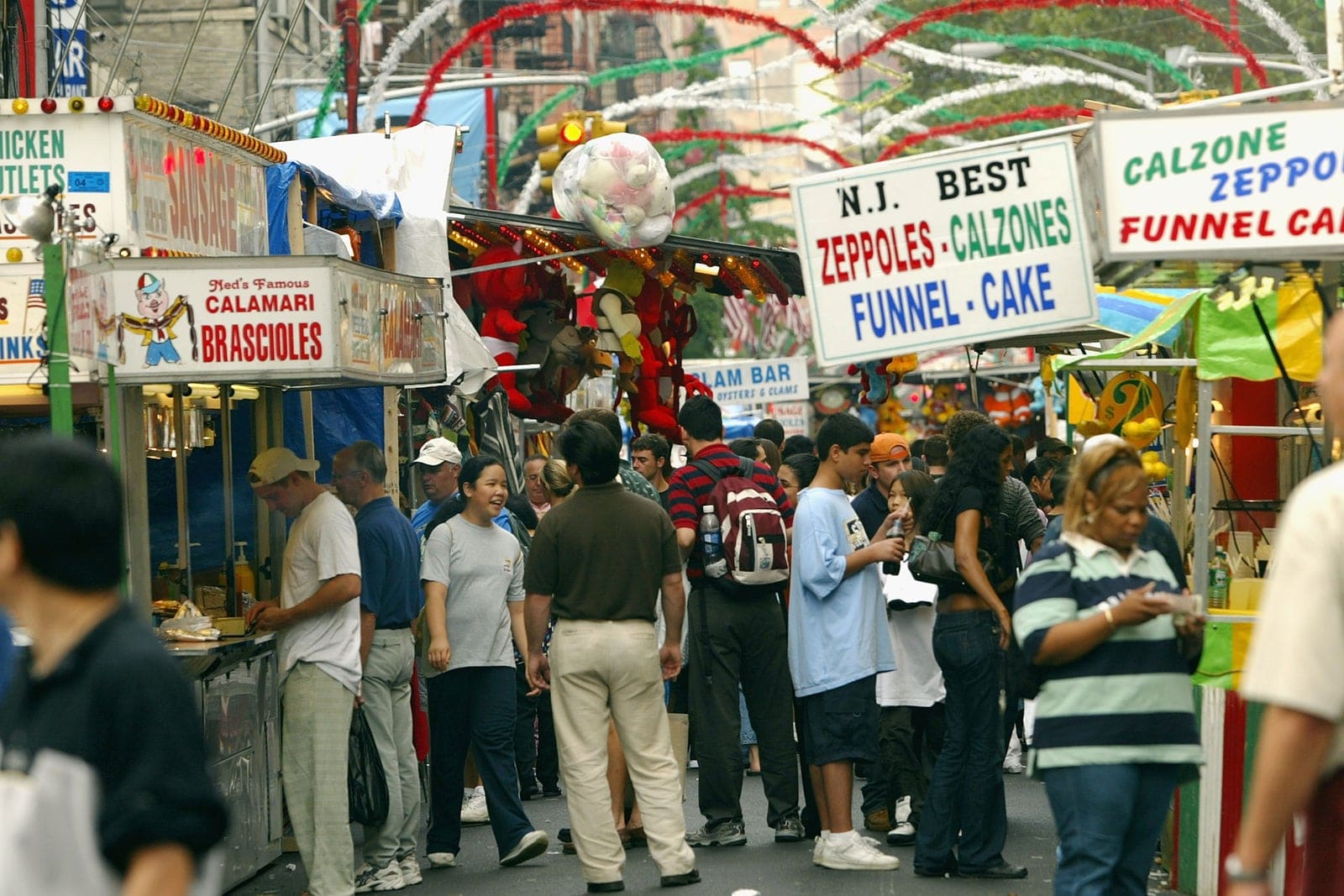
Every September, Mulberry Street in Little Italy transforms. Food carts serve sausage sandwiches and chicken parmigiana. Frank Sinatra impersonators perform. Vendors sell T-shirts quoting The Godfather. Beneath the commercial layer, though, runs a thread of ritual that stretches back through medieval Naples to late antiquity.
The festival's founding in 1926 offered newly arrived Italians a rare public stage. At the time, immigrants from southern Italy faced overcrowded housing, employment barriers, and religious suspicion. Irish Catholics and local Protestants viewed Italian street processions and statue displays as too close to pagan practice. The label "real Catholicism" was withheld.
A Relic, a Procession, and Dollar Bills
Between 1881 and 1920, more than 4.5 million Italians arrived in the United States. Thousands settled on Manhattan's Lower East Side. By the early 20th century, their numbers had grown large enough to fund Italian-speaking churches. One was the Church of the Most Precious Blood, built in 1904 on Baxter Street.
In 1926, parishioner Alexander Tisi and a group of others organised a tribute to the saint most venerated in their home region. The first event featured a three-foot statue of San Gennaro hoisted on shoulders, carried around the church and nearby streets. Devotees pinned dollar bills to the figure, a practice that continues. A bone fragment said to belong to the saint was placed in a reliquary and hung around the statue's neck. Afterward, the community gathered over roasted chicken.
The event grew quickly. By 1928, The New York Times noted that thousands were attending what had already expanded from a single day to a week.
That same year, New York Police Commissioner Joseph Warren banned the procession. He argued that the dollar bills represented profanation of sacred symbols. A New York Supreme Court judge overturned the ban, ruling that Warren had violated religious liberties. The episode illustrated the discrimination Italian communities faced, not only from outside but from within other Catholic groups.
Blood That Liquefies, and What It Means
In Naples, two vials said to hold Gennaro's blood have been venerated since at least 1389. The contents reportedly liquefy on the saint's feast days. Neapolitans interpret this as a sign of protection. When the blood stays solid, disaster is expected. In 1943, the vials did not liquefy, and Allied bombs struck Naples shortly after.
The saint is also credited with halting the eruption of Mount Vesuvius in 1631. Since the later Middle Ages, his feast day has been central to the city's calendar. Medieval and Renaissance celebrations included pork dinners and street games. Young men wrestled greased pigs inside Naples Cathedral, the winner taking the animal home to cook.
These traditions made San Gennaro a symbol of Neapolitan identity. The New York festival was designed to preserve that connection.
Prejudice, Slurs, and the Mafia Shadow
Southern Italians' darker complexions exposed them to racial slurs. Terms like "guinea" and "swarthy" were common. Suspicion of criminality was reinforced by real organisations, including the Black Hand. Critics argued that Italian immigrants clung too tightly to homeland traditions and resisted assimilation.
After the Second World War, attitudes shifted. In 1949, local newspapers reported that people from various ethnic backgrounds attended the feast. They watched folk dances, symphonic bands, and a new addition: coloured string lights in green, white, and red hanging above the streets. Food stalls offered clams, pasta, and pastries marketed as authentic Italian fare.
Attendance surged. By the 1960s, buses brought Italians from Maine and Ohio. By the 1970s, the festival drew three million visitors annually. During that decade, young men climbed greased steel poles for cash prizes, a nod to medieval Naples. The event was stopped in the 1980s over safety concerns.
Internal Friction and Mafia Arrests
The festival has faced challenges from within the community. In 2007, some Little Italy residents petitioned Mayor Michael Bloomberg to cancel it, citing tourist strain and mafia involvement. In 1996, 19 members of the Genovese crime family were arrested for gambling, collecting vendor fees, and stealing money from the statue.
Bloomberg refused to intervene, calling the event part of New York itself.
A Centenary and a Vanishing Neighbourhood
This year's organisers describe the 100th festival as a tribute not only to Italian Americans but to New York's broader immigrant story. The timing is loaded. Two months before the centenary, Mayor Zohran Mamdani released a map of the city's immigrant enclaves that omitted Little Italy. Backlash was swift. Mamdani promised to restore the neighbourhood to the map, but some argued the omission reflected reality. Few Italians still live on Mulberry Street.
The controversy sharpens a question the centenary itself raises: how to honour immigrants who built the city when their descendants have long since moved elsewhere.
The answer may lie in the figure of San Gennaro himself. The saint remains a link between the children of the diaspora and their forebears, just as he was in 1926. A 17-century-old martyrdom still gathers crowds, still pins dollar bills to a statue, still serves roasted meat and coloured lights. The ritual adapts, but it does not disappear.