A Network Built for All Riders
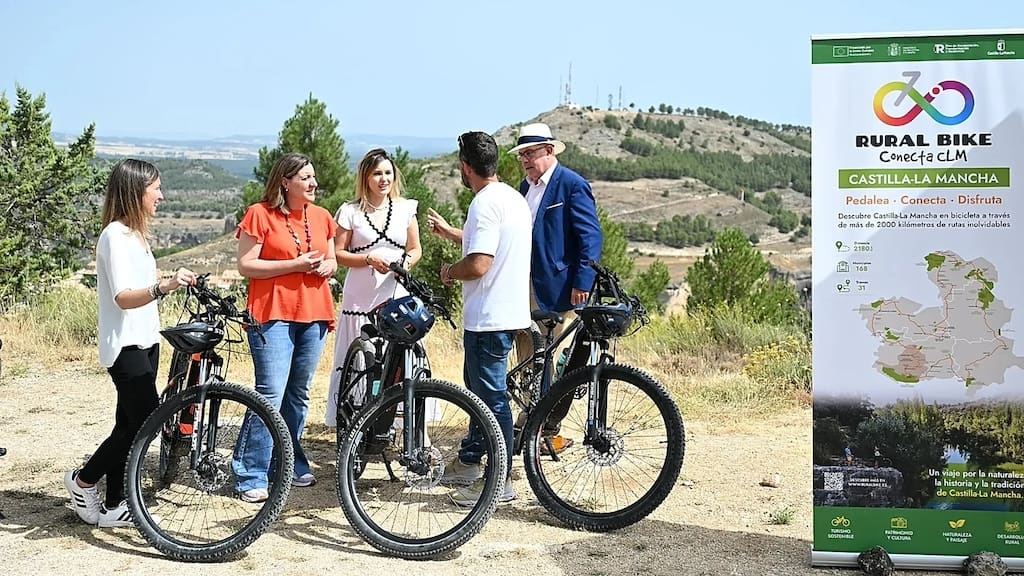
Castilla-La Mancha has opened a cycling network that stretches across 2,180 kilometers and touches 168 municipalities. The Rural Bike Conecta CLM route was developed with €2.4 million from the EU's Next Generation programme, according to the regional government, and forms part of a broader push toward sustainable tourism in central Spain.
The network connects two national parks, seven natural parks, and two UNESCO Global Geoparks. It also passes through provincial capitals and smaller villages that rarely see tourist traffic. Castilla-La Mancha claims one of the highest concentrations of protected natural areas in Europe, and this route is designed to make them accessible by bike.
More than 3,200 signposts have been installed along the way, and 168 kilometers of existing path have been resurfaced. The route combines historical trails, disused railway lines, and existing paths into a single system that accommodates riders of varying skill levels. Paved sections work for families and casual cyclists, while gravel tracks and mountain bike trails challenge more experienced riders.
Windmills, Wetlands, and Medieval Cities
The route takes in landscapes that shaped Miguel de Cervantes' Don Quixote. The windmills of Ciudad Real, which the fictional knight mistook for giants, sit along the path. So does Toledo, a UNESCO World Heritage city known for its layered Jewish and Moorish history. Cuenca's canyons and medieval architecture also feature on the itinerary.
Natural highlights include Tablas de Daimiel National Park, where cyclists can leave their bikes and follow one of three walking routes. One leads to a viewpoint that the regional tourism authority describes as offering exceptional sunsets. Cabañeros National Park offers 16 marked trails through Mediterranean plains and mountains, with birdlife and wildlife that draw nature-focused travelers.
The route is intended to slow down the pace of travel. Rather than bus tours that deposit groups in villages for a few hours, the network encourages independent exploration over days or weeks. Patricia Franco, head of the region's Ministry of Economy, Business and Employment, described it as an invitation to enjoy nature and active tourism while serving as a route throughout the region.
A Response to Uneven Tourism Pressure
Spain's tourism sector grew unevenly in 2024 and 2025. Barcelona, Mallorca, and the Canary Islands have faced protests over overcrowding, rising rents, and strain on public services. Castilla-La Mancha, by contrast, has struggled to attract visitors despite its cultural and natural assets.
According to the Exceltur Barometer, Castilla-La Mancha recorded the strongest tourism revenue growth in Spain during the second quarter of 2026, with an 11.9% increase. The new cycling network is part of an effort to sustain that momentum and distribute tourism income more evenly across the region.
The approach targets a different type of traveler. Cyclists tend to move slowly, stay longer, and spend in smaller towns along the way. The infrastructure investment, including signage and resurfacing, signals a commitment to making rural areas accessible without overwhelming them.
Connecting to a Continental Network
The regional government has plans to link Rural Bike Conecta CLM to EuroVelo, a network of 17 long-distance cycle routes that cross Europe. EuroVelo routes connect cities such as London, Amsterdam, Brussels, Luxembourg, Zagreb, Bucharest, and Athens. If the connection is completed, Castilla-La Mancha's network would become part of a continent-wide system that draws long-distance cyclists from across Europe and beyond.
The project reflects a broader shift in how regions think about tourism. Instead of competing for the same crowds that flock to well-known cities and beaches, Castilla-La Mancha is building infrastructure for travelers who prioritize landscape, culture, and slower movement. The result is a route that offers access to protected areas and historic sites without requiring visitors to join a tour group or follow a fixed itinerary.
For now, the network is new, and its long-term impact remains to be seen. But the combination of EU funding, regional planning, and a focus on sustainability suggests that Castilla-La Mancha is positioning itself as an alternative to Spain's overtourism hotspots, one pedal stroke at a time.