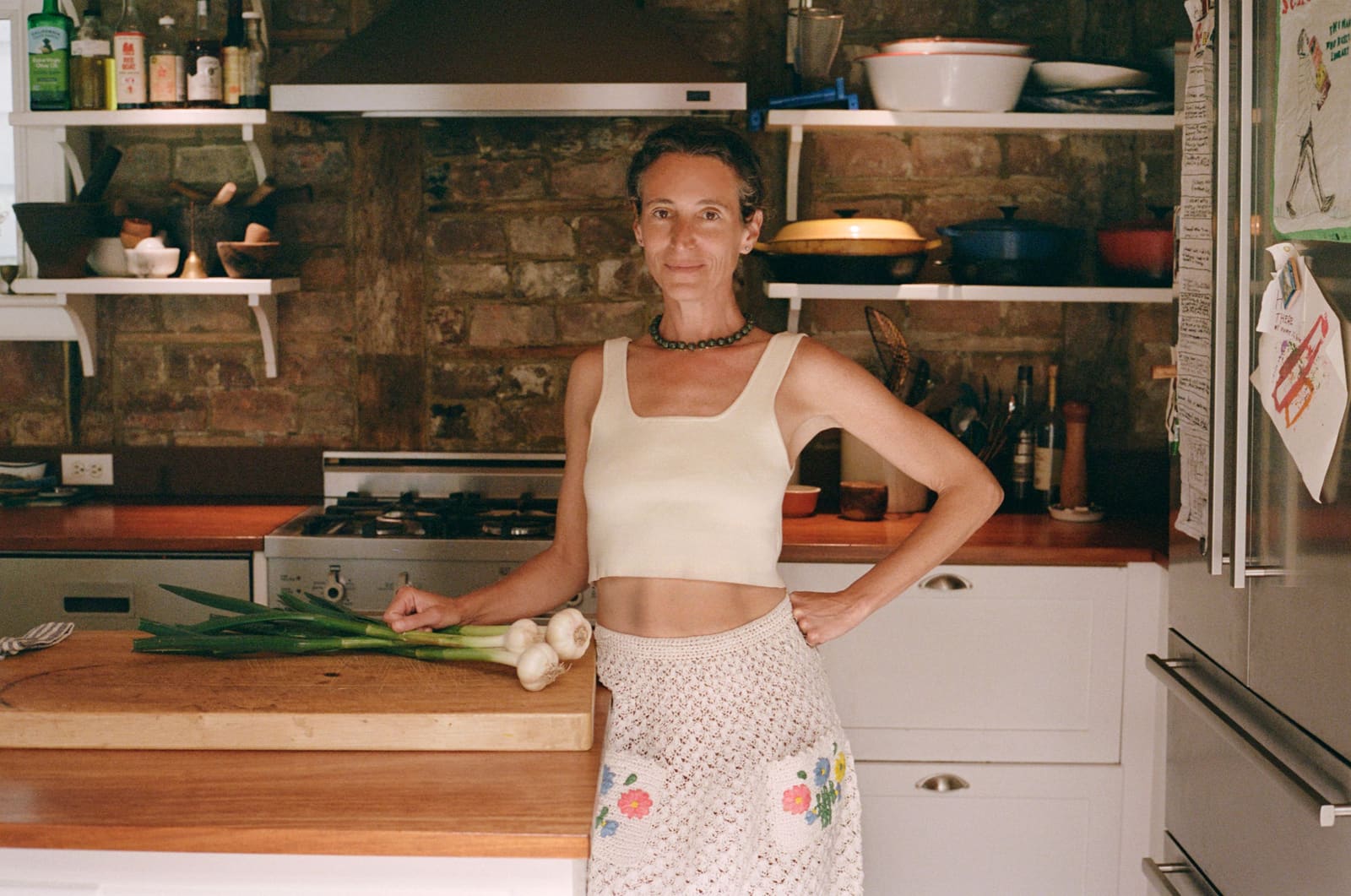
A Gratitude List That Became a Book
Tamar Adler spent the autumn of 2023 on the floor. The James Beard Award-winning author and Vogue contributing editor found herself cataloguing mistakes instead of accomplishments, haunted by what felt like a meager inventory of her life. Depression had visited before, but this time her husband suggested something small: make a gratitude list.
The first entries were obvious. Husband, son, warm bed. But something shifted when Adler started noticing smaller things: the smell of coffee, clouds of challah bread, the abrasive tang of fresh pineapple. Those fragments became Feast on Your Life, a diary that celebrates food and daily rituals as anchors when everything else feels unmoored.
The book doesn't follow a single narrative thread. You can read it front to back or open it anywhere for a reminder that joy lives in peeling a grapefruit or stirring a spoon through hot liquid. Adler wrote it for people in the grip of major depression, but also for anyone who needs a few minutes of respite without leaving the house.
Why Food Works When Nothing Else Does
When asked what pulled her out of that dark place, Adler points to immediacy. Food demands presence in a way few other things do. You can't cook or eat while staying locked in abstract worry. Your senses take over: the hiss of oil, the weight of a knife, the way garlic smells different raw versus caramelized.
For someone who struggles to get out of bed, the kitchen is close. You don't need to plan an outing or summon energy you don't have. The act of being fully present, even for five minutes, remaps your brain in tiny ways. It pulls attention away from what feels insurmountable and plants it in the sensory present.
Adler describes it as a perfect tool because it engages so many senses at once. When you finish really being present, you think a little differently. It's a shift that doesn't require a prescription or a long-term plan, just the willingness to notice what's right in front of you.
A New City Built on Beauty
In August 2025, Adler moved with her husband and nine-year-old son to Madrid's Las Letras neighborhood. They wanted time abroad in a Spanish-speaking country, and the Spanish capital offered something she hadn't anticipated: a daily bath in beauty.
She talks about the fountains. Madrid has them everywhere, and the constant presence of moving water, the sound and sight of it, became part of her daily rhythm. It's the kind of detail someone else might walk past, but Adler has trained herself to notice. That skill, honed during her hardest months, now shapes how she experiences a new city.
Her deep knowledge of food and her eye for small, meaningful details make her restaurant recommendations worth following. She's not chasing trends or checking off must-visit lists. She's looking for places that do a few things exceptionally well, where the experience feels generous rather than performative.
Five Madrid Spots That Ground Her
Dolores sits on a corner near her apartment, and Adler goes for one reason: the matrimonio, a tapas dish that pairs a cured anchovy with a white pickled boqueron. The best time is around 7pm, just before dinner, when the place is packed. What sets Dolores apart is that they cure their own anchovies in-house, so the fish arrives as a big, beautiful fillet draped over potato chips with parsley and garlic. Every visitor she's taken there has loved it.
Farah serves Palestinian food, and owner Heba Kharouf is always present. Adler orders the whole sea bass with tahini sauce and a second sauce the kitchen won't reveal, though it tastes faintly of mustard. The chopped Middle Eastern salad with date syrup and pink peppercorns is another standout. The restaurant feels personal in a way that's rare.
Sasha is her favorite in the city, but reservations open only six or seven days in advance and fill immediately. The menu changes constantly based on what the kitchen finds and loves that day. Prices appear only next to dishes actually available. Adler has had a "lazy" tortilla made with potato chips, morcilla, and pickled peppers; another time it arrived with shrimp, thinly sliced zucchini, and spring vegetables. The fried artichokes are consistently excellent. The generosity of the place, both in portion and spirit, stands out in a small dining room that never feels the same twice.
Ton Ton is dark, romantic, and tiny. Adler loves the artichoke and beef tartare. You share many small plates, and the intimacy makes it ideal for a quiet dinner where you actually want to hear the other person. It's chic without feeling precious.
O'Pazo is run by the team behind the well-regarded Desde 1911, and the seafood is flawless. Adler ordered percebes (barnacles), pink shrimp from Palamos, oysters, and tiny clams. For the main course, the kitchen served bowls of potato chips and sprouts as vegetable sides. You can look at the fish displayed behind you and choose what you want. The approach is straightforward, and the execution leaves nothing to criticize.
What a Memoir About Food Really Does
Feast on Your Life isn't a cookbook, though it's full of food. It's not a self-help book, though it emerged from a survival strategy. Adler describes it as a primer you can turn to when you need a reminder that something good exists, and that it's closer than you think.
The act of writing it, of cataloguing small beauties, helped her rebuild. Now living in a city she describes as vibrant and generous, she continues the practice. She notices fountains, tastes anchovies cured in-house, orders whole fish she can see before it's cooked. She shows up for the smallest rituals because they've proven, over and over, that they matter.
Her recommendations aren't about chasing the next opening or the hardest reservation. They're about places that ask you to be present, to taste something made with care, to sit in a small room and share food that changes depending on the day. For someone who knows how fragile attention can be, and how much work it takes to stay grounded, that's not a small thing.