Freedom on Four Wheels
Road trips have a reputation for being complicated. Multi-stop itineraries, hotel bookings, backup plans. But the best ones often ignore that script entirely. They're less about ticking off landmarks and more about following impulse, getting a little lost, and trusting that the detours will be worth it.
That philosophy has guided plenty of travelers through Europe, where open roads connect mountain villages, coastal stretches, and islands that feel untouched by the usual tourist circuits. The continent's geography lends itself to driving: borders dissolve, landscapes shift from vineyards to fjords in a matter of hours, and the infrastructure generally supports both campervans and rental cars.
What makes a drive memorable isn't always the destination. It's the decision to pull over for a swim in a river you hadn't planned on seeing, or the café you stumble into because your GPS lost signal. The routes below share that quality. They're scenic, yes, but they also leave room for the unexpected.
The Pyrenees: Second Gear All the Way
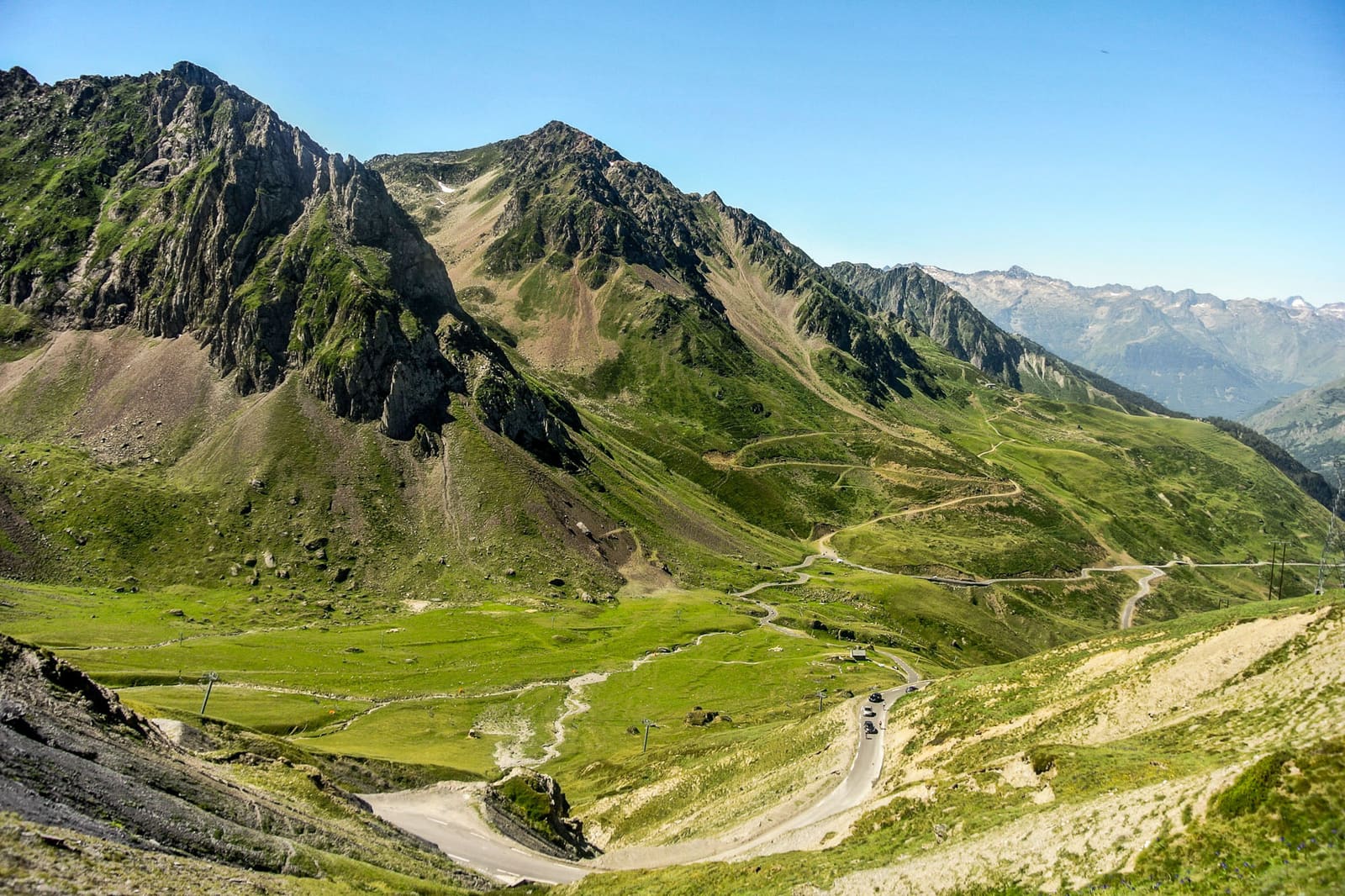
The mountain range straddling France and Spain is not a drive for anyone in a hurry. Hairpin turns, steep gradients, and cyclists in Lycra testing their endurance on Tour de France routes mean you'll spend most of your time creeping along in low gear. It's exhilarating if you're prepared for it, nerve-wracking if you're not.
A logical starting point is Sauveterre-de-Béarn, a medieval village in southwestern France where you can dip into the river and grab coffee before the road climbs. From there, head east toward Col d'Aubisque, a mountain pass surrounded by green peaks and the constant chime of cowbells. Goats scramble down cliffs, and stocky draft horses occasionally wander over to inspect parked cars.
The route continues through Col du Soulor and up to Col du Tourmalet, which sits at 2,115 meters and offers sweeping views of the valleys below. It's a popular stop for cyclists and drivers alike, and the altitude means the air is thin and cool even in summer.
For those camping, a detour onto the D128 near Pont d'Artigouli, just above the French-Spanish border, provides a quiet spot to park for the night. Sunrise at that elevation is worth the early alarm.
Greece's Ionian Coast: Fishing Villages and Thermal Springs
The drive from Koroni to Parga traces Greece's western edge, hugging the Ionian Sea for much of the route. It's a coastal road that feels worlds apart from the busier stretches around Athens or the Cyclades.
Koroni, a small town on the Peloponnese peninsula, anchors the southern end of the route. A sixth-century castle overlooks the water, and the town has quietly attracted a community of artists and musicians over the years. It's the kind of place where lunch stretches into the afternoon, and the local wine is poured generously.
From Koroni, the E5 and A09 highways wind north through fishing villages and past Kaiafas, where thermal springs bubble up near the coast. Kyparrissia, a cobbled town inland, offers a break from the sea, and the Mercoyuri vineyard in Korakochori is worth a stop if you're interested in regional wines.
The route crosses the Rio-Antirrio Bridge, one of the world's longest cable-stayed bridges, before continuing north past Ozeros and Amvrakia lakes. The landscape shifts from coastal to inland and back again, and the final stretch between Preveza and Parga has seen a wave of boutique hotels open in recent years.
It's possible to complete the drive in a single day, but breaking it into multiple legs allows for detours to Lefkada or overnight stops along the quieter parts of the coast.
The Hebrides: Stillness and Stone
Lewis and Harris, two islands connected by a mountain range off Scotland's west coast, offer a different kind of drive. The landscape is stark: brown moorland, dark gneiss rock, and an Atlantic horizon that shifts between brooding and brilliant depending on the light.
Getting there requires a ferry from Ullapool to Stornoway, the main town on Lewis. Once you're on the island, stock up on fuel and supplies, because phone signal disappears quickly as you head west.
Gearrannan, a crofting village on the western edge of Lewis, is home to a cluster of blackhouses, traditional Hebridean dwellings with thick stone walls and thatched roofs. Crofters and weavers lived in these structures until the 1970s, and some have been converted into accommodations where visitors can stay overnight.
South of Gearrannan, the Calanais Standing Stones stand in an unusual cross formation. They were erected around 5,000 years ago, and their purpose remains a matter of debate among archaeologists. The North Harris Eagle Observatory, further south, offers a chance to spot a pair of golden eagles that nest in the area each year.
The A859, which cuts through the center of the two islands, offers views of Loch Shiphoirt and expanses of windswept land. It's quiet in a way that feels almost eerie, especially if you're used to more populated routes.
Harris' western coast is where the landscape softens. Beaches at Luskentyre and Sgarasta Mhòr stretch out in long ribbons of white sand, often empty even in summer. At Sgarasta Mhòr, a coin-operated shower and a small fee allow campervan travelers to park overnight, with nothing but the sound of waves and wind for company.
Why These Routes Work
None of these drives require elaborate planning. They share a common thread: infrastructure that supports exploration, landscapes that reward slow travel, and enough flexibility to accommodate spontaneity. Whether it's a mountain pass in the Pyrenees, a coastal village in Greece, or a remote island in Scotland, the roads themselves become part of the experience.
Travelers who prioritize rigid schedules may find these routes frustrating. But for those willing to let go of control, they offer something increasingly rare: the sense that anything might happen once you turn the key.