A Coast Shaped by What It Doesn't Have
The surprise of South Wales isn't what's there. It's what isn't. Long stretches of beach meet the eye without hotels stacked behind them. Clifftop trails wind past wildflowers instead of souvenir stands. Seabirds nest by the thousands on offshore islands where ferries arrive with birdwatchers, not tour buses.
This kind of restraint is rare along popular coastlines anywhere. But in Pembrokeshire and the Gower Peninsula, protected status has kept development in check. The Pembrokeshire Coast National Park covers 240 square miles of shoreline, while the Gower Peninsula holds the distinction of being the UK's first Area of Outstanding Natural Beauty, designated in 1956. Both labels carry weight. They mean planning restrictions, conservation funding, and landscapes that still feel shaped more by wind and tide than by human ambition.
Three spots along this coast illustrate what that protection looks like on the ground.
Skomer Island and the Puffin Question
Boat trips to Skomer Island leave from Martin's Haven, a small harbor on the Pembrokeshire coast. The crossing takes 15 minutes. What you find on arrival depends entirely on timing.
Puffins breed on Skomer from April through July. During that window, the island supports one of the largest Atlantic puffin colonies in northern Europe, with populations estimated in recent years at around 20,000 breeding pairs, according to Wildlife Trust of South Wales. Outside breeding season, the birds disperse to open ocean, and visitors see razorbills, guillemots, and Manx shearwaters instead.
The puffin's appeal is straightforward. Black and white plumage, an outsized orange beak, webbed feet that dangle in flight. They look improbable, which makes them easy to anthropomorphize and hard to forget.
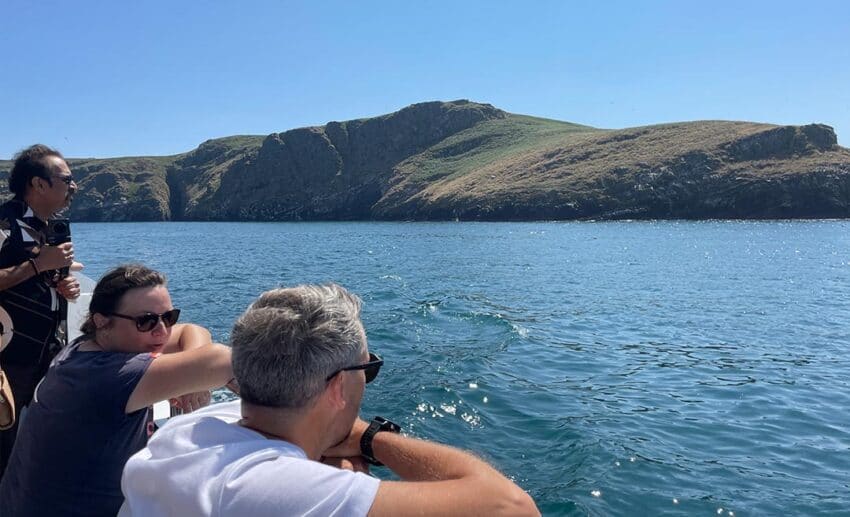
Boat tours circle Skomer and neighboring Skokholm Island without landing, allowing close views of birds on the water and nesting on cliff ledges. On calm days, rafts of puffins gather offshore, floating in loose groups between dives for sand eels. The birds are surprisingly unbothered by boats, a product of decades of careful visitor management that has taught them to tolerate human presence at a distance.
Skomer is also home to grey seals, peregrine falcons, and choughs, a red-billed member of the crow family that has become a symbol of Welsh conservation efforts. The island's ecosystem is carefully monitored. Visitor numbers are capped, and no one stays overnight except researchers and a seasonal warden.
Newgale Beach and the Logic of Gentle Waves
Newgale sits halfway along the Pembrokeshire Coast Path, a two-mile crescent of sand backed by low grassy cliffs. The beach holds a Blue Flag, the international eco-certification that signals clean water and responsible environmental management. But the real draw is simpler: it's a beginner-friendly surf spot with a soft sandy bottom and waves that rarely intimidate.
For travelers learning to surf, that combination matters. Rocky seabeds punish mistakes. Steep drops and powerful breaks demand experience. Newgale offers neither. The waves roll in gently, building confidence rather than fear. Local surf schools operate from the car park, offering lessons and board rentals.
The lack of development is deliberate. A small car park, public restrooms, and a handful of shops service the beach, but no hotels or apartment blocks line the shore. Campsites dot the area inland, catering to road-trippers working their way around the Pembrokeshire coast.
Swimming conditions are equally forgiving. Lifeguards patrol in summer, and the gradual slope into the water makes it suitable for families. On warm days, the beach fills but never feels crowded. Two miles of sand absorbs a lot of people.
What Newgale doesn't offer is drama. No sea stacks, no hidden coves, no Instagram-ready rock formations. It's a straightforward beach doing what beaches do best: providing space, water, and a place to spend the day without a plan.
Pobbles Bay and the Three Cliffs Bay Overflow
Three Cliffs Bay is one of the Gower Peninsula's most photographed beaches, named for the trio of limestone peaks that rise from the sand. It appears on postcards, travel guides, and social media feeds with reliable frequency. Pobbles Bay, just around the headland, gets far less attention.
The two beaches are separated by a short clifftop walk, but the difference in visitor numbers is striking. Three Cliffs draws crowds. Pobbles remains quiet.
Both beaches share similar characteristics: golden sand, rocky cliffs, no development. The hike to Pobbles Bay passes through coastal grassland where choughs nest and hares are commonly spotted. Wildflowers bloom along the path in spring and early summer, adding color to the green and grey palette of grass and stone.
Pobbles Bay is dog-friendly year-round, which accounts for some of its appeal among locals. The beach also features rock pools at low tide, shallow caves along the shoreline, and enough seclusion to make it feel like a discovery rather than a destination.
The Gower Peninsula's protected status means both beaches remain free of the hotels, cafes, and rental shops that typically cluster around popular coastal spots. Access is by foot only, a barrier that filters out casual visitors unwilling to walk 20 minutes from the nearest car park.
For travelers seeking the Gower's coastal beauty without the crowds, Pobbles Bay offers a practical alternative. It's not hidden, just overlooked.
What Protection Looks Like
South Wales' coastline isn't pristine by accident. Designation as a national park or Area of Outstanding Natural Beauty brings legal protections that limit construction, regulate visitor access, and fund conservation work. These aren't symbolic titles. They shape what gets built, where people can go, and how landscapes evolve.
The result is a coast where wildlife still thrives in visible numbers. Where beaches remain undeveloped not because they're remote, but because planning laws keep them that way. Where the rhythm of a visit is determined more by tide tables and breeding seasons than by opening hours and ticket queues.
That kind of travel requires patience. Puffins don't perform on demand. Weather changes plans. But for travelers willing to work within those constraints, South Wales offers something increasingly rare: coastal landscapes where nature still calls most of the shots.