A Wall That Stayed When Others Came Down
When a tourist walked into the men's section at Bagno Marino La Lanterna earlier this summer, the reaction was swift. A local beachgoer reminded the visitor of the rules. Staff stepped in to calm things down. But the disagreement that followed did more than interrupt a day at the beach. It reopened a conversation that has simmered in Trieste for decades.
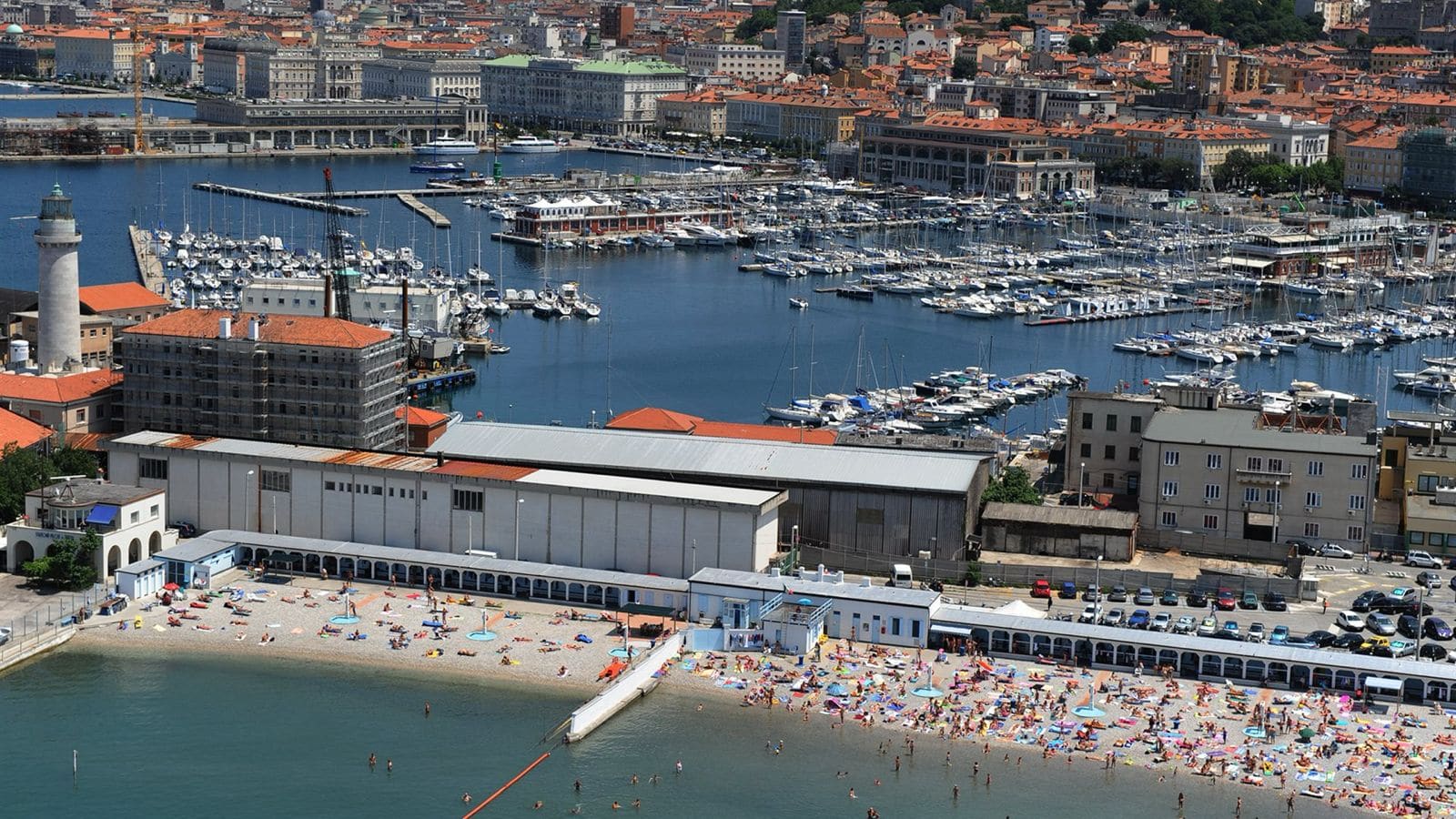
Pedocin, as locals call it, is a public beach on Italy's northeastern coast where a white wall splits the sand into two zones: one for men, one for women. The arrangement is voluntary. Visitors know what they're signing up for. Children can move between both sides, and exceptions exist for parents helping family members. Couples can meet in the water past the buoys, where the division dissolves. Yet the structure itself remains, making Pedocin what many believe is the last gender-separated beach in Europe.
The beach opened in 1903, when Trieste was part of the Austro-Hungarian Empire and separated bathing was standard across much of the continent. Public decency laws made mixed-gender beaches rare. Germany, parts of Scandinavia, and other regions had similar setups. Over time, those barriers disappeared as attitudes shifted. Pedocin's wall did not.
Why the Wall Survived
In the 1950s, local officials considered tearing it down. The goal was to modernize the beach and draw more tourists. But many residents, especially women, pushed back. They valued the atmosphere the separation created. For them, the wall wasn't a relic. It was a feature.
Today, regulars describe Pedocin as a place where families return year after year, where neighbors recognize each other, and where the rhythm of summer feels familiar. One visitor put it plainly: "It's our tradition. People from outside sometimes don't understand it, but nobody is forced to be here."
Trieste's mayor, Roberto Dipiazza, echoed that sentiment after the recent incident, calling Pedocin "a unique feature of the city" and a defining part of local identity. The beach has outlasted two world wars, border changes, and waves of social reform. Its persistence isn't simply inertia. For many in Trieste, the wall represents continuity in a city whose history has been anything but stable.
The Critics Speak Up
Not everyone sees it that way. Critics argue that a publicly operated beach should not separate people by gender, especially in 2026. During the recent dispute, one tourist reportedly called the arrangement "an absurd and medieval custom." The comment, and the incident itself, quickly spread through Italian media and reignited a familiar question: should traditions that no longer reflect modern values be preserved simply because they've always existed?
For some, the answer is no. They see the wall as a symbol of outdated social conventions, a reminder of an era when women's bodies were policed and public spaces were carved up by rigid norms. The fact that the beach is run by the municipality adds weight to their argument. If Pedocin were a private club, the debate might be different. But public infrastructure, they argue, should serve everyone equally.
For others, the critique misses the point. They note that the beach is voluntary, that women were instrumental in keeping the wall standing, and that the separation offers something many visitors value: a space free from the dynamics that often accompany mixed-gender environments. The debate isn't easily settled, and it touches on questions about autonomy, heritage, and whose comfort gets prioritized in shared spaces.
Modernizing Without Erasing
While the argument plays out, Pedocin is making other changes. The beach recently installed a Seatrac Mover, a device that allows people with reduced mobility to enter the water on their own. Two new reading areas with bookcrossing stations have been added, letting visitors swap books while they tan. The municipality framed these updates as part of a broader push to make the beach more accessible and welcoming.
The improvements seem to be working. A recent satisfaction survey gave Pedocin an average rating of 4.6 out of 5. Visitors singled out staff friendliness, cleanliness, and the overall environment. Opening hours received a perfect score. The results suggest that for many people, the beach's unusual layout doesn't detract from the experience. If anything, it may be part of the appeal.
What Pedocin Says About Tradition
The tension around Pedocin reflects a broader question facing cities across Europe: how do you honor the past without freezing it in place? Trieste is a city shaped by layers of history, from Austro-Hungarian rule to Italian annexation to its role as a Cold War flashpoint. Pedocin is one thread in that fabric, a place where the old rules still apply but where new additions signal a willingness to adapt.
The beach is not a museum piece. It's a working space that serves thousands of visitors each summer. The fact that it continues to attract both locals and tourists suggests that the wall, for all the debate it generates, hasn't become a barrier to entry. People still choose to go. They still pay to sit on the sand. And for many, the separation isn't an obstacle. It's the point.
Whether Pedocin will look the same in another 120 years is anyone's guess. Social norms will continue to shift. New generations will weigh the value of tradition against the pull of change. For now, the wall stands. And the conversation around it shows no sign of ending anytime soon.