A City That Works on Paper
Most destination guides for wheelchair travelers focus on glossy attractions. They skip the practical question: can you move through a place without constantly asking strangers for help or abandoning half your plans?
Manchester sits roughly an hour by rail from the Lake District, close enough for quick visits when you need urban energy after quieter landscapes. The city carries weight from its industrial roots, punk and Northern Soul legacies, and football obsession. Food culture keeps shifting. But for anyone rolling through, the question isn't what exists but whether you can actually reach it.
Rail connections from London, Birmingham, Liverpool, Leeds, and Glasgow run frequently into Manchester Piccadilly. Wheelchair spaces and accessible toilets come standard on most services, though advance booking through Passenger Assist remains wise. Lifts connect every platform to the main concourse, and once outside, central neighborhoods sit within reach without complex navigation.
Trams That Actually Function
The Metrolink tram system stands out for straightforward reasons: platforms align with carriage floors, gaps stay minimal, and designated wheelchair spaces don't require negotiation. Level boarding removes the usual precision gymnastics or need for staff intervention. It's the kind of infrastructure that lets you change plans mid-day rather than mapping every move hours earlier.
Accessible taxis, including traditional black cabs, appear regularly across the center. When weather turns or distances stretch, hailing one doesn't involve long waits or explanations.
The Northern Quarter's Mixed Terrain
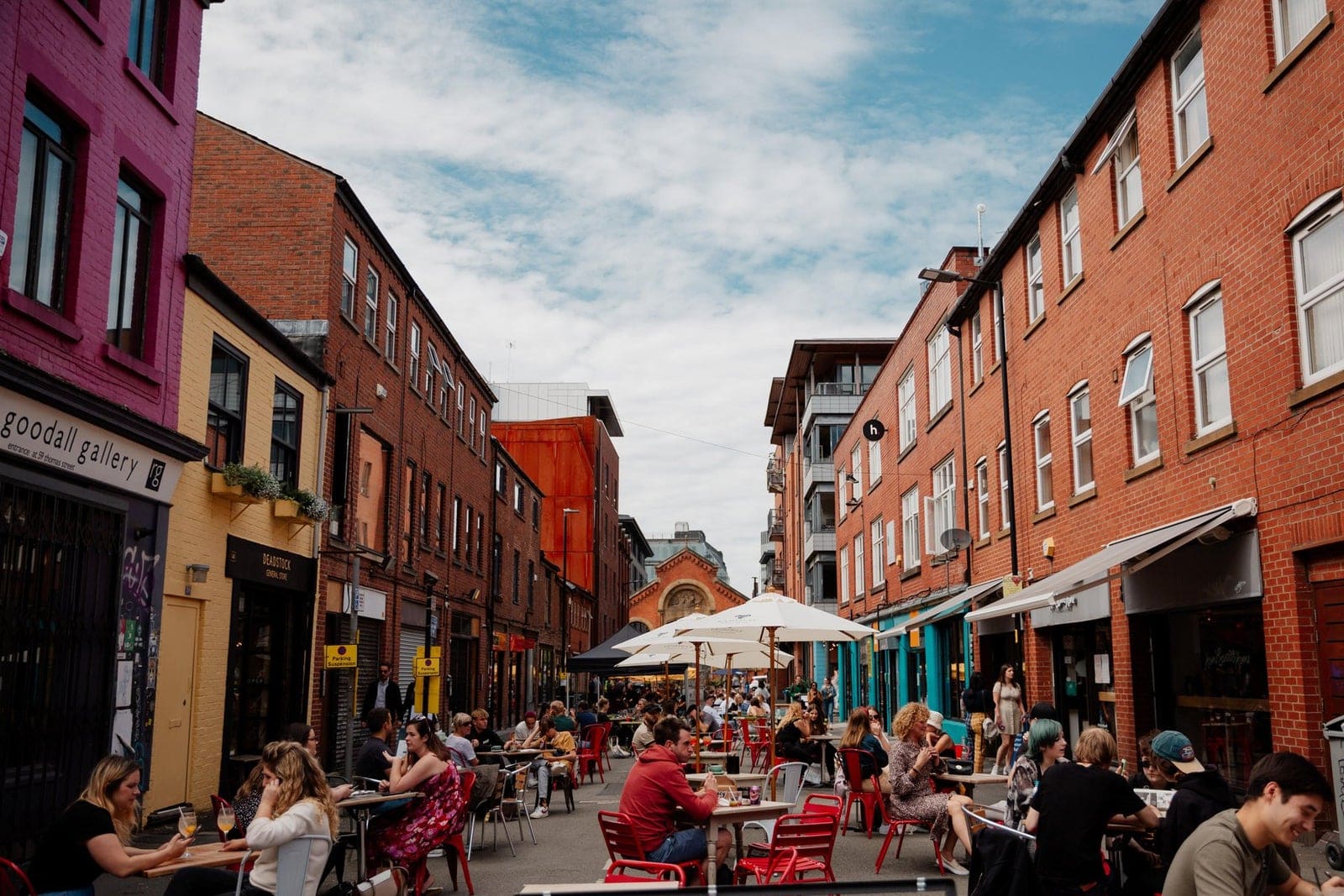
Between Piccadilly Gardens and Ancoats lies the Northern Quarter, Manchester's creative pocket known for vintage clothing, record stores, street murals, and businesses that skip chain formulas. Oldham Street, Tib Street, and Thomas Street form the core.
Pavements here mostly stay level and wide enough for comfortable passage, though peak hours can compress space. The rhythm suits slow exploration with frequent coffee stops, letting you adjust routes when tired or curious.
Manchester Craft and Design Centre occupies a converted Victorian fish market on Oak Street. Independent makers sell jewelry, prints, and home goods across two floors. Both entrances avoid steps, and an accessible toilet sits on the ground level. No lift reaches the upper studios, but staff will bring items downstairs if something catches your attention from above.
Afflecks, an indoor market on Church Street, sprawls across multiple floors with small independent units selling everything from locally themed gifts to vintage prints and Italian sandwiches. The building's age could spell trouble, but a portable ramp provides step-free entry, a lift serves all levels, and an accessible toilet sits on level one. Some individual stalls run tight on space, requiring selective navigation. The entrance ramp slopes steeply, though staff consistently help.
Where Accessibility Becomes Standard
Spinningfields represents Manchester's financial district, polished and restaurant-heavy. Cocktail bars, outdoor terraces, and after-work crowds define the area. Because many venues opened recently, level entrances, wider doorways, and outdoor seating appear more often than not. You can browse options visually before committing, rather than guessing whether a doorway will block entry.
Manchester Arndale covers the practical shopping needs: Apple, Lego, Sephora, plus fashion, beauty, and tech stores. Halle Place on the lower level houses restaurants including Archie's, a local burger chain, and Barburrito for customizable options.
Step-free routes, generous walkways, and breathing room throughout the center make movement predictable. Accessible toilets and a Changing Places facility add reassurance for longer visits requiring more space or equipment.
Culture Without Barriers
Manchester Art Gallery offers free entry to collections spanning six centuries, from Victorian and pre-Raphaelite paintings to contemporary work and sculpture. The current exhibition, Worn: The Life Within Clothes, runs through February 2028 and examines garment stories through a slow fashion perspective.
Level entry, ample circulation space, and seating throughout make the gallery genuinely usable rather than theoretically accessible. Accessible toilets sit on ground and first floors. Audio-described tours serve blind and partially sighted visitors for select events, while BSL interpreters appear for certain programs.
Eating Without Advance Logistics
Freight Island occupies a massive former railway depot beside Piccadilly Station, housing independent kitchens and bars under one roof. Pizza, tacos, burgers, Asian street food, and cocktails coexist, solving the problem of group dining when preferences diverge.
The venue's scale works in favor of accessibility: step-free access throughout, wide circulation routes, accessible toilets, and enough space that tables don't compress into obstacle courses.
The Foundry Project in the Northern Quarter handles everything from brunch to early dinner with a relaxed approach. Burgers, pizzas, small plates, and cocktails cover comfort food territory without fuss. Spacious layout, accessible toilets, and allergy-friendly menu options make it an easy choice.
Runyon's Bar and Restaurant sits inside voco Manchester hotel near Piccadilly. The menu blends British staples like fish and chips with dishes including honey gochujang pork belly and Keralan cauliflower curry. Polished but not stiff. Level access from the reception leads to the bar and restaurant, with accessible public toilets available.
Hotels That Thought It Through
voco Manchester, formerly Hotel Brooklyn, retains New York-inspired design with dark wood, velvet furnishings, brass details, and monochrome bathrooms. The hotel offers 18 adapted bedrooms: nine wheelchair accessible, nine ambulant accessible. Two wheelchair rooms include ceiling track hoists, still uncommon in UK hotels and transformative for guests who need them.
Bathrooms use level access wet rooms that feel luxurious rather than medical, with fittings positioned for practical use. The experience removes the usual negotiation that accompanies accessible hotel stays.
The Reach at Piccadilly sits minutes from the train station and within rolling distance of the Northern Quarter. Canal-side location and Manchester's industrial past inform the design through natural materials, warm finishes, and subtle narrowboat references.
Accessible bedrooms feature step-free access, spacious layouts, roll-in showers, and practical bathroom fittings. Public areas navigate easily, with lifts serving all floors and level access throughout.
The Real Verdict
Manchester doesn't achieve perfect accessibility, but it outperforms many UK cities. Step-free routes exist, transport functions independently, cultural stops provide space, shopping areas stay practical, and enough venues cluster together that one inaccessible doorway doesn't collapse the entire day.
Older buildings, crowded streets, and occasional compromises still appear. But the city offers options. For wheelchair users, that distinction separates trips that feel like logistical challenges from ones that actually deliver enjoyment.
Distances between central neighborhoods stay manageable enough to adjust plans on the go rather than locking into rigid schedules. When access information holds up beyond major tourist sites, spontaneity becomes possible. Manchester delivers that more often than not.