The Season Opens in the Rockies
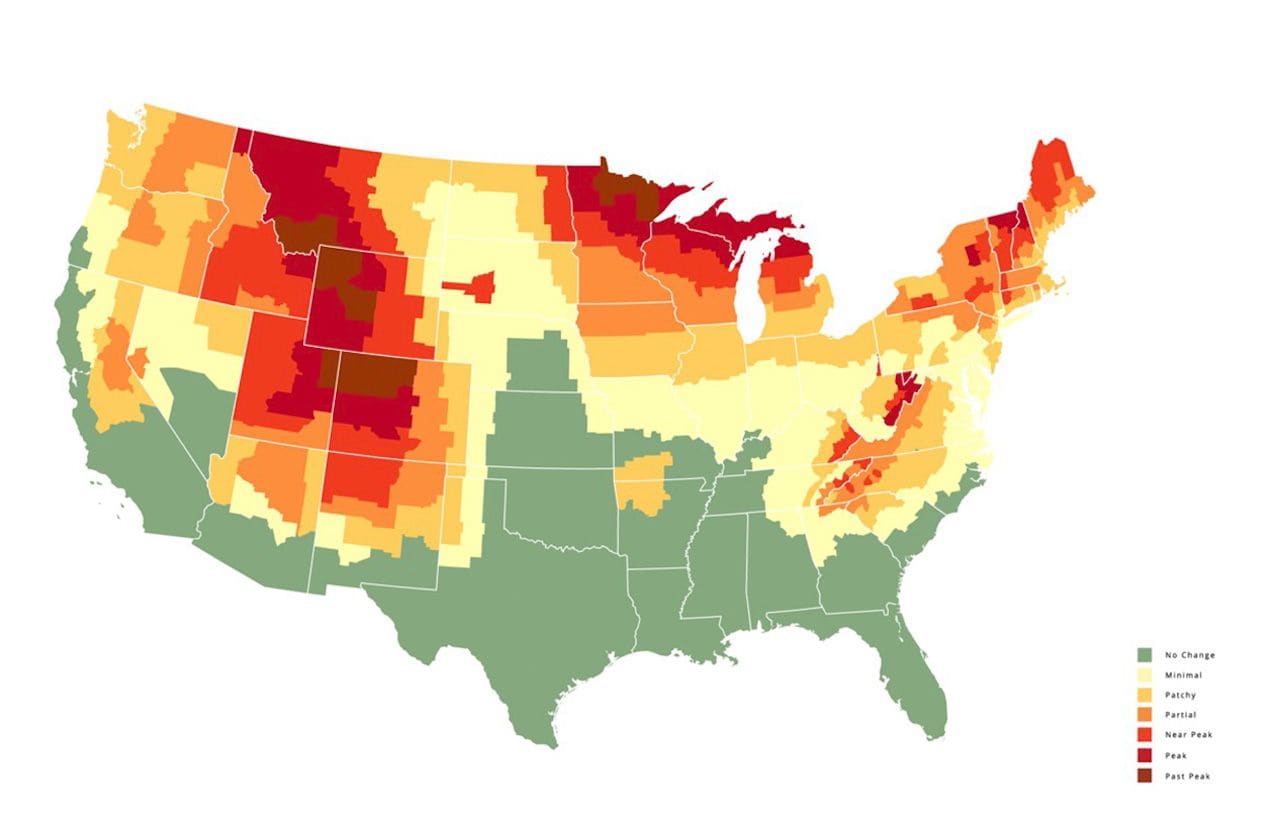
Autumn color won't arrive everywhere at once. The earliest displays are expected in the high country of the Mountain West, where Idaho, Montana, Wyoming, Utah, and Colorado could see peak foliage as early as September 8. These states benefit from elevation and latitude, which bring cooler nights sooner and trigger the chemical shift that turns leaves red, orange, and gold.
Within a week, the northern tier of the Midwest will join in. Minnesota, Wisconsin, and Michigan typically follow close behind the Rockies, with color spreading across the Great Lakes region by mid-September. By the end of that month, much of the northern United States and higher-elevation zones will be approaching or reaching their most vivid phase.
The timing matters for travelers who want to catch the display at its best. A difference of even five days can mean the gap between bare branches and a forest ablaze.
New England's Window Is Narrow
New England, the most famous leaf-peeping destination in the country, operates on a slightly later schedule. Initial color changes begin around mid-September, but the region's signature burst of red maples and golden birches won't hit full strength until early October.
The most intense displays are forecast between October 6 and October 13, with northern Maine, New Hampshire, Vermont, and upstate New York leading the progression. Southern New England follows within days. The window is short, and weather plays a role. A warm spell can delay the peak; an early frost can accelerate it or dull the colors altogether.
For visitors planning trips around Columbus Day weekend, the forecast suggests good timing this year. But flexibility helps. Checking conditions a week out and adjusting routes can mean the difference between a decent show and a spectacular one.
The South Waits Until November
Southern states experience fall on a different clock. Texas, Louisiana, and Florida won't reach peak foliage until mid-November or later, with some areas holding color into early December. The delay reflects warmer temperatures and the slower decline in daylight hours at lower latitudes.
The South's foliage season is also more variable. Deciduous trees are less dominant in many southern forests, and the palette skews toward yellows and browns rather than the vivid reds common farther north. Still, certain pockets, particularly in the Appalachian foothills and the Ozarks, offer strong displays for those willing to seek them out.
The extended timeline gives travelers in the region more leeway. There's less pressure to nail a specific weekend, and crowds are generally lighter than in New England or the Smokies.
How the Forecast Gets Made
Predictions like these rely on historical data and current atmospheric conditions tracked by the National Oceanic and Atmospheric Administration. Patterns from previous years provide a baseline, while temperature trends, precipitation levels, and long-range weather models help refine the estimates.
No forecast is perfect. A late-summer drought can mute colors, while an unusually warm autumn can push the peak back by a week or more. But the broad strokes, the progression from north to south and high elevation to low, hold true most years.
SmokyMountains.com, which publishes the annual map, updates its predictions as the season progresses. For travelers booking accommodations or planning multi-day road trips, these updates can be as useful as the initial forecast.
Planning Around the Calendar
The rolling nature of fall color creates opportunities. A traveler based in the Midwest could catch the Rockies in early September, return home for the local peak a week later, then head to New England in mid-October without seeing the same landscape twice.
Road trips remain the most popular way to experience fall foliage, offering the flexibility to chase the peak or pivot when conditions shift. Campgrounds in prime foliage zones fill early, especially on weekends, so advance reservations are worth the effort.
The appeal isn't just visual. Fall foliage season coincides with cooler weather, fewer bugs, and harvest season at orchards and farms. The experience is as much about the season itself as the color, which may explain why travelers return year after year even when the timing isn't perfect.