The New Border Reality
Europe's biometric entry-exit system has been running for several months now, and the picture varies wildly depending on where you land. Some airports and ferry terminals have managed the transition smoothly. Others have not. Reports of multi-hour queues at certain border points have travellers rethinking their routing, especially for short breaks where half a day lost to immigration can reshape an entire trip.
The system requires first-time visitors to provide fingerprints and facial scans before clearing passport control at Schengen Area entry points. The stated goal is tighter security and better tracking of visa overstays. The practical effect, at least in early implementation, has been congestion at understaffed checkpoints and confusion over who needs to register.
For travellers weighing convenience against destination choice, a handful of European countries sit outside the system entirely. They are not part of the Schengen zone, which means no biometric registration and, in most cases, familiar passport-stamp procedures. Here are ten places to consider.
Cyprus: Mediterranean Beaches, No Queue
Cyprus joined the European Union in 2004 but has not entered the Schengen Area, largely due to the island's political division. That means British and other non-EU passport holders clear immigration the old-fashioned way.
The island splits neatly into resort strips and quieter hinterland. Limassol and Ayia Napa draw the package-holiday crowd, while Protaras and the Troodos Mountains offer a slower pace. Paphos holds UNESCO-listed archaeological sites, including Roman-era mosaics and rock-cut tombs. Nicosia, the divided capital, layers Venetian walls, Ottoman mosques, and a UN buffer zone into a single walkable centre.
Cyprus works well for families looking for predictable sun and for anyone interested in Eastern Mediterranean history without the logistical weight of Greece or Turkey.
Ireland: Green Lanes and No Schengen Hassle
Ireland opted out of Schengen under the Common Travel Area agreement with the UK, which predates the EU itself. Ferries from Britain and flights from anywhere else go through standard immigration, with no biometric registration required.
The Wild Atlantic Way remains one of Europe's premier road-trip routes, stretching more than 1,600 miles along the west coast. The Cliffs of Moher and Downpatrick Head anchor the route, but the real draw is the cumulative effect of small harbours, stone walls, and Atlantic light.
Dublin offers the Guinness Storehouse and a pub-heavy social calendar. Cork has become a hub for artisan food producers, while Galway's traditional music scene remains one of the most authentic in the country. For travellers based in the UK, Ireland is reachable by train and ferry, making it one of the few car-free options on this list.
Albania: Riviera Views Without the Schengen System
Albania is not an EU member and has no immediate prospect of joining Schengen, which leaves its borders under national control. British passport holders get 90 days visa-free.
The Albanian Riviera, running south from Vlorë to the Greek border, has drawn increasing attention as a lower-cost alternative to Croatia and Greece. Ksamil and Himarë anchor the beach scene, with white sand and clear water that photographs well but can get crowded in July and August.
Inland, the Albanian Alps offer serious trekking. The Valbona Pass is a full-day hike through limestone peaks and alpine meadows. Tirana, the capital, mixes Ottoman-era architecture with Soviet-era apartment blocks and a scattering of bold contemporary buildings. Prices remain well below Western European norms, though that gap is narrowing as tourism grows.
Bosnia and Herzegovina: Budget-Friendly and Off the Beaten Path
This Balkan country has just 12 miles of Adriatic coastline, squeezed around the town of Neum, so it is not a beach destination. What it offers instead is dramatic natural scenery, Ottoman heritage, and some of the lowest travel costs in Europe.
The Kravica Waterfalls, south of Mostar, cascade into a wide pool popular with swimmers. Una National Park, in the northwest, protects the emerald Una River and offers white-water rafting. Mostar itself centres on the Stari Most, a 16th-century Ottoman bridge rebuilt after the 1990s conflict. Sarajevo, the capital, has a relaxed café culture and museums that address the siege of the city with sobering detail.
Budget travellers will find hostel beds under ten pounds and restaurant meals for less. The country remains one of the cheapest in Europe for accommodation and food, though infrastructure can be patchy outside the main towns.
North Macedonia: Lakes, Mountains, and Ottoman Markets
North Macedonia is landlocked and mountainous, with a history shaped by Ottoman rule and 20th-century Yugoslavia. It is not in the EU and not in Schengen, so border formalities are brief.
Lake Ohrid, shared with Albania, is one of Europe's oldest and deepest lakes. The town of Ohrid climbs the hillside above the water, with medieval churches, a clifftop fortress, and cobbled lanes lined with red-tiled houses. The lake itself is a UNESCO site, valued for its endemic species and archaeological significance.
Skopje, the capital, sits below Mount Vodno. The Old Bazaar is one of the largest Ottoman-era markets in the Balkans, still functioning as a commercial hub. The Kale Fortress offers views over the city and the Šar Mountains beyond. North Macedonia remains relatively unknown to Western European tourists, which keeps crowds manageable.
Moldova: Wine Cellars and Soviet Architecture
Moldova is Europe's least-visited country, which is both a drawback and an appeal, depending on your tolerance for limited tourist infrastructure. It is not in the EU and not in Schengen, and it sees very few Western tourists.
The country has a serious wine industry, with over 7,000 years of viticultural history. The Ștefan Vodă region produces reds, including the local Rară Neagră. The Codru region focuses on whites and sparkling wines. Mileștii Mici, near the capital, holds the world's largest wine cellar, with over 1.5 million bottles stored in 200 kilometres of underground tunnels.
Chișinău, the capital, is built largely from white limestone and punctuated by Soviet-era monuments and green spaces. It is not a conventional tourist city, but it offers a glimpse of a corner of Europe that remains outside the usual circuits.
Montenegro: Adriatic Glamour and Mountain Escapes
Montenegro is tiny by population and area, with fewer than 630,000 residents. It is not in the EU and not in Schengen, though it has applied for membership in both.
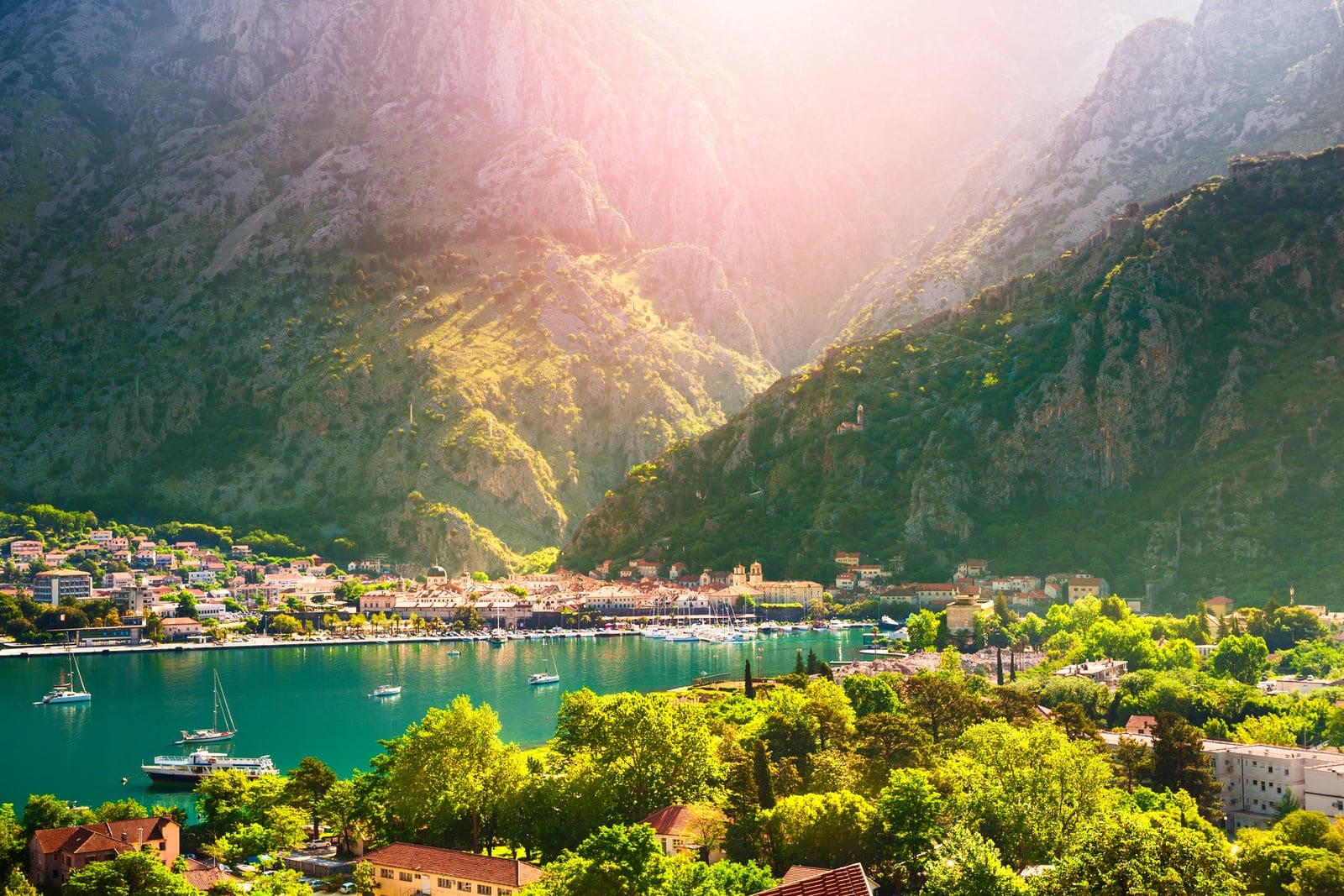
The Adriatic coast draws luxury travellers to towns like Sveti Stefan, where an Aman resort occupies a fortified islet. The Bay of Kotor, ringed by Venetian-era towns and steep mountains, is a UNESCO site and a popular cruise stop. Montenegro has 117 beaches along its coast, ranging from pebbly coves to family-friendly stretches.
Inland, Durmitor National Park offers hiking, rafting, and winter skiing. Visitors can stay in katuns, traditional mountain farms, for a rural experience far removed from the coastal glitz. Montenegro straddles luxury and adventure tourism in a way few small countries manage.
Kosovo: Europe's Youngest Nation
Kosovo declared independence in 2008, though Serbia does not recognise it and a handful of EU countries remain neutral. More than 100 nations, including the UK, do recognise Kosovo as independent. It is not in the EU and not in Schengen.
Prishtina, the capital, is compact and walkable. The Ethnological Museum covers the country's heritage, while the city's mix of brutalist buildings and Ottoman mosques reflects its layered history. Prizren, in the south, sits below the Sharr Mountains and retains much of its Ottoman-era architecture, including stone bridges and hillside fortifications.
Kosovo is not a major tourist destination, and infrastructure remains basic in places. But for travellers interested in recent history and emerging destinations, it offers a perspective unavailable elsewhere in Europe.
Serbia: Nightlife, Fortresses, and National Parks
Serbia is not in the EU, though it is a candidate country. It is not in Schengen, so border procedures are straightforward for UK passport holders.
Belgrade, the capital, has a reputation for nightlife, particularly the floating clubs that line the Sava and Danube rivers in summer. The Belgrade Fortress overlooks the confluence of the two rivers. Saint Sava Temple, one of the largest Orthodox churches in the world, dominates the skyline. The Skadarlija quarter, with its cobbled streets and traditional taverns, offers a more bohemian atmosphere.
Outside the city, Serbia has five national parks. Tara National Park, in the west, features mountain peaks, deep valleys, and archaeological sites dating to the Neolithic period. Banjska Stena, a viewpoint in the park, looks out over a horseshoe bend in the Drina River.
United Kingdom: The Staycation Option
For UK residents, the simplest way to avoid the EES is to stay home. Scotland's Highlands and islands, the Pembrokeshire coast in Wales, the Lake District, and the Cotswolds all offer landscapes and outdoor activities without the need for a passport.
Northern Ireland has the Giant's Causeway, a UNESCO site of hexagonal basalt columns formed by volcanic activity. Cities like Dundee, Birmingham, and Newcastle offer weekend-break options that bypass the usual London and Edinburgh crowds.
Staycations remove the risk of border delays entirely, though they also remove the cultural distance that makes travel abroad appealing to many. It is a trade-off worth considering if your main goal is scenery and relaxation rather than immersion in a different language or culture.
Weighing the Trade-Offs
Choosing a destination based on border procedures is not how most people plan trips, but it is a factor now in a way it was not two years ago. The countries on this list offer genuine travel experiences, not just workarounds. They also come with trade-offs. Some have less-developed tourist infrastructure. Some require more research to navigate. A few carry political complexities that travellers should understand before booking.
The EES will likely become less disruptive as airports add staff and streamline registration. But for now, knowing where the system does not apply can open up alternatives that might otherwise stay off the radar.