A Port City That Runs on Coffee
Trieste sits at the northeastern edge of Italy, pressed between the Adriatic Sea and the Slovenian border. For centuries, this port city straddled empires. It belonged to the Habsburgs longer than it has been Italian, and that history shows up most clearly in its cafés.
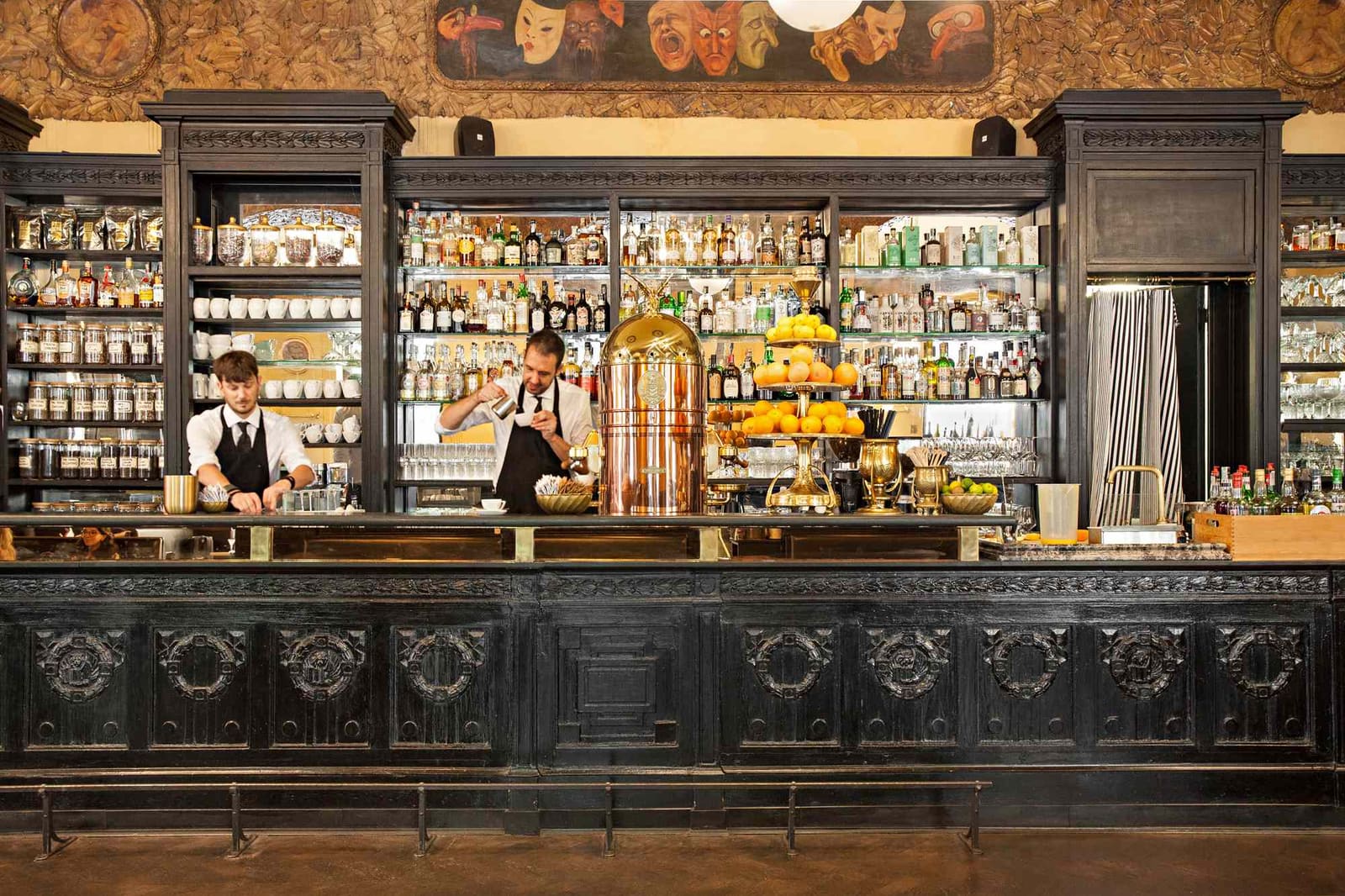
Walk into any of Trieste's historic coffee houses and the atmosphere shifts. High ceilings, velvet banquettes, and gilt mirrors recall Vienna more than Rome. The city earned its nickname "Vienna by the Sea" honestly. But the coffee itself is pure Italian: short, strong espresso pulled with the precision that defines the country's café culture.
The city's relationship with coffee is not just cultural. It is economic. Trieste remains one of Europe's most important coffee ports. Raw beans arrive from Africa, South America, and Asia, passing through the city's docks before being roasted and distributed across the continent. Major Italian coffee brands, including Illy and Hausbrandt, were founded here. The port handles hundreds of thousands of tons of green coffee annually, making it the leading coffee port in the Mediterranean.
Where Empires Left Their Mark
Trieste's layered identity comes from its past as a Habsburg free port. Under Austrian rule from the early 14th century until 1918, the city grew into a cosmopolitan trading hub. Merchants from across Europe and the Levant settled here, bringing languages, religions, and customs that gave Trieste a character distinct from the rest of Italy.
After World War I, the city was annexed to Italy. Then came another upheaval: a brief period under Yugoslav control after World War II before returning to Italian sovereignty in 1954. Each shift left traces. Slovenian is still spoken in surrounding areas. Street names toggle between Italian and German. The architecture is Austro-Hungarian, with neoclassical facades and grand squares that would not look out of place in Prague or Budapest.
This confluence of influences shaped how Trieste approached coffee. The city adopted the Italian espresso bar but preserved the Central European tradition of the café as a social institution, a place to linger over newspapers and conversation rather than gulp and go.
The Ritual of Caffè Triestino
Ordering coffee in Trieste requires a small vocabulary adjustment. Ask for a "caffè" and you will get what the rest of Italy calls a cappuccino: espresso with a cap of foamed milk. For a standard espresso, you order a "nero" (black). A "capo in B" is espresso in a glass with a dollop of frothed milk. These terms are hyperlocal, used almost nowhere else in the country.
The ritual matters as much as the drink. Trieste's historic cafés are designed for sitting, not standing. Caffè San Marco, opened in 1914, still has its original wood paneling and marble tables. Writers and intellectuals gathered here throughout the 20th century, including James Joyce, who lived in Trieste for more than a decade and taught English to supplement his income. The café was bombed during World War I because of its association with Italian irredentists, then rebuilt and reopened.
Caffè Tommaseo, which dates to 1830, claims to be the oldest café in Trieste still in operation. Its chandeliers and frescoed ceilings attract tourists, but locals still come for their morning caffè, reading the paper at the same tables their grandparents occupied.
Coffee Roasters and Modern Craft
Trieste's coffee culture is not frozen in amber. The city has embraced the global specialty coffee movement while maintaining its own traditions. Smaller roasters have emerged alongside the legacy brands, experimenting with single-origin beans and lighter roasts that would have been unthinkable a generation ago.
Illy, founded in Trieste in 1933 by Francesco Illy, pioneered pressurized packaging that kept roasted coffee fresh during transport. The company remains headquartered in the city and operates a university dedicated to coffee science and training baristas. Hausbrandt, another Trieste institution, has been roasting coffee since 1892 and exports to more than 70 countries.
The presence of these companies means that coffee expertise runs deep. Baristas in Trieste grow up around the industry. Many have family connections to roasting, importing, or the port trade. The result is a baseline level of quality that is hard to find elsewhere. Even an unremarkable neighborhood bar will serve a well-pulled espresso, because the standard is simply higher.
Beyond the Espresso Cup
Trieste offers more than coffee, though coffee is a useful lens for understanding the city. The waterfront Piazza Unità d'Italia is one of Europe's largest sea-facing squares, lined with ornate buildings that once housed imperial offices. The Roman amphitheater, dating to the 1st century, sits incongruously among residential streets, a reminder that the city's history stretches back millennia.
The Miramare Castle, perched on a rocky outcrop overlooking the Gulf of Trieste, was built in the 1850s for Archduke Maximilian of Austria. Its interiors are preserved as they were when he lived there, before he left to become Emperor of Mexico and was executed three years later. The castle grounds are open to visitors, and the views across the Adriatic are expansive.
Trieste also has a literary legacy that extends beyond Joyce. Italo Svevo, one of Italy's most important modernist novelists, was born and lived here. Umberto Saba, a poet, ran a bookshop in the city that still operates today. The city's multicultural, in-between status seems to have nurtured a particular kind of introspective writing, concerned with identity and displacement.
A City That Resists Easy Labels
Trieste does not fit neatly into the narrative of Italy that most travelers expect. It is not picturesque in the way of Tuscany, nor sun-drenched like the Amalfi Coast. The food is influenced as much by Austro-Hungarian and Slavic traditions as by Italian. Goulash and strudel appear on menus alongside pasta and risotto.
The city's relative obscurity has kept it off the well-trodden tourist circuit, which means it retains a lived-in quality. Locals go about their routines without the self-consciousness that comes from being constantly observed by visitors. The cafés are full of people who are actually from Trieste, not just passing through.
For travelers interested in coffee, Trieste offers a chance to see how the drink functions as both industry and culture. The port, the roasters, and the cafés are all part of the same ecosystem. The city's history explains why it became a coffee hub, but it is the persistence of that culture, adapted and maintained across political upheavals and economic shifts, that makes Trieste worth attention now.