The Shift From Seeing to Sustaining
For decades, the travel industry treated nature as backdrop. Visitors arrived, admired, departed. The cycle repeated until trails eroded, reefs bleached, and wildlife retreated. But a quieter movement has taken root: experiences designed so your presence funds measurable ecological gains. Not offsetting harm. Not minimizing damage. Actually improving the systems you visit.
Justin Francis, who co-founded Responsible Travel and advises the UK government on nature and business, draws a sharp line. Tourism that claims to care about nature but leaves it depleted is still extraction, he argues. The new standard is regeneration: you arrive, spend, and something tangible gets better. A forest corridor expands. A species count rises. A community trains in habitat stewardship and stays.
This approach is spreading across continents, and the results are starting to show up in camera-trap data, pollinator surveys, and herbarium records. The question for travelers is no longer whether a trip harms less. It is whether the trip builds back.
Counting What You Protect
At Böëna Lodges in Costa Rica, guest revenue has underwritten two years of forest monitoring across five properties. Camera traps at Pacuare have recorded jaguars moving through primary forest; at Lapa Ríos on the Osa Peninsula, all five of the country's wild cat species have been documented. More than 800 hectares of tropical forest are now permanently protected and linked to national parks, creating corridors that matter as much for carbon storage as for animal movement.
In Ladakh, Journeys With Purpose partners with the High Asia Habitat Fund to track snow leopards. The cats are apex predators, and their presence signals that prey populations and the broader mountain ecosystem remain functional. Guests join conservation practitioners in the field, learning how coexistence between humans and wildlife is managed in one of the planet's most fragile landscapes.
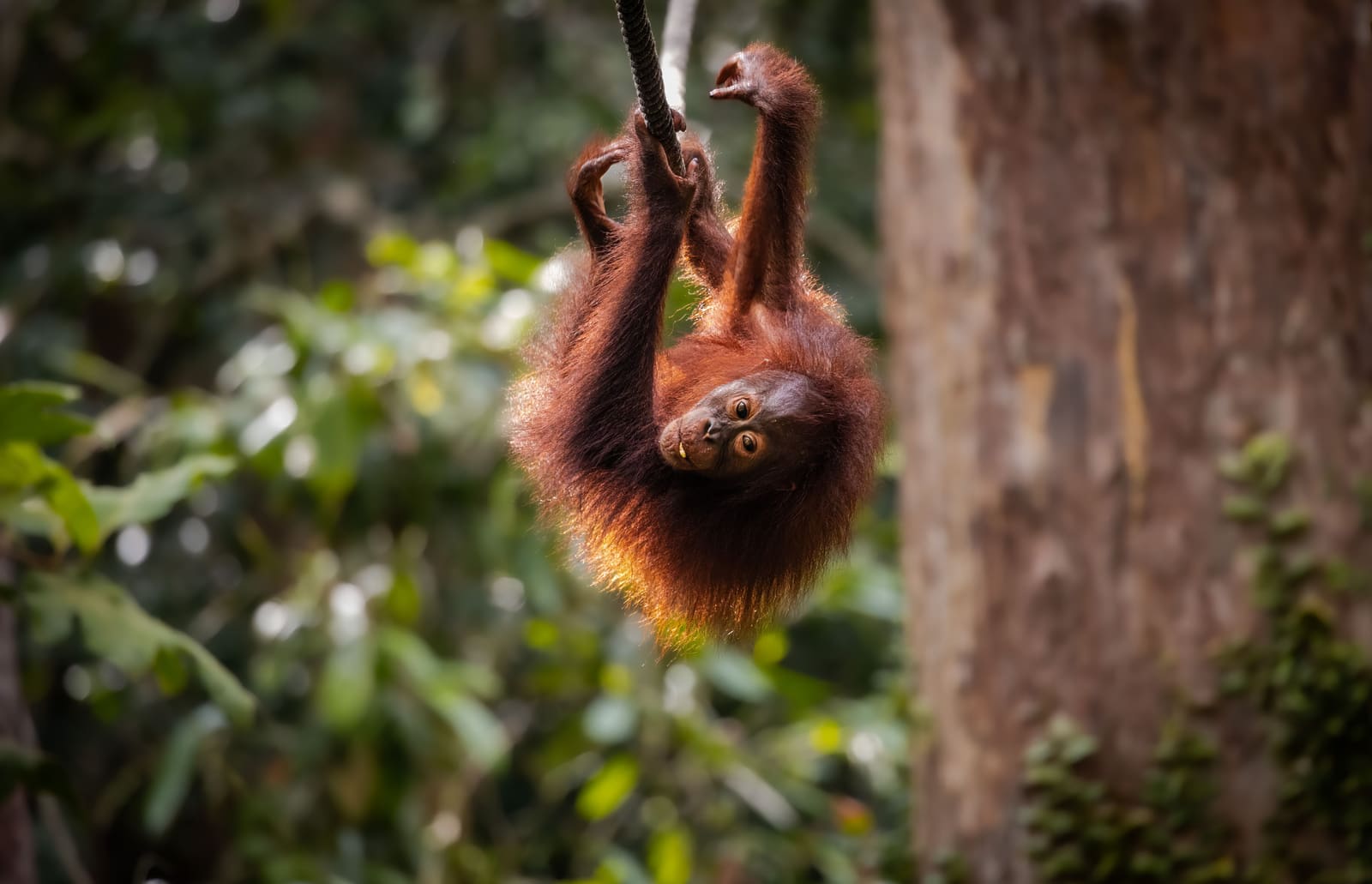
Responsible Travel has built an entire collection around this model. Projects span Borneo orangutan sanctuaries, Big Five volunteering in South Africa, and habitat work across multiple continents. The company increasingly requires partners to report species counts, hectares protected, and community members employed. The metric is simple: what did your money keep alive?
Citizen Science as Travel Content
Exodus, a certified B Corporation, runs Citizen Science Departures in partnership with iNaturalist. Travelers on trips in Finland and Portugal collect biodiversity data in the field, guided by experts who understand local ecological pressures. The observations go into the International Union for Conservation of Nature's eBioAtlas, feeding species mapping and conservation planning.
Since the program launched, participants have logged thousands of environmental DNA detections across 15 countries. The tally includes 534 individual species, 54 classified as endangered, and 36 invasive. The data helps scientists track what lives where, but it also gives travelers a role beyond consumption. You are not just passing through. You are documenting what remains.
Biodiversity is often framed as abstract, the domain of researchers in remote locations. But it touches the cotton in clothing, the palm oil in food, the monoculture farms that dominate agricultural landscapes. Supporting crop diversity through travel choices matters as much as protecting charismatic megafauna.
Post Ranch Inn in California's Big Sur, part of the Beyond Green portfolio, is developing a regenerative farming partnership with a certified organic grower cultivating over 300 heirloom varieties. Early harvests are due to reach the restaurant's menu this year. The logic is ecological: monoculture farms and biodiverse ones look different, function differently, and store carbon at different rates.
Casa di Langa in Piedmont, Italy, maintains 10 beehives in its truffle forest. Native Piedmontese bees pollinate orchards, vineyards, and wildflower meadows. The work is small-scale but deliberate, a signal that even luxury properties can integrate habitat support into operations.
Pollinators, Plants, and the People Who Protect Them
Grootbos Private Nature Reserve in South Africa's Western Cape sits within the Cape Floral Kingdom, the smallest and most botanically dense of the world's six floral kingdoms. When Michael Lutzeyer and his family bought the property, it was a struggling farm. Today, the reserve's herbarium has documented over 1,000 plant species in Grootbos and the surrounding Walker Bay Fynbos Conservancy. Six were previously unknown to science.
The Cape Floral Kingdom contains roughly 9,000 species, most of them endemic. Lutzeyer notes that an estimated 150 species vanish globally every 25 hours. Knowing what exists is the first step in keeping it alive.
Grootbos offers flower safaris, drawing visitors who might never have considered botany a reason to visit Africa. An entomology program studies the pollinators on which the ecosystem depends. Plants and insects are documented together, their interdependence explained through field guiding that balances rigor with storytelling.
The Green Futures Horticultural College trains members of the surrounding Gansbaai community in indigenous horticulture. Paying locals to become custodians of the landscape was, when it began, a radical shift. Conservation became something the community had a stake in, not something imposed by outsiders. The model created jobs and kept families rooted in the area.
Slower Movement, Lighter Footprint
Tourism accounts for roughly 8 to 9 percent of global greenhouse gas emissions, according to independent research. A 2024 study in Nature Communications found that tourism's carbon footprint grew 3.5 percent annually between 2009 and 2019, outpacing the broader global economy by more than double.
Going slower helps. Train travel, electric vehicles, and longer stays in fewer places all reduce per-trip emissions. Airlines are investing in sustainable aviation fuels and reforestation, but the pace lags behind growth. One overlooked choice is flying economy. More passengers per flight means fewer emissions per person. The physics is straightforward.
Richard Hammond, who writes as The Green Traveller, has published guides to flight-free itineraries across the UK and Europe, plus slower journeys further afield. The routes include citizen-science projects and rewilding sites worth the extra time.
Where Your Spend Does the Most
Elizabeth Becker, author of Overbooked: The Exploding Business of Travel and Tourism, argues that overtourism was never just about crowd size. It pushed out local life and threatened environments in ways that contradicted the purpose of travel. Now, she says, visitors have a chance to approach travel with renewed respect and still enjoy it.
Popular destinations tend to be the most ecologically and socially strained. They are also the most vulnerable to shocks: political instability, natural disasters, viral news. Lesser-visited landscapes and community-led conservation projects are both more resilient and more in need. Your money goes further in every sense.
Bruce Poon Tip, founder of G Adventures, emphasizes that many places depend on tourism to support their economies and fund conservation. But the structure must be controlled, regulated, and flexible enough to withstand change. Travelers need to know where their money goes after they spend it and choose accordingly, he says, so that places and people can continue to thrive.
The shift is already underway. The question is whether enough travelers will follow.