A Race Against Erosion
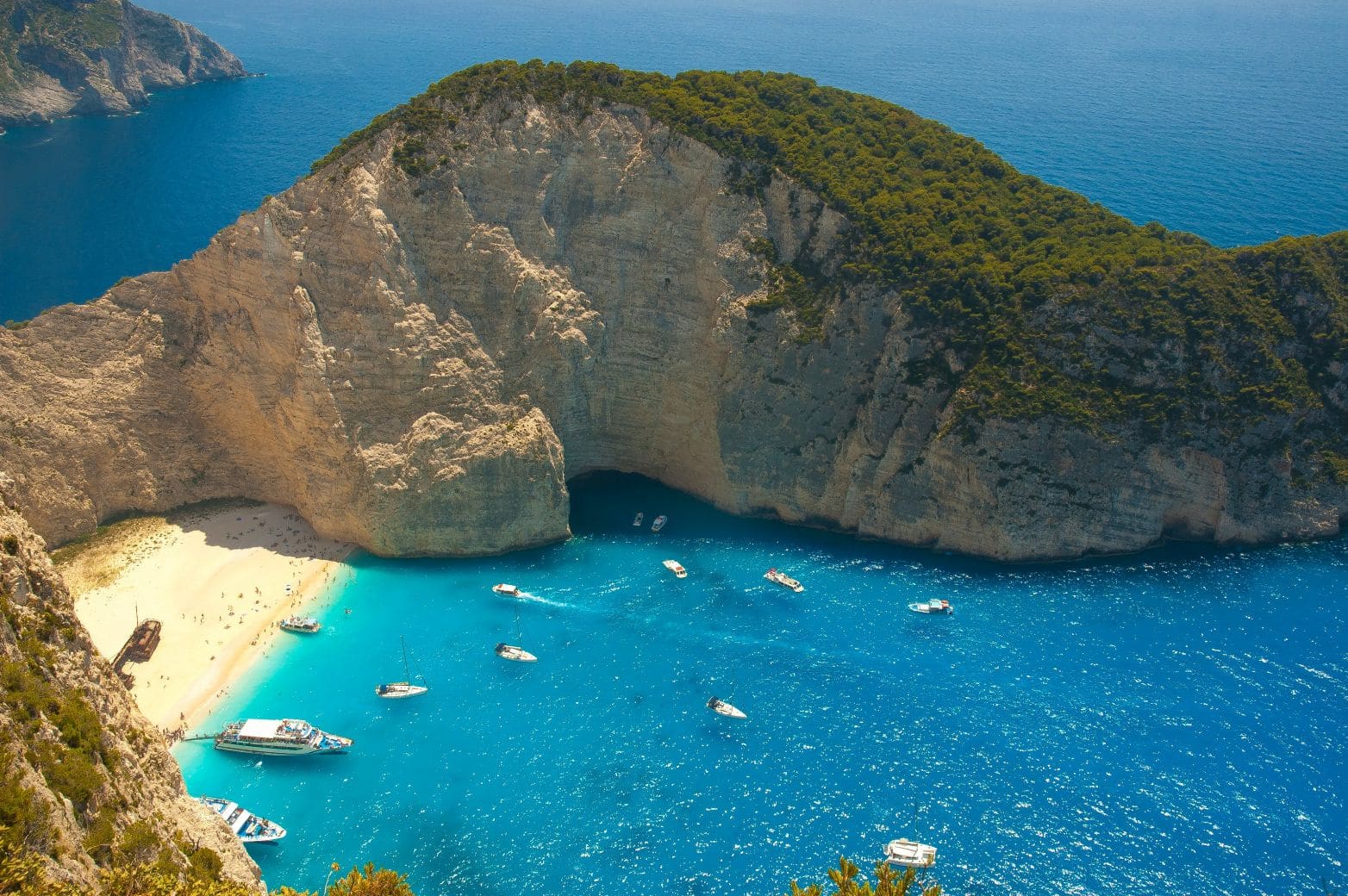
The rusting hull of the Panagiotis has sat on Navagio Beach since 1980, when the ship ran aground on the white pebbles of Zakynthos. Over four decades, the wreck has become one of Greece's most photographed landmarks, drawing an estimated 1.5 million visitors each summer to the narrow cove ringed by limestone cliffs. Now, local officials say the ship is disappearing.
The municipality of Zakynthos has unveiled a plan to extend the beach by 30 metres seaward, using 45,000 cubic metres of gravel to push the shoreline forward and move the wreck further from the water's edge. The goal is to reduce wave action that has been accelerating the decay of the vessel and eroding the beach itself.
"The ship is disappearing; it's the last chance to save what's left," Zakynthos mayor Giorgos Stasinopoulos said in 2025. He noted that without intervention, the island risks losing the single feature that draws the bulk of its summer tourism.
The Social Media Effect
Navagio Beach, often called Shipwreck Beach or Smugglers' Cove online, gained traction over the past decade as Instagram and TikTok users shared images of the turquoise bay framed by towering cliffs and the decaying hull. The contrast between pristine nature and industrial ruin proved irresistible to photographers and casual visitors alike.
But popularity has come with consequences. Foot traffic around the wreck has contributed to structural damage, while storms and wave action have taken a heavier toll. The beach has been shrinking, and pieces of the ship have broken off or been carried away by the sea.
The expansion project, developed in partnership with the National Technical University of Athens, will involve placing gravel along the shoreline to create a buffer zone. Once the extension is complete, conservation teams plan to stabilize and restore parts of the Panagiotis.
Closed Indefinitely
The beach and surrounding bay have been off-limits to boats and swimmers since before the announcement, and the closure is set to continue until at least 31 October 2026. The restriction follows a 2018 cliff collapse that injured seven tourists and a 2022 earthquake that raised concerns about additional rockfalls.
Greece's Earthquake Planning and Protection Organisation has been inspecting the cliffs twice a year since then. The most recent assessments found ongoing landslide risk, prompting authorities to keep the area closed while they evaluate long-term safety measures.
Visitors can still view the beach from designated lookout points on the clifftops above, but access to the sand and the wreck itself remains prohibited. The closure complicates the expansion timeline, though officials have not yet released a schedule for when construction might begin.
Tourism at Stake
For Zakynthos, the stakes are high. The island's tourism economy leans heavily on the shipwreck's global recognition. Mayor Stasinopoulos framed the project as essential not just for local revenue but for preserving a cultural asset that has come to symbolize the island itself.
"The shipwreck is not only the top tourist attraction of Zakynthos," he said. "It is a global symbol of our island, a unique natural and cultural asset that we must protect and deliver safely and upgrade for future generations."
The challenge is twofold: preventing further erosion while ensuring the cliffs above are stable enough to allow safe access. The expansion addresses the first problem, but the second remains unresolved. Until the landslide risk is mitigated, the beach will stay closed, and the wreck will continue to weather storms without the buffer the new gravel is meant to provide.
What Happens Next
No timeline has been shared for the start of construction, and it's unclear whether work can proceed while the beach remains closed for safety reasons. The project will require coordination between the municipality, university engineers, and national safety authorities.
If the extension moves forward, it will represent one of the more ambitious efforts in Greece to preserve a tourism landmark through environmental intervention. The alternative, officials suggest, is watching the Panagiotis rust away entirely, along with the tourism revenue it generates.
For now, the wreck sits in its cove, inaccessible and eroding, while planners work out how to save it.