Behind the Garage Door
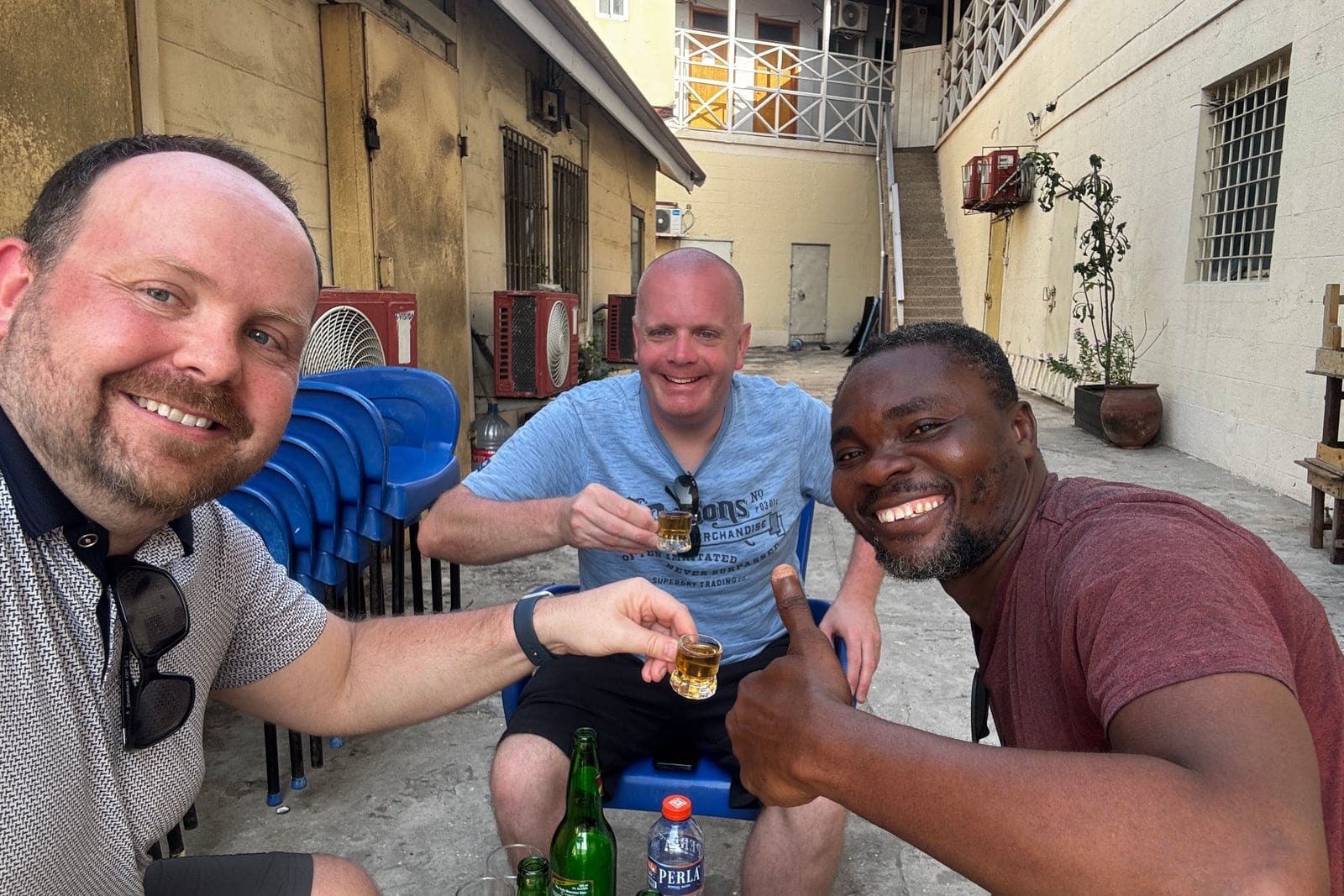
Jamestown doesn't advertise its bars. The pubs here operate from car washes, front rooms, and converted warehouses, marked only by the sound of glass bottles clinking and voices carrying through doorways. To find them, you need someone who knows where to knock.
That's the premise behind a growing number of walking tours in Ghana's capital, where the focus has shifted from ticking off landmarks to navigating everyday life alongside residents. Jamestown Walking Tours, one of the first operators to try this approach, runs afternoon excursions that thread through courtyards and alleyways most visitors would never locate alone.
The district is four centuries old, layered with colonial warehouses, fishing boats, and boxing gyms tucked into fading merchant buildings. Coffin makers work on elaborate caskets in plain view. Obituary posters paper the walls. Death, like most things here, happens in public.
So does drinking. Scattered throughout Jamestown is what locals call a chop bar network, informal pubs where men nurse bottles of Club beer and argue over games of chequers. Some occupy crumbling buildings. Others are improvised roadside shelters. A few are literally someone's living room.
The Tro-Tro Test
Understanding how Accra moves means riding a tro-tro, the minibuses named after the threepence fare charged during colonial rule. They're decorated with names and slogans that reflect their owners' worldviews. "The Blood of Jesus" idles next to "Inshallah." "Pikachu" overtakes them both. One displays "God Is Good" on the bumper and a prominent middle finger on the back window.
During rush hour, vendors balancing vegetables and household goods on their heads move faster than the traffic. Crossing the street requires stepping into the flow and walking steadily in one direction, trusting drivers to maneuver around you. It works, mostly.
Tour guides have started building tro-tro rides into their itineraries, partly because it's the cheapest way to get around (fares run 30 to 60 pence) and partly because it's where you see how the city actually functions. Women balance baskets of coconuts on their laps. Schoolchildren in crisp uniforms giggle in the back rows. The entire cross-section of the capital squeezes into one vehicle.
Murals have become more common across Accra in recent years, many of them visible from tro-tro windows. Some depict fishermen and traders in collage form. Others tackle corruption and inequality head-on, with raised fists and slogans like "Justice for Africa."
What Visitors Are Actually Looking For
The shift toward micro-tours reflects a broader change in what travelers want from Accra. More UK tourists are arriving, British Airways now runs daily direct flights from Heathrow, and the standard itinerary of forts and museums isn't holding attention the way it used to.
Tour operators have noticed that visitors often feel embarrassed admitting they don't know where to start in neighborhoods like Jamestown. The layout is confusing, the attractions aren't marked, and there's no clear entry point. So guides are building experiences around that uncertainty, turning the maze into the appeal.
The economic logic is straightforward. Micro-tours funnel money directly into communities that don't always benefit from increased tourism. A pub crawl that stops at a front-room bar or a car wash turned drinking spot keeps revenue with the people who live there, rather than routing it through hotel concierges and chain restaurants.
But there's a cultural argument, too. Ghana is approaching the 70th anniversary of independence in 2027, the first sub-Saharan African country to reach that milestone. Guides want visitors to understand that history extends beyond the transatlantic slave trade. Osu Castle, a former trading fort and slave dungeon, later became the seat of government and hosted Queen Elizabeth II in 1961. She brought her own bed.
Kwame Nkrumah, Ghana's first post-independence president, remains visible throughout the capital. His memorial park features a 30-foot bronze statue and his most repeated maxim: "Forward ever, backward never." Tour guides frame independence as a story worth equal billing with the centuries of exploitation that preceded it.
The Drink at the End
The final stop on many Jamestown tours involves akpeteshie, a potent spirit distilled from palm sap. It's traditionally served when newborn children are presented to the rising sun, part of a Ga celebration that involves pouring a small amount on the floor as an offering to ancestors before everyone takes a shot.
The sweetness lasts only a moment before the burn arrives. Laughter usually follows, especially when first-timers visibly struggle. It's not subtle, but neither is the point. These tours are designed to feel participatory, not observational. You're not watching Accra from a distance. You're sitting in someone's front room, drinking their liquor, surrounded by family photos and beer crates fighting for wall space.
Practical Realities
Jamestown and much of Accra remain cash-based. Stock up on Cedi early from currency vendors or ATMs. UK visitors need a visa (starting at £60 for single-entry) and proof of yellow fever vaccination. Flights from London Heathrow run around six hours and 40 minutes, with fares starting at £700, according to British Airways.
Accommodation options range widely. Budget lodges near the beach start around £25 per night. Mid-range hotels with pools and courtyards run from £65. Larger studio apartments with on-site restaurants and airport transfers cost upward of £95.
Tro-tros remain the cheapest way to navigate the city, though Uber operates here as well. For those less comfortable with the minibus system, ride-hailing apps provide a straightforward alternative, including routes to and from Jamestown.
Tour operators like Jamestown Walking Tours, Tro-Tro Tours, and Here is Ghana offer customized city experiences, many of them focused on neighborhoods and traditions that don't appear in standard guidebooks. The Saturday afternoon pub crawl has become particularly popular, partly because it delivers exactly what it promises and partly because it doesn't feel like a tour at all.
What This Means for How People Travel
The rise of micro-tours in Accra suggests a broader shift in how cities are packaging themselves for visitors. Instead of competing on landmarks, they're competing on access to everyday life. The appeal isn't what you see, it's who shows it to you and whether the experience feels genuine.
For travelers, that means adjusting expectations. You won't leave with a checklist of monuments. You'll leave with stories about riding a tro-tro called "Pikachu," drinking palm liquor in someone's front room, and learning to cross a six-lane road by walking steadily and trusting the traffic to move around you.
For communities, the model offers a way to participate in tourism revenue without becoming a backdrop for it. The pubs stay local. The guides are residents. The money circulates in the neighborhood. It's not a perfect system, but it's more direct than most.
Accra's experiment with micro-tours will likely influence other cities facing similar questions about how to handle growing visitor numbers without erasing what made the place interesting in the first place. The answer, at least here, involves a garage door, a local guide, and a willingness to follow them inside.