An Unlikely Introduction
The invitation came from a friend fresh off a guided birdwatching trip in Borneo. She wanted company for a day at Kuala Selangor Nature Park, a wetland reserve an hour northwest of Kuala Lumpur. I agreed, expecting a quiet walk. What I got instead was a crash course in why birds matter and how the way we travel can either protect or erode the ecosystems that sustain them.
When we met at the park entrance, my friend looked ready for reconnaissance. Khaki clothing, a camera mounted on a tripod with a lens as long as my forearm, and a thick field guide tucked under her arm. She handed me the book and a pair of binoculars. My job: identify whatever she spotted. Hers: photograph as many species as possible. Birdwatchers call this "twitching," the pursuit of sighting as many birds as you can.
Herons, Storks, and the Start of Something
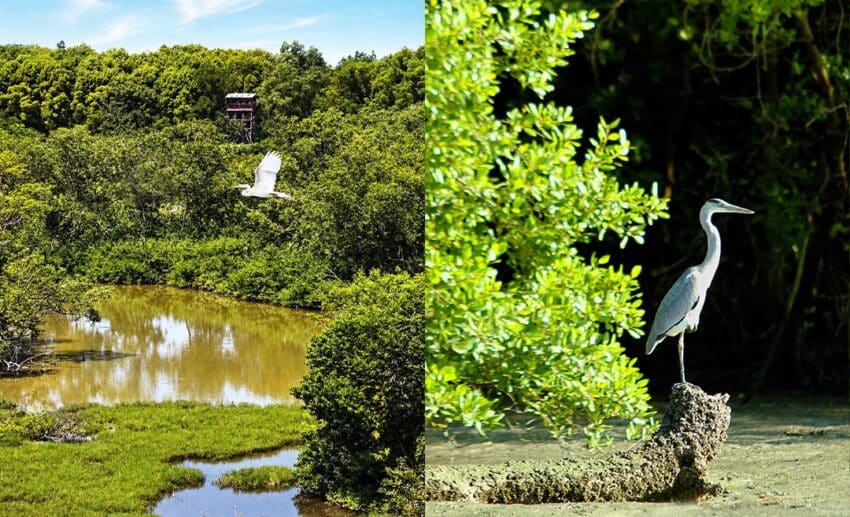
The first bird she called out was a Great Egret, standing motionless near a Grey Heron at the lake's edge. Or was it a Striated Heron? I flipped through the field guide, trying to match illustrations to the pale, long-necked shape in the distance. The binoculars helped. What had been a vague white smudge suddenly became a bird with texture, feathers, and intent. I made a mental note to buy my own pair.
Herons turned out to be easier to spot than I expected. These large wading birds spend their time in shallow water, spearing fish with sharp bills. The Striated Heron, I learned, is also called the Mangrove Heron. It hunts by staying perfectly still, then striking when prey drifts close.
Later we saw a Milky Stork, a bird that stirs mud with its feet to flush out fish. According to the field guide, it's endangered and rarely seen. Watching it work the shallows felt like witnessing something borrowed, not owned.
Why Any of This Matters
At some point I asked my friend the question that probably reveals how little I understood: why does any of this matter? What role do birds actually play in our lives?
An hour later, I was still getting the answer. Birds control insect populations. They pollinate plants and support crop growth. They reduce mosquito numbers. They're part of a system that functions whether or not we notice it. And the choices travelers make, from the resorts we book to the products we buy, either support that system or weaken it.
Malaysia is home to around 790 recorded bird species, according to biodiversity data. The country's forests, wetlands, and mangroves draw birdwatchers from around the world. This kind of tourism, often called avitourism, generates an estimated USD 70 billion globally each year. When managed responsibly, it gives natural areas economic value that can compete with development pressures.
Wetlands That Almost Weren't
Kuala Selangor Nature Park, managed by the Malaysian Nature Society, nearly became a golf course. Decades ago, wetlands like this were dismissed as wastelands with little economic use. Then scientists pointed out what those areas actually do: protect coastlines from erosion and storms, serve as breeding grounds for marine life, and provide critical rest stops for migratory birds traveling between Siberia and Sydney. Some of these birds fly 10,000 kilometers. They need places like Kuala Selangor to recover.
The park now operates with an information center, chalet accommodation, and an entry fee of RM4. It's close enough to Kuala Lumpur for a day trip, and the town of Pasir Penambang across the river has seafood restaurants if you want to extend the visit. Trails and boardwalks wind through mangroves and along the water, though it's worth checking access before you go.
Beyond Kuala Selangor
Birdwatching in Malaysia doesn't stop at one park. Fraser's Hill, a hill station in Pahang, is known for montane species. Tanjung Tuan in Negeri Sembilan sits at one of the narrowest points of the Straits of Malacca, just 38 kilometers across, making it a prime spot to watch raptors like the Oriental Honey-buzzard during migration. The Malaysian Nature Society organizes the Fraser's Hill Bird Race each June and Raptor Watch in Port Dickson every March.
In Sabah and Sarawak, resorts and nature lodges employ eco-guides who help visitors navigate the rainforest canopy and riverbanks. The Borneo Bird Festival in Sandakan takes place each November, drawing enthusiasts from across the region.
Some resorts have built their operations around nature-based tourism. The Datai in Langkawi, Danum Valley Field Centre, Sukau Rainforest Lodge, and Belum Rainforest Resort all emphasize low-impact access to ecosystems that would otherwise be difficult to reach. These places hire local staff, source food locally, and in some cases use alternative energy. Asking questions about how a resort operates and what it does to limit its footprint is one way to avoid greenwashing and support businesses that align with conservation goals.
Small Shifts, Big Difference
You don't need to become a dedicated twitcher to travel more thoughtfully. Simple adjustments make a difference. Carry a reusable water bottle instead of buying single-use plastic. In Malaysia, an estimated 1,500 plastic bottles are discarded every second, and only one in 400 coffee cups gets recycled, according to waste management studies. Leave no trash behind, a reminder that shouldn't be necessary but often is.
Don't feed wildlife. It disrupts natural behavior and can make animals dependent on humans, which is why monkeys at some tourist sites have become aggressive. Wear neutral colors in natural areas so you blend in. Keep noise low. Take photos, not souvenirs.
What Sticks
By the end of the day at Kuala Selangor, I had learned to distinguish between egrets and herons, understood why mangroves matter, and started to see how the act of watching birds connects to larger questions about how we move through the world. Birdwatching slows you down. It asks you to pay attention. And once you start paying attention, it's harder to ignore what's at risk.
The trip didn't turn me into an avid birder, but it did shift the way I think about travel. Curiosity, it turns out, can be a tool. It opens up places in ways that rushing through them never will. And it makes you care about what happens to those places long after you've left.