Cars Keyed, Tourists Told to Leave
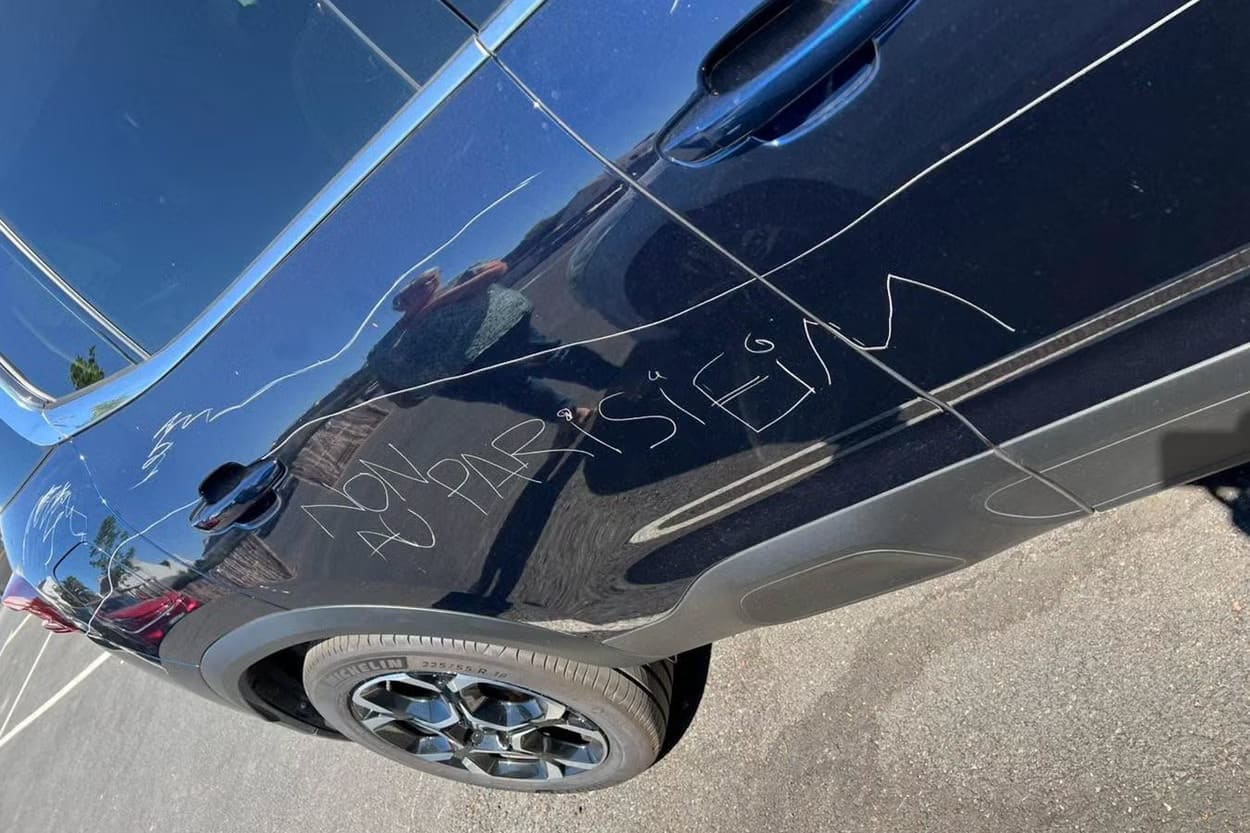
A jogger in Penmarc'h answered honestly when two cyclists asked if she was local. She wasn't. They cursed her out and rode away. Across the Finistère coast this summer, cars with Île-de-France license plates were scratched with messages like "Parigots dehors" and "Non aux Parisiens." In Saint-Suliac, graffiti appeared on private homes: "Bobos out" and "Saint-Suliac is losing its soul." One wall in Penmarc'h read, "Refugees welcome, tourists go home."
The targets were not foreign visitors. They were French citizens from Paris and other cities, arriving in Brittany for summer holidays as they have for decades. But something this year felt different, or at least louder.
Loïc Le Fur, mayor of Plobannalec-Lesconil, called the vandalism "deeply shocking" and posted his disgust on social media. David Le Berre, mayor of Penmarc'h, insisted the incidents did not reflect his town's welcoming spirit and promised swift removal of graffiti. Both condemned the hostility. Neither offered to cover repair costs for the damaged vehicles.
A Region Stretched Thin
Penmarc'h has about 5,600 year-round residents. In summer, that number swells past 17,000. Roads clog, parking vanishes, and a housing market already squeezed by second homes tightens further. Between April and September last year, Finistère logged 7.4 million overnight stays, the highest of any Brittany department, according to Tourisme Bretagne.
French tourists make up four-fifths of overnight stays in the region. Nearly a third come from greater Paris. The pattern is longstanding, but this summer brought added pressure. Heatwaves and wildfires scorched southern France, pushing more visitors north to cooler coastlines. Towns accustomed to managing predictable seasonal crowds found themselves handling more arrivals than infrastructure or goodwill could absorb.
Anne Gallo-Kerleau, president of Tourisme Bretagne, told Le Parisien that July visitor numbers were not unusually high. She suggested the backlash was not new, just more visible. A Tourisme Bretagne study found that 89 percent of Bretons consider tourism acceptable. That still leaves one in ten who do not, and it is unclear how many fall somewhere in between, tolerating tourism until it crosses an invisible line.
The Parisian Factor
Parisians have long been a punchline in France, stereotyped as rude, impatient, and out of touch with life beyond the capital. The slang term "parigot" carries contempt. The graffiti in Finistère used it deliberately. So did the vandals who scratched "Non au Parisieim" into car paint, misspelling their own insult.
The distinction between "the French" and "the Parisians" is a cultural fault line that predates modern tourism. But when housing prices climb and local services strain under seasonal demand, old stereotypes become convenient scapegoats. Second-home ownership, concentrated among wealthier urban residents, compounds resentment. Homes sit empty most of the year while locals struggle to find affordable rentals.
The hostility in Brittany is not an isolated flare-up. On the Île de Ré, leaflets reportedly circulated telling Parisians to go home. In Corsica, a dormant independence movement resurfaced this summer with a warning to second-home owners: "Do not consider yourselves safe on our national territory." The language was more threatening, the stakes higher.
Coolcations and What Comes Next
Climate patterns are shifting where people go on holiday. The Mediterranean, once the default summer destination, is increasingly too hot. Coastal towns along the Channel and Atlantic, including Brittany, are becoming "coolcation" destinations. The trend is likely to intensify.
That poses a challenge for regions that benefit economically from tourism but lack the infrastructure to handle rapid growth. Investment in roads, public transport, water systems, and affordable housing has not kept pace with demand. Neither has the social contract between residents and visitors.
The vandalism and verbal abuse in Brittany are symptoms of a mismatch. Communities that depend on tourism revenue but feel overrun by it are caught in a bind. Restricting visitors would hurt local businesses. Accommodating them without adequate planning erodes quality of life for residents.
Some towns are experimenting with visitor caps, higher taxes on second homes, and restrictions on short-term rentals. Others are improving infrastructure or promoting off-season travel. None of these solutions is simple, and none addresses the deeper question of who has the right to be somewhere and on what terms.
The Line Between Guest and Intruder
Tourism has always been a negotiation. Residents tolerate inconvenience in exchange for economic benefit. Visitors expect hospitality in exchange for their spending. When either side feels the bargain is unfair, tensions rise.
What happened in Brittany this summer crossed a line, but it also revealed where that line is drawn. The jogger in Penmarc'h was not behaving badly. She was simply not local. The cars in Plobannalec-Lesconil were parked legally. Their offense was the license plate.
The backlash was less about individual behavior than about volume and visibility. When enough outsiders arrive at once, they stop being guests and start feeling like an occupation. That perception, fair or not, is hard to reverse once it takes hold.
Brittany's mayors condemned the vandalism, but condemnation alone does not solve the underlying problem. Towns that triple in population every summer need more than goodwill. They need infrastructure, planning, and honest conversations about capacity.
For now, Parisians heading to Brittany might find themselves less welcome than they expected. Not because of anything they did, but because of how many of them showed up at once.