A 27-Year Wait
The 1999 total solar eclipse over England's south coast left an impression that lasted nearly three decades. Watching from a coastal promontory in Devon, surrounded by hundreds of strangers who cheered, screamed, and wept as darkness fell mid-morning, one observer made a promise: this wouldn't be his last eclipse.
The problem was timing. The next total solar eclipse visible from the UK won't arrive until 2090. So when northern Spain appeared in the path of totality for August 2026, the opportunity was impossible to ignore. This time, an 18-year-old daughter with plans to study science joined the trip.
The pair drove onto a ferry from Portsmouth and crossed to Santander, the Cantabrian capital sitting directly in the eclipse's path. The path of totality, roughly 180 miles wide, would sweep from Siberia through Greenland, Iceland, and into Spain and the Balearic Islands.
Scouting the Perfect Spot
They rented an apartment in Somo, a surf town just east of Santander, and spent the days before the eclipse hunting for the ideal vantage point. Should they stake out remote sea cliffs? Would Santander's coastal bluffs be mobbed? If they ventured inland to the Picos de Europa mountains, would higher elevation mean more cloud risk?
Locals offered contradictory advice. Experienced eclipse-chasers, known as umbraphiles, suggest staying mobile until the last minute in case clouds threaten the view. The car sat ready for a quick escape.
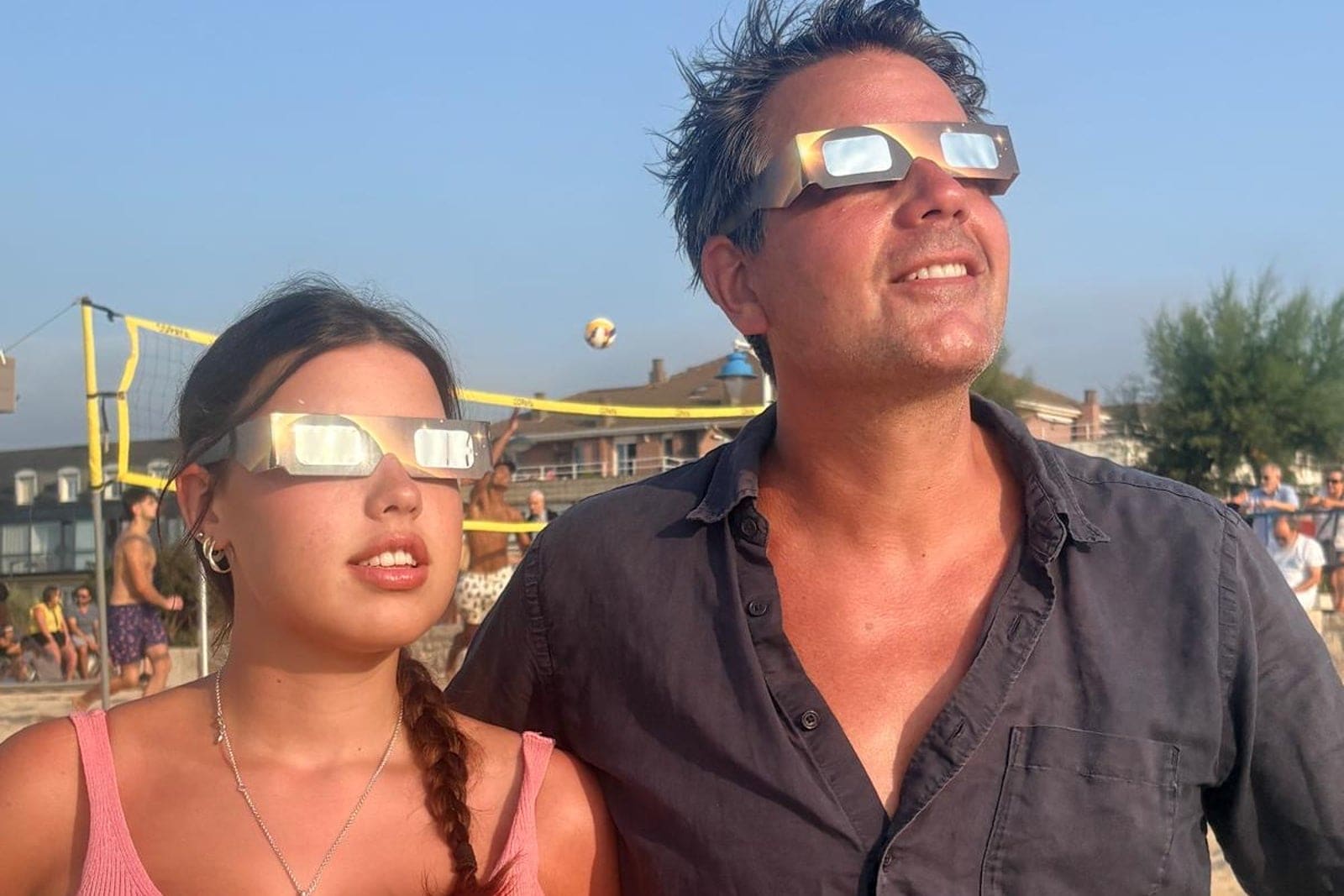
In the end, they settled on Playa de Somo, the wide beach mere steps from their apartment. They arrived an hour early, eclipse glasses in hand, and claimed a spot with a clear northwest view. To the east, hundreds perched on cliff-top beach chairs. To the west, Santander residents gathered on terraces and balconies. In the bay, dozens of boats faced the sun.
The Show Begins, Then Falters
Around 7:40 pm, the moon began its slow bite into the sun's disc. "It looks like Pac-Man," the daughter observed. The nibble grew larger, minute by minute.
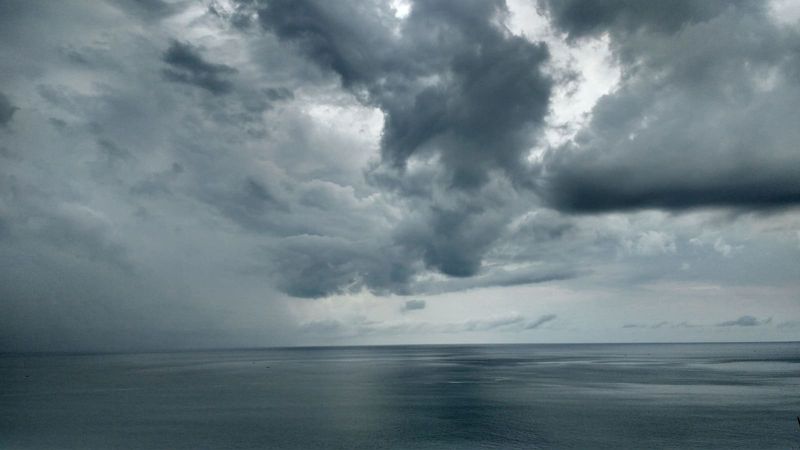
Then clouds moved in from the west.
At 8:27 pm, when the moon should have fully blocked the sun, much of the spectacle disappeared behind cloud cover. The corona glowed faintly around the moon's circumference, but other phenomena vanished. The lunar shadow racing in from the west at thousands of miles per hour? Gone. The diamond-ring effect, when the last sliver of sunlight sparkles like a gem at the moon's edge? Obscured. Baily's beads, those bright spots where sunlight streams through lunar valleys? Invisible.
What remained was still powerful. Full darkness descended. The temperature dropped. Birds fluttered in confusion. Around them, Spanish spectators clapped, cheered, and lit up their phones against the sudden night.
Totality lasted barely more than a minute. Partially hidden, it felt achingly short.
By 8:12 pm, the sun began to reappear. The show was over.
Different Reactions to the Same Sky
The experience, even diminished, carried weight. Watching the solar system's mechanics play out in real time made one observer feel both his place in the universe and his insignificance within it. Despite the cloud cover's interference, the moment felt humbling and joyous in equal measure.
His daughter had a different response. "Weirdly, I felt scared," she said. "It felt almost apocalyptic."
The disappointment stung. He'd hoped she might have an astronomical revelation, the kind that comes from witnessing something so rare it reshapes how you see the world.
The Cosmic Coincidence
Total solar eclipses occur somewhere on Earth roughly every 16 months, but any given location might wait centuries between appearances. The phenomenon relies on a remarkable cosmic accident: the sun's diameter is 400 times the moon's, and the sun sits, on average, 400 times farther from Earth than the moon. This makes both objects appear the same size in our sky, allowing the moon to block the sun precisely.
There's a second coincidence at play. Sentient beings exist to witness this alignment at exactly the right moment in Earth's history. The moon's orbit drifts away from Earth by a few centimeters each year. Millions of years from now, it will be too distant to fully cover the sun. Right now, in Earth's 4.5-billion-year timeline, conditions are perfect.
Another Chance
In August 2027, a total solar eclipse will cross southern Spain and North Africa. When it reaches Egypt, totality will last almost six and a half minutes, making it the longest land-based eclipse of the entire 21st century.
The father and daughter, still smarting from the cloud cover in Cantabria, are already planning to book tickets to Egypt.
He's promised her the next one will be the big one.