A New Player on the Track
For more than thirty years, one operator has controlled passenger rail through the Channel Tunnel. That era is ending. Ferrovie dello Stato Italiane, Italy's state railway group, has ordered 19 high-speed trains from Hitachi Rail in a deal worth roughly €2 billion, according to FS Group. The trains will support a new Paris-London service set to start in 2029, alongside expanded domestic French routes.
The order marks the most concrete step yet by a competitor to enter the cross-Channel market. While others have announced intentions, FS Group is now committed to hardware and a timeline. Gianpiero Strisciuglio, CEO of FS, described the trains and a new maintenance facility near Paris as central to what the company calls the "Metro of Europe," a vision of tighter high-speed links across the continent.
What the Trains Will Offer
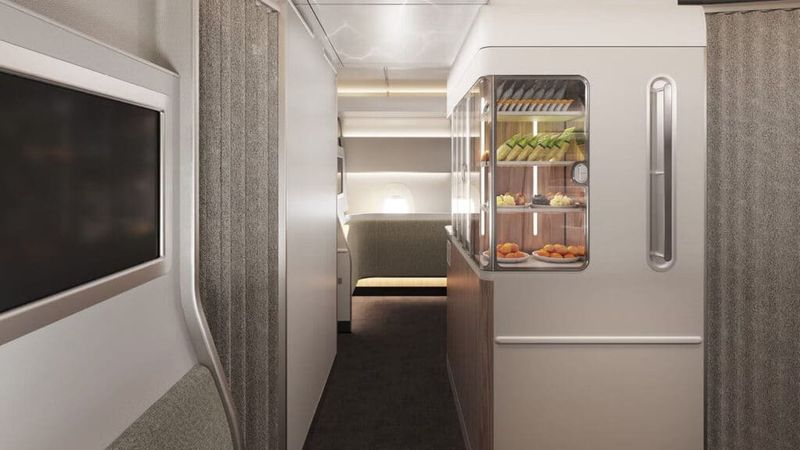
The new rolling stock will feature internet speeds up to 10 gigabits per second, a bistro-style food service, and interiors designed for long-distance comfort. Those details matter in a market where the incumbent has set expectations for onboard experience. Passengers crossing the Channel typically spend just over two hours on the train, but they expect reliable connectivity and decent food options during that window.
FS Group will also use the trains to increase frequency on key French domestic routes, including Paris to Lyon and Paris to Marseille. That dual-market strategy spreads the financial risk and builds volume on both sides of the border.
The Bigger Picture
The FS announcement follows earlier noise from Virgin Trains, which said in late 2025 it was seeking £700 million in investment to challenge the status quo. Sir Richard Branson framed the effort as part of a pattern: his group has entered air, cruise, and rail markets before, often shaking up pricing and service standards. Whether Virgin secures the funding and follows through remains to be seen, but the stated intent adds pressure.
Why now? Regulatory changes in recent years have opened access to the tunnel for additional operators, though the technical and financial barriers remain high. Trains must meet strict safety standards, and operators need slots at St Pancras in London and Gare du Nord in Paris, both of which are constrained. The upfront cost of purchasing trains and securing maintenance facilities is substantial, which is why new entrants have been slow to materialize despite the regulatory opening.
There is also the question of demand. Cross-Channel rail has grown steadily, but it competes with budget airlines on price and convenience. A second or third operator could lower fares through competition, potentially pulling travelers away from short-haul flights. Or it could lead to a fight for market share that squeezes margins without expanding the total pie. The outcome depends on how much latent demand exists and how aggressively the new players price their tickets.
What It Means for Travelers
More operators should mean more choice. In theory, competition drives down prices, increases frequency, and improves service quality. The challenge is whether the market can support multiple players without one or more pulling back. The Channel Tunnel has capacity limits, and station slots are finite. If FS and Virgin both launch services, along with the current operator, scheduling will get complicated.
Passengers who have paid premium fares for cross-Channel travel for years will watch closely to see whether the new entrants deliver on promises of lower prices and better connectivity. The 2029 launch date gives FS Group three years to finalize operations, train staff, and negotiate the complex web of access rights and safety certifications required to run international services through the tunnel.
For now, the monopoly that has defined cross-Channel rail since 1994 is on notice. Whether the new competition reshapes the market or simply adds another option remains to be seen, but the landscape is shifting.