A Different Yorkshire Landscape
The Yorkshire Wolds roll through East Yorkshire in soft, chalky waves, a landscape that feels worlds away from the rugged moorlands and dales that define the county's reputation. This is England's chalk country, where undulating hills flatten into agricultural plains under broad skies, and where the land meets the North Sea in a line of powdery white cliffs. In summer, puffins and kittiwakes claim these edges. The rest of the year, they belong mostly to wind and solitude.
East Yorkshire - historically known as the East Riding, from the Old Norse term for a third - remains one of England's quieter corners. While the Brontë sisters pull visitors west and the Peak District anchors the south, the East Riding draws a different kind of traveler: those willing to trade famous landmarks for footpaths that see more sheep than hikers, and a port city that has spent the past decade redefining itself.
Hull's Reinvention
Hull has worked hard to shake off its reputation. After years of appearing on "worst places to live" lists, the city leaned into culture and came out the other side with a new identity. Its designation as UK City of Culture in 2017 accelerated a transformation already underway, and the seaport has since attracted film crews - earning it the nickname Hullywood.
The city center is compact and walkable, with wide pedestrianized streets and a waterfront setting that gives it breathing room. Most museums are free. The Street Life Museum recreates 1940s urban life, while the Victorian Hepworth Arcade shelters independent bookshops and vintage stores. The Deep, an aquarium shaped like a ship's prow, sits where the River Hull meets the Humber Estuary. Its design by Terry Farrell is best appreciated from The Minerva, a pub with a beer garden that faces the water.
In the Fruit Market district, old dockside warehouses now house independent restaurants, cafés, galleries, and street art. Thieving Harry's serves lunch and cake in a space that nods to Hull's industrial past while embracing a creative present. The city isn't trying to compete with York or Leeds. It has carved out something smaller, scrappier, and more intimate.
Walking the Wolds
The Yorkshire Wolds Way runs 79 miles from Hessle, on the banks of the Humber, to the coastal town of Filey. It is one of England's more accessible long-distance trails, with minimal elevation gain and lodges spaced throughout. The aerobic challenge is modest, but the trail delivers something rarer: solitude. You can walk for miles without encountering another person, moving through pastoral scenes that feel unchanged for decades.
For those with less time, shorter loops offer a taste of the landscape. The Fridaythorpe loop covers seven miles of rolling farmland. The Wharram Percy circular, a 2.7-mile walk, crosses into North Yorkshire to reach an abandoned medieval village, its foundations exposed by archaeological digs. The site includes remnants of two manor houses, peasant dwellings, and an 11th-century stone church, all believed to have been depopulated during the Black Death.
The Wold Rangers Way, a 44-mile circuit starting and ending in Driffield, traces the routes of itinerant farm workers who moved through the region in the 19th and 20th centuries seeking seasonal work. Named sections like the Horsehair Jack Trod (nine miles) and Mad Halifax (22 miles) honor the nomads who first walked these paths. Completing the full circuit in a day is possible, though ambitious. Driffield, the self-styled Capital of the Wolds, offers a base at The Highfield, a boutique hotel that welcomes muddy boots and Sunday best with equal ease.
Puffins and Chalk Cliffs
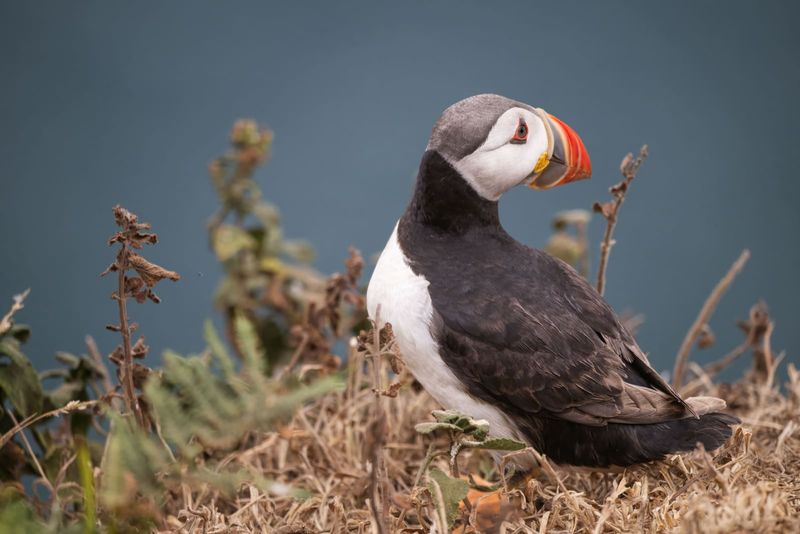
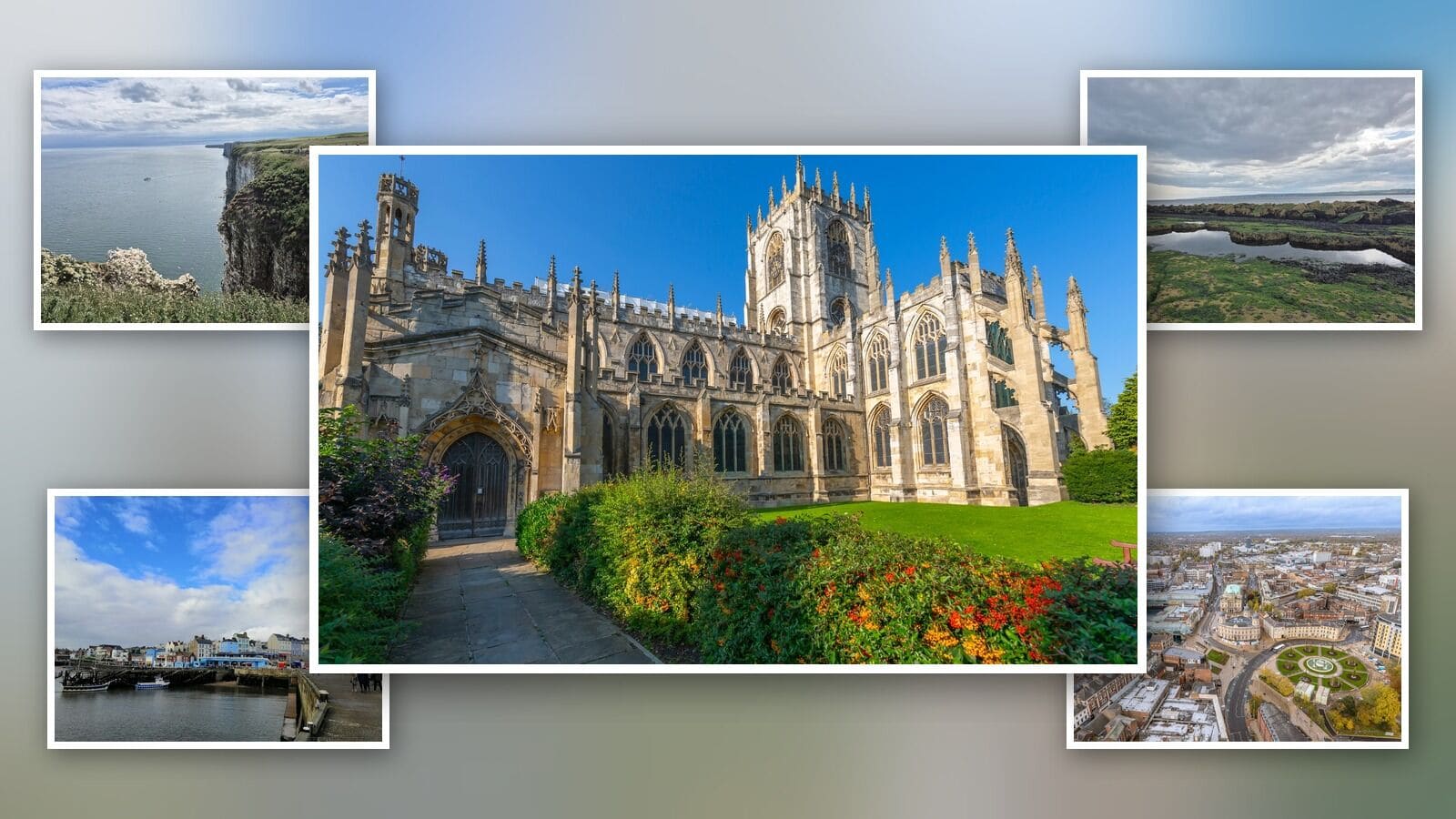
Flamborough Head, a chalk promontory topped with a lighthouse built from chalk rubble, marks the northernmost point of the East Riding's 50-mile coastline. From here, a 12-mile out-and-back walk leads to Bempton Cliffs, where seabirds nest in summer. Puffins arrive in May and June, though they are smaller and harder to spot than visitors expect. The reserve, open year-round, stations volunteers at lookouts to help locate the birds. Binoculars are available for rent, and telescopes are fixed at key vantage points.
The 30-minute walk from Bempton Station to the reserve crosses meadows with views over the sea. Late fall and winter visits trade puffins for solitude and wind.
Bridlington, a traditional seaside resort, offers the full British coastal experience: a busy harbor, fish and chip kiosks, and shorefront amusements. A short walk along the headland leads to Sewerby Hall, a Grade I-listed house with an exhibit dedicated to Amy Johnson, the Hull-born aviator who became the first woman to fly solo from the UK to Australia. Her story is a point of local pride.
Filey, technically in North Yorkshire but culturally adopted by the East Riding, presents a more polished version of the seaside town. Edwardian architecture lines a broad sandy beach that ends at Filey Brigg, a rocky peninsula accessible at low tide. The place feels remote, almost prehistoric - the kind of setting where spotting a Plesiosaur wouldn't seem entirely out of place.
Beverley's Market Town Charm
Beverley centers on its Gothic minster, a scaled-down echo of York without the tourist crush. The town was granted market status in the medieval period, giving it the legal right to hold regular markets - a prototype for modern commerce. Wednesdays and Saturdays still bring farmers, producers, and artisans to trade goods.
Beverley Westwood, a medieval common land on the edge of town, preserves the link between rural and urban life. Residents once grazed livestock here for free, and cattle still wander the park today. The town's food scene mixes British and global cuisine. The Westwood serves seasonal British fare, while the Beverley Arms Hotel, a restored coaching inn, offers four-poster beds and a sense of history.
St. Mary's Church, one of Beverley's historic sites, adds another layer to the town's medieval character. While Malton holds the title of Yorkshire's food capital, Beverley makes a strong case for itself.
Getting There and Around
The East Riding sits slightly apart from the main rail line connecting London, Leeds, York, and Edinburgh, but Northern Rail links Hull with these cities and Sheffield. Round Robin and North East Rover tickets offer discounted multi-day travel within the region and are sold at train stations. The Northern Explorer Ticket allows up to four days of hop-on, hop-off travel and can be purchased online or via app.
Train and walking suffice for most of the East Riding, though car rental may suit families or those aiming for smaller villages. The region feels removed from the rest of Yorkshire, but that distance is part of its appeal. The late artist David Hockney found inspiration in these landscapes, and they continue to offer something increasingly rare: space, quiet, and a chance to see a side of England that most visitors overlook.