The Flexibility Window Has Closed
Schengen zone countries can no longer pause the biometric Entry/Exit System at their borders, even when passenger queues spiral out of control. The temporary suspension option, introduced to manage teething problems during the initial rollout, ended in September 2026. All member states must now enforce fingerprint and facial scans for travellers from outside the zone, including British citizens, regardless of congestion levels.
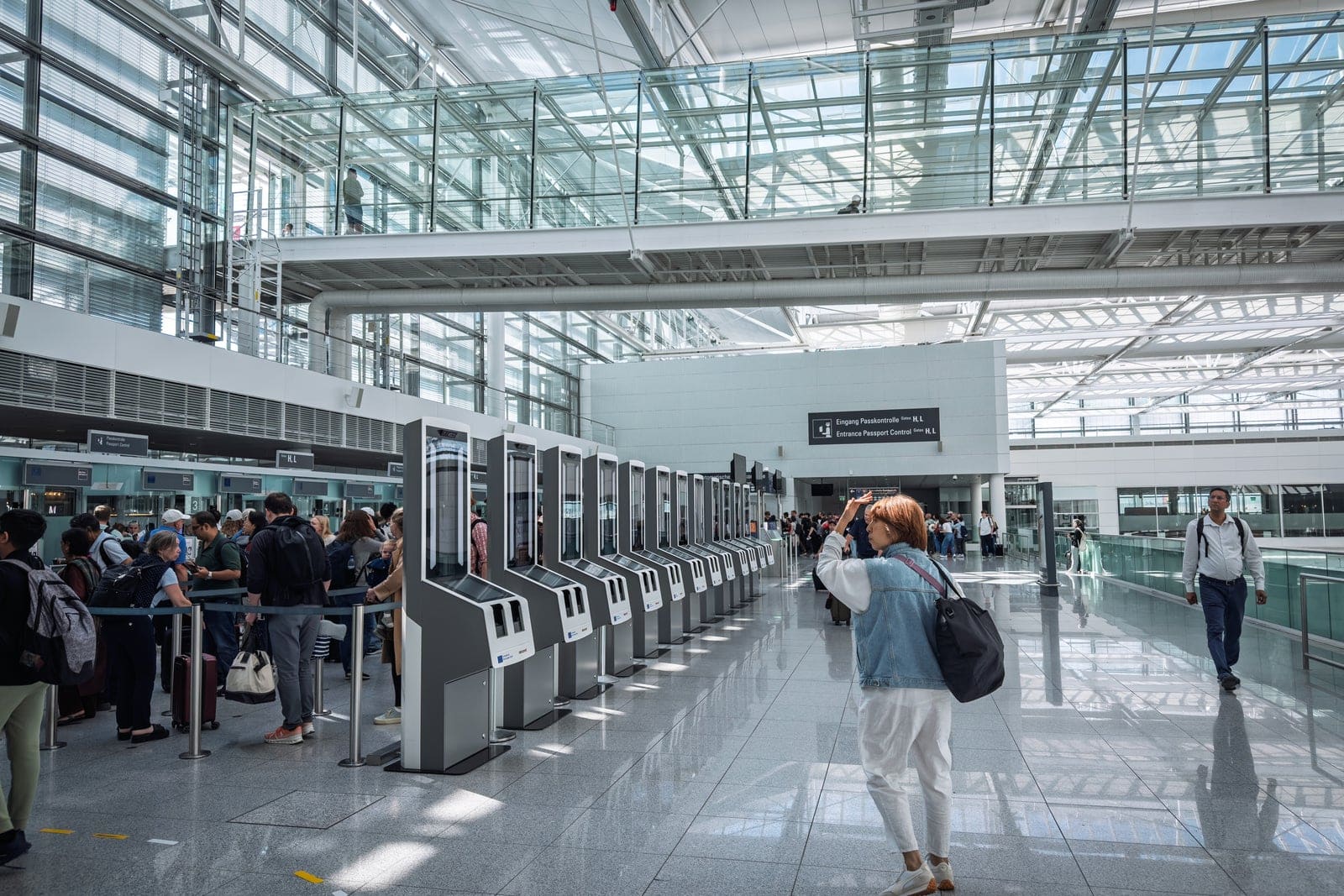
The change arrives as the system completes its first year. EES began a phased introduction in October 2025 and expanded across the Schengen area in April 2026. First-time visitors register biometric data at entry and exit points; subsequent crossings require quick verification scans. The process has demanded new kiosks, equipment installations, and staff training at hundreds of border posts.
During July 2026, wait times at certain airports stretched to five hours during peak periods, according to Airports Council International. Portuguese airports including Lisbon, Faro, and Porto reportedly used the suspension provision this summer, though comprehensive data on which locations paused the system and for how long remains unavailable.
Industry Calls for Extended Grace Period
Travel industry groups argue that removing the suspension option is premature. Thomas Reynaert, head of external affairs at the International Air Transport Association, said the flexibility measures should remain until at least the end of the winter season. IATA supports the policy goals behind EES but contends that operational issues persist across Europe, including unstable system performance and incomplete deployment of supporting infrastructure.
The organisation has called for closer coordination between the European Commission, member states, airports, airlines, and border authorities. One suggested improvement involves encouraging travellers to complete pre-registration procedures remotely, reducing the time each person spends at border control.
In early July 2026, the European branch of ACI wrote to European Commission president Ursula von der Leyen, describing EES as creating "unsustainable pressure" and requesting intervention before conditions deteriorate further. The letter asked whether border control authorities could retain flexibility to suspend procedures during exceptional circumstances beyond September. Ryanair separately requested an extension of the suspension rule into early 2027, arguing that airports and border staff need more time to repair malfunctioning kiosks, boost staffing levels, and stabilise operations.
What This Means for Travellers
The rule change removes a safety valve that allowed countries to revert to manual passport checks when biometric systems became overwhelmed. Without that option, delays that previously triggered a suspension will now have to be absorbed through longer queues or operational adjustments at individual airports.
Frontex director Uku Särekanno stated earlier that there was no intention to ease EES requirements beyond September, signalling that enforcement would become uniform. The lack of visible data makes it difficult to assess how widespread the use of suspensions was this summer or which airports might face the most pressure going forward.
For travellers, the immediate impact depends on how well individual airports have adapted their infrastructure and staffing since the system launched. Remote pre-registration, where available, may offer a way to shorten processing times. However, the industry consensus suggests that significant operational gaps remain, and the removal of flexibility could translate into longer waits during busy travel periods this autumn and winter.
The system's design assumes that once most travellers have completed their initial registration, verification scans will be fast enough to prevent bottlenecks. Whether that assumption holds under real-world conditions, particularly at high-traffic entry points, will become clearer in the months ahead.