Salt, Oysters, and the Taste of Limestone
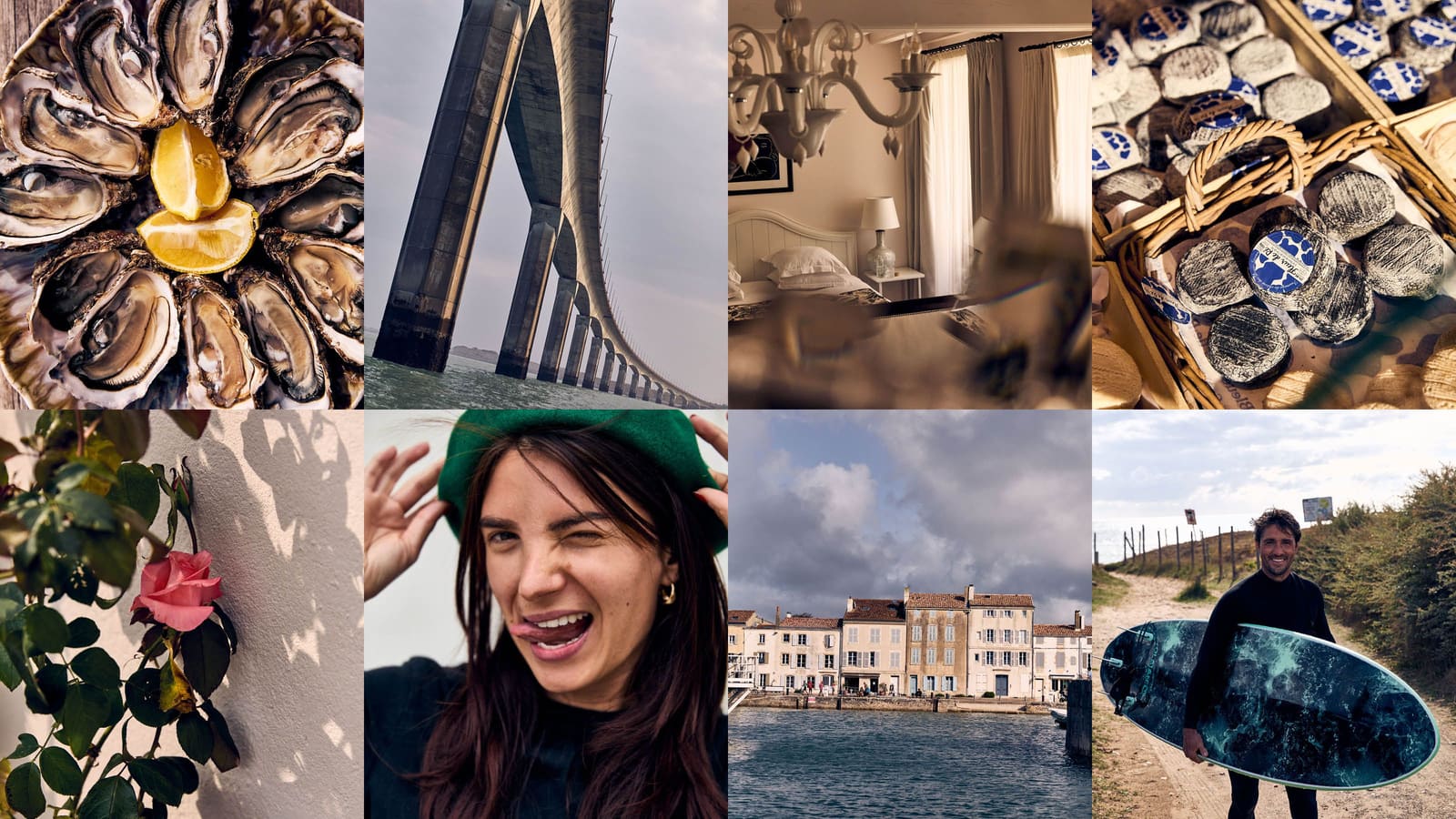
A half-dozen oysters on the Charente islands costs a few euros. Waiters slide them across the counter, and diners tip them back with a quick chew, briny and cold. It's the kind of transaction that happens dozens of times a day at shacks along the coast of Ré, Oléron, and Aix, three islands in the Atlantic a few miles off southwest France. The oyster beds here are vast, tended by tractors that lumber through tidal flats with sacks of harvest. The product is world-class, and the price reflects an economy where seafood isn't a luxury but a staple.
The food culture on these islands runs deeper than the oysters, though they're the most visible draw. Salt marshes stretch for miles, worked by paludiers using wooden hand tools in a tradition that dates to the 11th century. White potatoes, grown in limestone-rich soil and fertilized with seaweed, have a flavor distinct enough that locals talk about them unprompted. At the Saturday market in La Flotte on Île de Ré, vendors pile hazelnuts still dewy in their casings next to pork loins roasted with mustard and egg flans caramelized dark as tar. It's a food system shaped by geology, climate, and trade routes that made this region politically vital to France for centuries.
The White Gold That Built La Rochelle
Salt made this archipelago wealthy. By the 17th century, La Rochelle, the mainland city that serves as the gateway to the islands, was one of France's most important ports, and salt was the reason. The product harvested here, known as fleur de sel, forms a thin film on the surface of salt pans and dries light as sea spray. It's high in magnesium and calcium, faintly sweet, and amplifies flavor without overpowering it. The coarser salt at the bottom of the pans, metallic grey and briny, is used for preserving.
Paludiers still work the marshes by hand. On Oléron, a six-mile loop around the salt pans can be cycled, though high season brings crowded bike paths and occasional traffic jams of tandems. The marshes themselves are mesmerizing, flat expanses where salicornia, a type of marsh samphire, turns rust-colored in late summer. The work is physical and seasonal. One paludier near La Couarde-sur-Mer, hands tanned and salt-streaked after a summer of harvest, explained the difference between the grey salt and the fleur de sel, holding up a handful of each. The coarser variety is sold for preservation; the fine white crystals go to restaurants and home cooks willing to pay for the subtlety.
Potatoes, Mushrooms, and the Market at La Flotte
The market in La Flotte runs all week, unlike most island markets that operate only on weekends. Early on a Saturday, stalls fill with produce that reflects the islands' microclimate and soil. Morgan Cerceau, a vendor who sells pitted-cap mushrooms, also surfs at Les Grenettes beach on the south side of Ré. He lives on the island year-round with his young family, drawn by the lack of traffic lights, billboards, and high-rise buildings. The lifestyle is a trade-off, he admits. Winter is quiet, tourism drops, and income follows. But the rhythm of the place, what the Romans called Terra Maritimensis, or Land of the Sea, keeps him there.
The white potatoes at La Flotte are a case study in terroir. They're harvested before full maturity, and the limestone in the soil, combined with seaweed fertilizer, gives them a flavor that's both earthy and faintly mineral. Cooked, the skins come away like silk. It's the kind of ingredient that doesn't need much, a quality that defines the food here. Simplicity isn't a style choice; it's a response to raw materials that don't require embellishment.
Eels, snails, and figs appear at the market depending on the season. The egg flans, caramelized to near-black, are a local specialty. So is Pineau des Charentes, an aperitif made from grape must and cognac, tasting of candied peel and yellow-fleshed peaches. It's sweet but sharp, a combination that mirrors the islands themselves: gentle in climate, bracing in flavor.
Oyster Shacks and the Economics of Abundance
The oyster shacks that dot the coast are casual operations, often family-run, selling directly to visitors who eat standing up or at picnic tables. The oysters come from beds visible at low tide, and the freshness is a given. On Oléron, the nickname La Lumineuse, or "the radiant one," reflects the exceptional sunshine the island receives, which affects both the oysters and the salt. The clarity of light after a storm is sharp enough to make the limestone of Fort Boyard, a 65-foot structure rising from a sandbank, look almost white.
The port of Boyardville on Oléron is noisy with oyster tractors and the smell of barnacles mixed with honeysuckle from terrace walls. It's a working port, not a scenic one, though the two aren't mutually exclusive here. The islands are popular with Parisians, especially Ré, which is reachable by a fast train from Montparnasse to La Rochelle in two and a half hours. The bridge to Ré has a toll; the one to Oléron does not. Île d'Aix, the smallest, is car-free and accessible only by boat. Its population is around 200, making it one of the smallest communes in France.
The Tension Between Tourism and Tradition
The islands jump with life from May onward. Crowds cross the bridges, campsites fill, and the bike paths become congested. The tourism is egalitarian in the sense that it spans income levels. There are well-run campsites alongside boutique hotels, and the oyster shacks serve everyone at the same price. But the seasonal influx puts pressure on infrastructure and labor. Vendors like Cerceau rely on summer income to carry them through quieter months, and the balance between preserving the islands' character and accommodating visitors is a recurring conversation.
The food markets and oyster shacks are part of what makes the islands accessible. A meal of oysters, bread, and white wine can be had for under twenty euros. The salt, sold at markets and specialty shops, is affordable enough to be an everyday ingredient. The Pineau des Charentes is inexpensive compared to imported aperitifs. The food culture here isn't built on exclusivity, even as property prices on Ré and Oléron have risen with demand from Paris.
What the Romans Knew
The Romans called this region Land of the Sea, and the name still fits. The islands are flat, fringed in pine forests and sand the color of apricots. The climate is mild and oceanic, and the botany is sandy. The villages, originally built for merchants, have stone-carved facades with swags and basket-handle arches. The architecture reflects the wealth that salt and trade brought to the region, and the food reflects the resources that made that wealth possible.
The oyster beds, the salt marshes, the limestone-rich soil: these are the constants. The tourism is seasonal, the population fluctuates, but the food remains rooted in what the land and sea produce. It's a food culture shaped by geography and maintained by people who see the work as worth the trade-offs. No traffic lights, no billboards, no high buildings. Just oysters, salt, and potatoes that taste like the place they come from.