A New Essential at the Acropolis
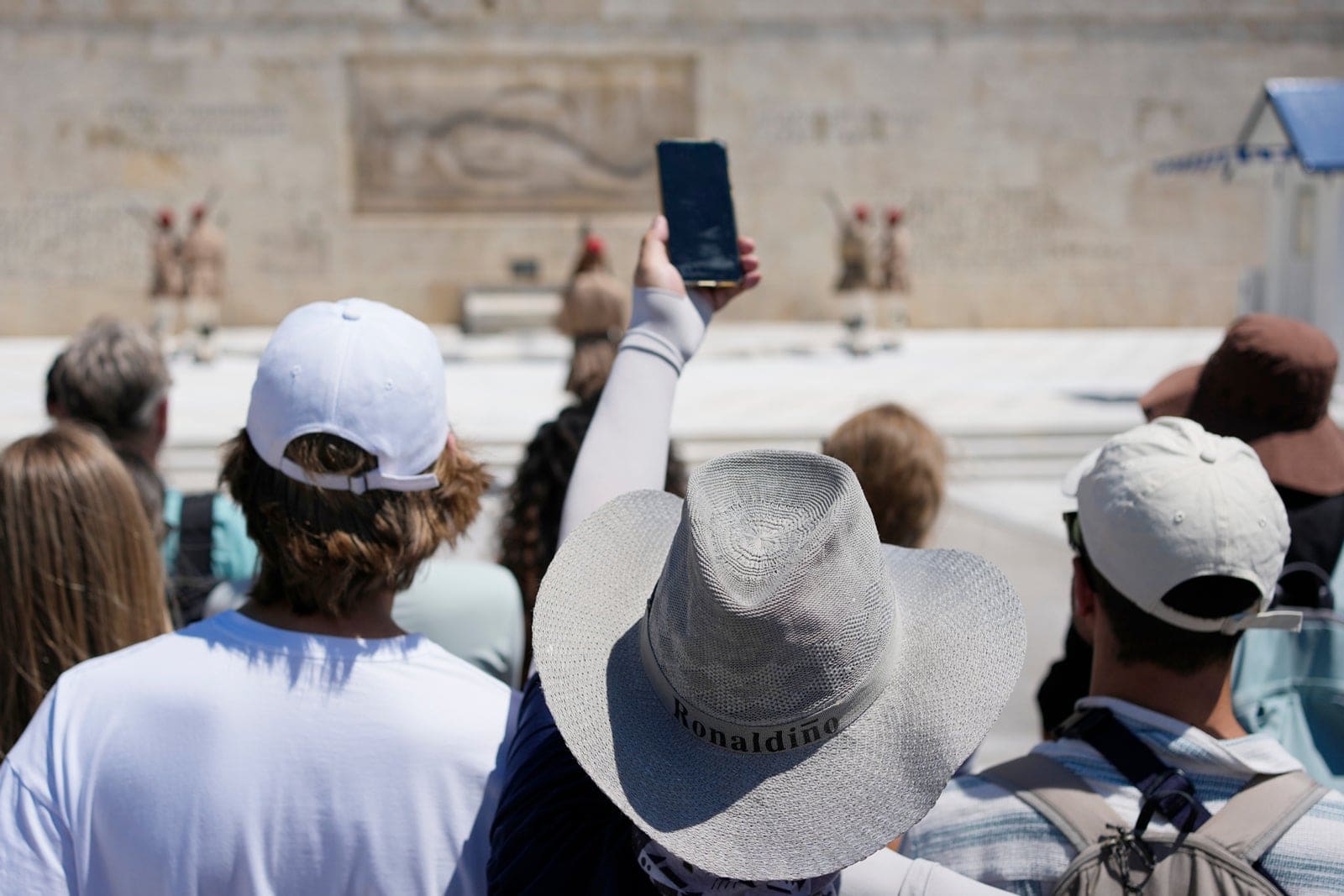
Walk through central Athens this summer and you'll notice something different: hat racks everywhere. Outside kiosks and souvenir shops, straw boaters, Panama hats, baseball caps, and bucket hats sit stacked in outdoor displays, beckoning tourists before they make the climb to the Acropolis.
The shift is not about fashion. It reflects a convergence of two forces reshaping how people experience Athens: record tourism numbers and intensifying heat. The Acropolis drew roughly 4.6 million visitors in 2025, according to Greek tourism data, with sightseers spending hours exposed to temperatures regularly climbing into the mid-30s Celsius. Shade is scarce on the marble terraces, and the sun is unrelenting.
At the base of the monument, even a carriage horse sported a brown bucket hat, modified with ear holes. The image captures the mood: protection from the sun has become a shared priority, crossing species and fashion sensibilities alike.
Jack Yosif, an Australian tourist wearing a black baseball cap, put it plainly while ascending the hill. He was already sunburned despite precautions. The growing awareness of sun exposure, he noted, has made headwear less of an oddity and more of a practical choice.
Demand Meets Necessity
Greece welcomed 38 million visitors in the most recent year for which data is available, a record figure. The combination of extreme heat and high demand for heritage sites means not everyone can visit during the cooler morning hours. Midday visits are common, and they come with risk.
Greek health organizations have welcomed the increased awareness of ultraviolet exposure and heat stroke dangers. Red Cross volunteers stationed at the Acropolis now distribute kits containing sunscreen, water, information leaflets, and red caps. The effort signals recognition that tourism infrastructure must adapt to changing climate realities.
On Syntagma Square, kiosk owner Konstantinos Mallios has watched hat sales rise steadily in recent years. His inventory ranges from budget options at 6 euros to stylish and souvenir models priced up to 20 euros. Elsewhere, vendors offer semi-disposable headgear made from compressed paper pulp, catering to travelers who need immediate, low-cost solutions.
The market has also opened space for artisans. In her basement workshop, hatmaker Lisa Sarigiannidou uses century-old presses and molds to shape straw braids into boaters within minutes. Her creations start at around 50 euros, with elaborate designs exceeding 100 euros.
Sarigiannidou, trained by her hatmaker father, has observed a behavioral shift. In the past, young women would try on a hat and laugh at their reflection. Now they approach the mirror seriously, often wearing their purchase straight out the door. The change reflects a broader cultural acceptance: hats are no longer novelty items but practical gear.
The Broader Context
The rising prominence of hats in Athens sits within a larger pattern of adaptation to climate pressures. Greece has endured devastating wildfire seasons in recent summers, with debates intensifying around power network safety. Cables exposed to extreme heat and strong winds, particularly in rural areas that have not seen rain in months, present ongoing risks.
Tourism, meanwhile, shows no sign of slowing. The economic benefits are significant, but the physical toll on both visitors and infrastructure is becoming harder to ignore. Heritage sites designed for ancient climates now host millions under conditions their architects never anticipated.
For travelers, the calculus is straightforward. A hat is a small investment against heat exhaustion, sunburn, and the risk of heat stroke. For vendors and local businesses, the trend represents both opportunity and necessity. And for Athens itself, the ubiquity of headwear is a visible marker of how climate and tourism are reshaping daily life in one of the world's oldest cities.
The souvenir of choice in Athens is no longer just a postcard or a replica statue. It is something simpler, more immediate, and increasingly essential: a hat that offers a sliver of relief under an unforgiving sky.