A Region That Swallows Traffic
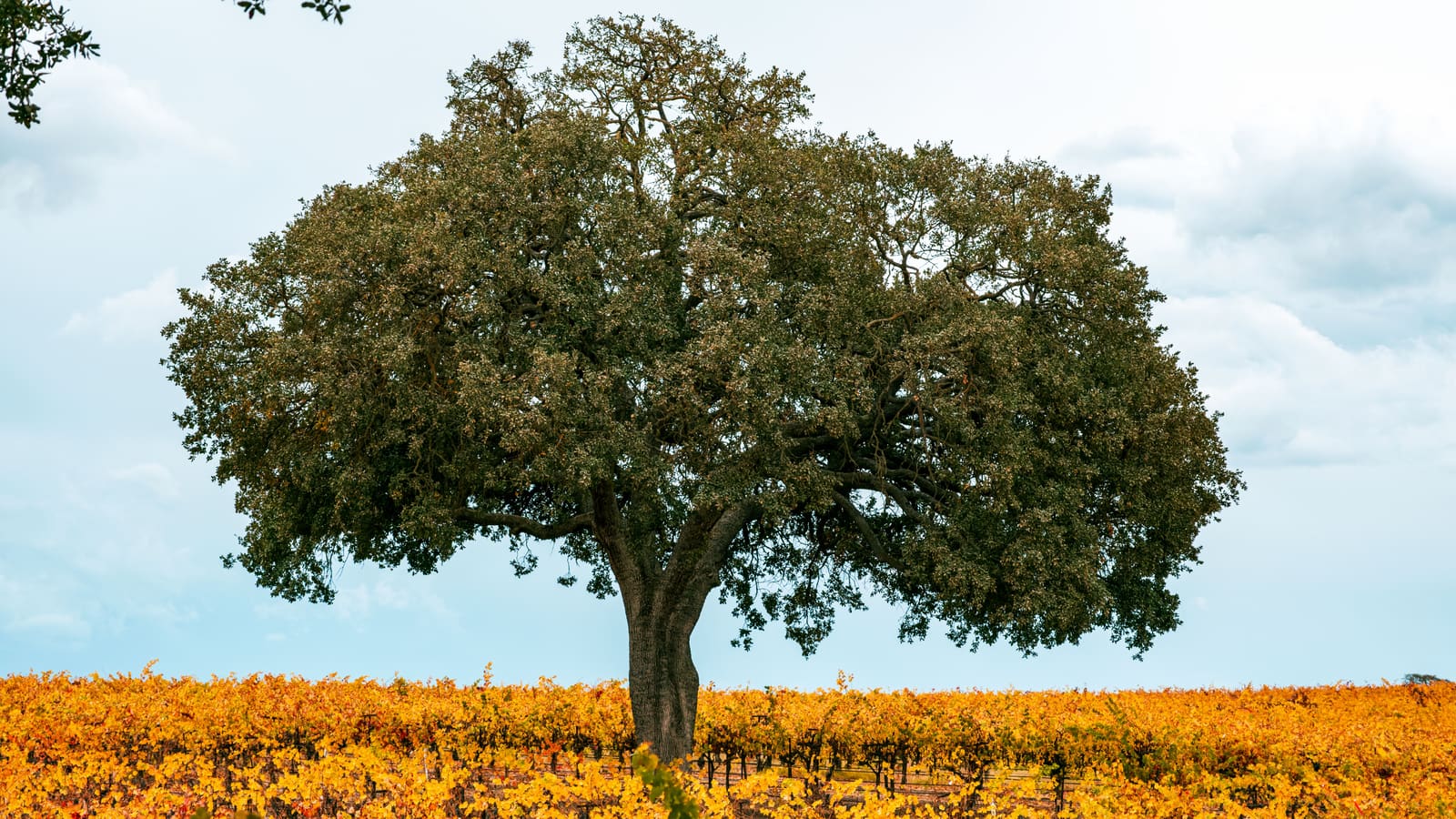
Leave Lisbon heading south and the change arrives gradually. Lanes disappear, pines crowd the edges, cork oaks punctuate dry fields. Within an hour the Alentejo begins: roughly a third of Portugal's territory, home to barely five per cent of its residents. The numbers hint at what the roads confirm: this is space without the usual accompaniment of tourist infrastructure.
The region carries layers of occupation. Romans laid down roads and planted vines. Muslim rule followed for centuries, leaving geometry in town layouts and irrigation knowledge. Christian forces pushed south during the Reconquista, building fortress towns that still crown hilltops. Later, Portugal's Estado Novo dictatorship isolated the country for nearly half a century until the 1974 Carnation Revolution; even Coca-Cola was kept out until 1977. The Alentejo absorbed all of it, and the evidence persists in stone, food and farming methods that elsewhere vanished generations ago.
Where Industry Meets Hospitality
Viana de Alentejo presents an unlikely first impression. Moagem Industrial Lodge occupies a former grain mill, its concrete and steel left exposed. A seven-metre chimney rises above the open kitchen. The pool resembles an oversized stone trough. Camouflage netting shades outdoor tables. Young staff in black shirts and orange braces move between diners, and the mood stays casual despite the architectural drama.
Chef Pedro Dias works over fire at the attached restaurant, applying contemporary technique to regional staples. A watermelon gazpacho arrives cold and sharp, layered with raw onion and tomato water. Bread comes with aggressively green olive oil pressed nearby. A croquette gains edge from sherry vinegar. The menu reads as a statement: old ingredients, new thinking, industrial bones repurposed.
Winemaking in Two Registers
Near Reguengos de Monsaraz, the Ervideira winery runs to scale. Stainless-steel fermentation tanks stand like sculptures; oak barrels line the cellar. Duarte Leal da Costa, fourth-generation winemaker, guides tastings with the intensity of someone presenting family members. He occasionally conducts them wearing dark glasses, removing visual cues that influence palate. The estate manages 120 hectares of vines and 36 of olives, but the history carries weight. The 1974 revolution brought ruin: vineyards destroyed, Duarte's grandfather dead from a heart attack shortly after. Rebuilding became inheritance. Today the winery bottles thirty grape varieties and ages 30,000 bottles underwater in a reservoir thirty metres down.
A few kilometres away, Teresa Caeiro works in a different tradition entirely. At 32, she is Portugal's first woman to lead talha winemaking, fermenting grapes in enormous clay jars. Grapes arrive at night, crushed and piped directly into the vessels. No stainless steel, no temperature control. Just clay, time and fermentation. Her young daughter has already participated in a vintage. The contrast with Ervideira is stark: one ambitious and medium-scale, the other elemental and intimate. Both aim to express the same landscape.
Évora's Layered Centre
After kilometres of emptiness, Évora feels dense. Roman temple, medieval churches, ducal palace, convents and tiled façades pack the old centre. One aristocratic palace has remained with the same family for roughly six centuries, history lived rather than merely displayed. Cork appears everywhere as handbag, hat, notebook, the landscape converted into souvenir.
The city's restaurants split between eras. Tua Madre serves Cantabrian anchovies on focaccia, tagliatelle enriched with lard from a traditional smoker, chocolate mousse topped with olive oil and pork scratching. The combinations sound improbable but hold together. Fialho, down an alley, offers the counterpoint: black waistcoats, white tablecloths, serious cutlery. Smoked ham, codfish carpaccio, steak and cod arrive with the gravity of ritual. One restaurant looks forward, the other back. Both belong to the city.
Europe's Largest Reservoir
Alqueva spreads across the southern Alentejo like a blue sheet laid over dry hills. Europe's largest artificial lake, shared with Spain, stretches for roughly 700 kilometres of shoreline. From a pontoon boat the scale becomes clear: hills roll away uninterrupted, villages retreat into haze, heat rises off the water. A man-made beach offers conventional swimming; the real luxury is the absence of other people.
That emptiness takes polished form at Quinta do Paral, a wine hotel surrounded by its own vines. A grape-covered tunnel leads towards rooms. Waterways cross courtyards. Bougainvillea climbs white and blue walls. Red-tiled floors, stone benches and fountains create Mediterranean theatre. The pool sits beneath oversized umbrellas; towels carry embroidered gold initials. Beyond the grounds, vineyards stretch in every direction. The food is assured: sea bream, samphire, octopus amuse-bouche, accompanied by the estate's own bottles. This is the Alentejo refined rather than reinvented, luxury built around the vineyard.
Craft With International Ambition
The Reguengos Blanket factory keeps handloom weaving alive by treating it as design rather than nostalgia. Carpets, rugs, curtains and lampshades emerge from old looms but with an international eye. The space functions as showroom, studio and working factory. Customers arrive from abroad as often as locally. It is a characteristic regional contradiction: ancient technique, contemporary market.
São Lourenço do Barrocal, just outside Monsaraz, combines elegant design with agricultural reality. Some of its olive trees are said to be 2,000 years old; the light and scale feel almost African. An olive-oil tasting, paired with the estate's wine, becomes another way of reading the landscape. Above it, Monsaraz gathers its whitewashed houses and medieval walls around a hilltop castle. The Alqueva reservoir spreads below. At sunset the village seems suspended between earth and sky.
Medieval Heights
The road climbs for more than two hours towards Marvão, and the altitude becomes improbable. The fortress town sits high in the São Mamede hills, tenth-century walls following the mountain ridge, cobbled streets climbing between whitewashed houses towards the castle. Hotel do Museu strips luxury back: the view stretches across olive groves, pines, fields and distant blue hills, with almost nobody visible. Then the food arrives: homemade bread with butter and salt flakes, basil sorbet, dark chocolate, hazelnut biscuit, pineapple infusion steeped for four days, cherry liqueur. The chef trained under a French Michelin-starred chef in Japan and developed his approach in Sweden. The cooking is serious; the setting makes it memorable.
Only around forty residents live in Marvão. Roads are narrow and cobbled, restaurants few. The sensation is less of arrival than of stumbling upon something. That feeling runs through the Alentejo: a vineyard behind a wall, a village café, a cork oak, an old estate, a restaurant someone mentions in passing. The country hotels share the appeal. They are not imitating international resorts; their pleasure lies in scale, character and the people running them.
What makes the Alentejo seductive is not simply beauty. It is the combination of space, history embedded in daily life and a food culture still rooted in place. The region remains what much of southern Europe was before crowds arrived.