Beyond the Golden Route
Japan's tourism industry has long leaned on a familiar corridor: Tokyo, Kyoto, perhaps Osaka. Yet a growing segment of visitors now skips the standard loop in favour of physically demanding itineraries that thread through alpine valleys, coastal cycling paths, and temple routes that require stamina as much as curiosity.
Small-group adventure operators are building itineraries around multi-day hiking, river rafting, and cycling tours that cover terrain most international tourists never see. The shift reflects both supply and demand: travellers looking for something other than shrines and shopping districts, and regions outside the main tourist hubs eager to attract visitors with different spending patterns and longer stays.
One such route runs along the Shimanami Kaido, a 70-kilometre cycling path that links Japan's main island of Honshu to Shikoku via a series of bridges across the Seto Inland Sea. The route passes fishing villages, citrus orchards, and remnants of feudal-era fortifications. It is not a wilderness experience, but it does offer a version of Japan that exists at a slower tempo, where interaction with residents feels incidental rather than staged.
The Alps and the Gorges
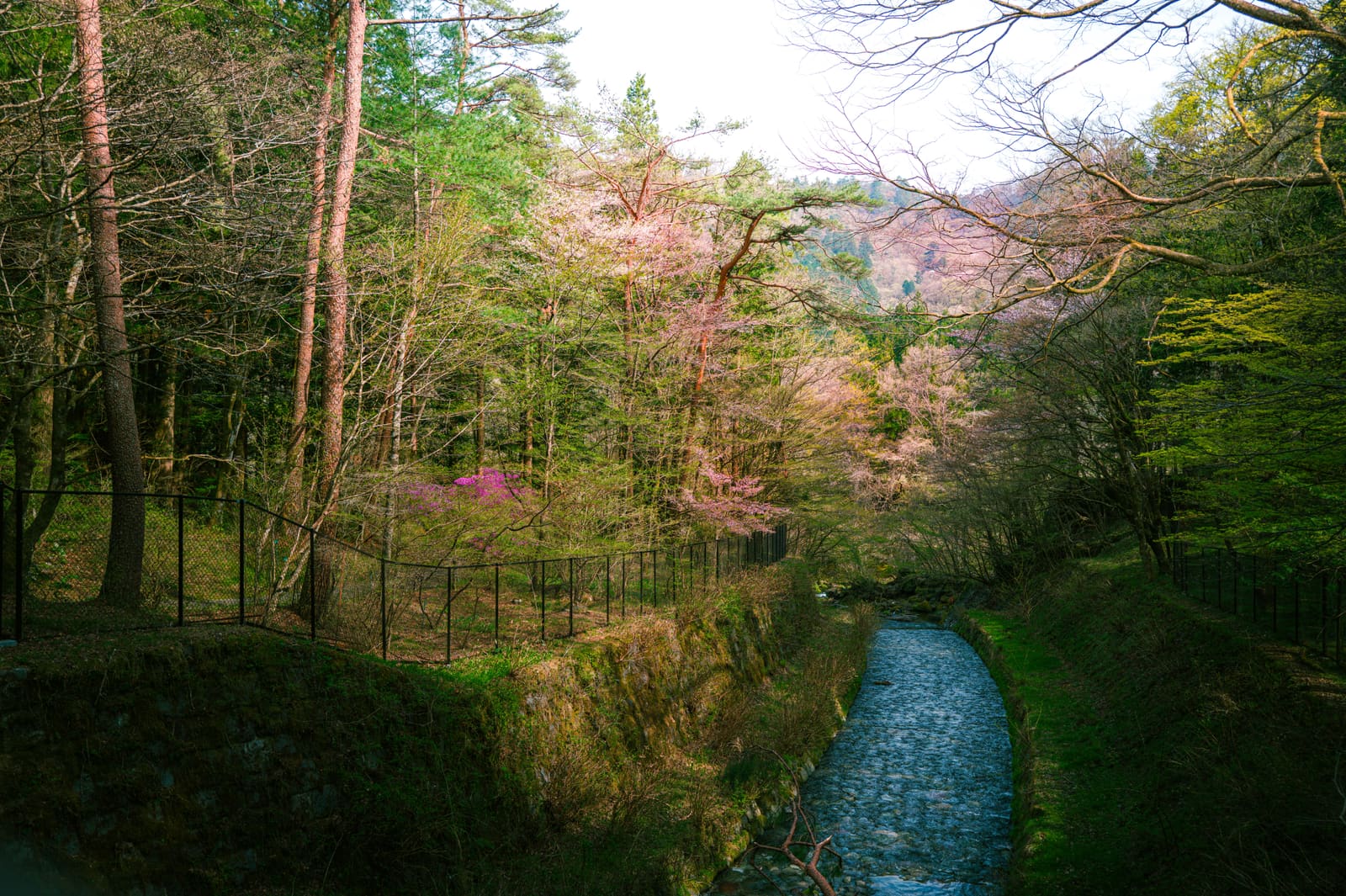
Nagano Prefecture, host of the 1998 Winter Olympics, has repositioned itself as a summer destination for hiking and paddleboarding. Myoko-Togakushi Renzan National Park draws visitors interested in stand-up paddleboarding on alpine lakes, while the Kamikochi valley, at roughly 1,500 metres above sea level, has banned private vehicles for more than three decades to preserve its landscape. The restriction has kept visitor numbers manageable and the environment relatively intact.
Further south, Oboke Gorge in Tokushima Prefecture offers white-water rafting through a steep-walled canyon. The gorge is also home to the Kazurabashi Bridge, a 45-metre suspension bridge originally woven from mountain vines and now reinforced with steel cables. The bridge spans the Iya River and remains a draw for visitors willing to navigate narrow mountain roads to reach it.
These activities require a level of fitness and a tolerance for discomfort, factors that naturally filter the audience. The trade-off is access to landscapes and experiences that remain outside the reach of the standard tour-bus itinerary.
Shrines That Demand Effort
Religious sites in Japan often sit at the top of long staircases, and the Konpira Shrine in Kagawa Prefecture is among the more demanding. The main hall sits at the 785th step of a 1,368-step climb, with the uppermost shrine requiring the full ascent. The route is lined with stone lanterns, wooden gates, and smaller temples, and the shrine itself is dedicated to safe travel and maritime protection.
The climb is not technically difficult, but it is long enough to thin the crowd. On any given day, the steps are shared by elderly pilgrims, school groups, and tourists, all moving at their own pace. The experience becomes less about the destination and more about the collective effort, a rhythm that many visitors find unexpectedly meditative.
Regional Flavours and Thermal Baths
Food remains a central part of any trip to Japan, but moving beyond the major cities opens up regional specialities that rarely make it onto international menus. Ehime Prefecture, on Shikoku, is known for citrus production, and tastings of local varieties are a fixture of tours through the area. Osaka's street food scene, centred on the Dotonbori district, offers okonomiyaki and skewered rice dumplings, dishes that are filling and inexpensive.
Hot springs, or onsen, are ubiquitous in Japan, but their role in these itineraries is less about luxury and more about recovery. After a day of cycling or hiking, a soak in mineral-rich water serves a practical purpose. Some hotels position their onsen at elevation, offering views alongside the heat. Dogo Onsen Honkan in Matsuyama, one of Japan's oldest public bathhouses, adds a historical dimension, though it also draws crowds for its nightly light displays.
Why Active Itineraries Work
Adventure-focused tours solve a logistical problem for independent travellers: planning multi-destination trips that involve cycling, hiking, and rafting requires local knowledge, transport coordination, and often advance bookings. Small-group operators handle the infrastructure, allowing participants to focus on the activity itself.
The format also appeals to travellers who want structure without rigidity. Days are built around a central activity, but there is room for spontaneity, whether that means stopping at a roadside fruit stand or extending a temple visit. The physical component ensures that even crowded sites feel less overwhelming, because the effort required to reach them filters the volume.
Japan's tourism industry has spent years trying to direct visitors away from overcrowded hotspots. Adventure itineraries offer one model for how that redistribution might work, not by asking people to skip Tokyo entirely, but by giving them a reason to spend more time elsewhere. The mountains, rivers, and coastal paths are already there. The question is whether enough travellers are willing to trade convenience for effort.