A City of Overlapping Flavors
London's Middle Eastern dining scene has always been more than just Edgware Road shawarma shops and Green Lanes baklava vendors. The capital's food landscape reflects decades of migration and community-building, with families running delis, cafes, and grill houses that have become neighborhood fixtures. But the past year has seen a noticeable shift: new openings are popping up in areas like Notting Hill, Borough Market, and Hackney, introducing regional cooking styles that go beyond the familiar mezze-and-kebab format.
The expansion matters for a few reasons. First, it decentralizes Middle Eastern dining, making it easier for Londoners across the city to access these cuisines without trekking to established hubs. Second, the new wave tends to emphasize specific regional traditions, whether Kurdish home cooking or Damascene sweets, rather than pan-regional menus. And third, many of these spots are small, chef-driven operations rooted in family recipes, offering a different experience from the long-standing, larger establishments.
Meyhane Traditions Meet Borough Market
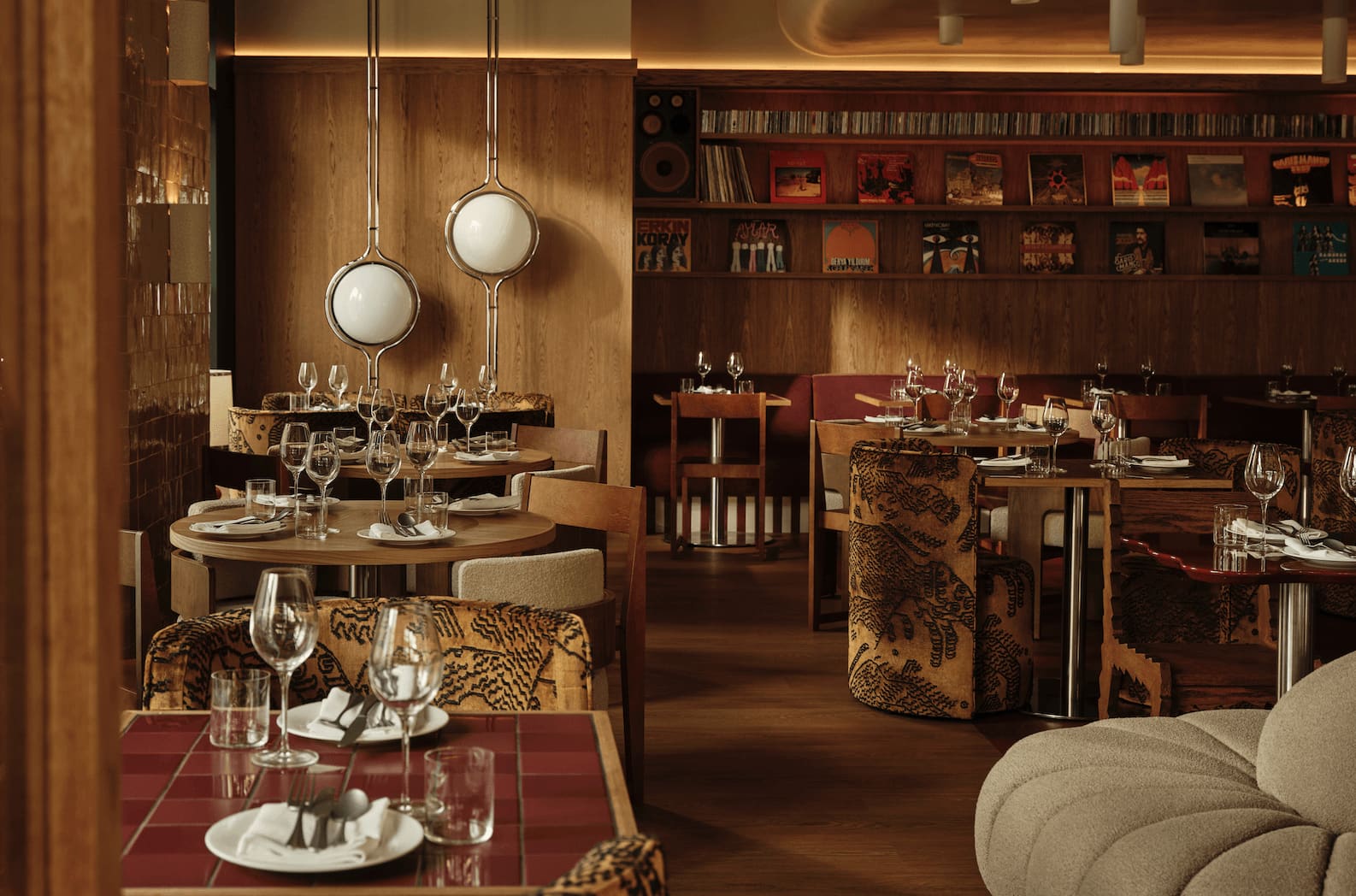
Kismet, tucked above a pub near Borough Market, recreates the atmosphere of Turkish and Northern Cypriot meyhanes, where meals unfold slowly over shared plates and live music. The dining room leans into nostalgia: crochet curtains, family photos, dark wood furniture. The set menu follows meyhane convention, starting with spreads like hibeş, a citrus-laced tahini, and "atom," buffalo milk yogurt with chili butter. Grilled dishes include tavuk şiş, smoky chicken thigh with red pepper. The meal ends with pistachio baklava and Turkish tea served tableside on silver trays.
The setup requires commitment. Diners walk through a pub, climb a narrow staircase, and slip behind a velvet curtain to reach the space. But that threshold seems intentional, a way to signal that this is a different kind of meal, one that takes time and invites conversation.
Lebanese Home Cooking in a Former Bank
Kinz opened in Notting Hill inside a 1930s Lloyds Bank building, making use of the triple-height ceilings and large windows. The design nods to Lebanese aesthetics: three-way arches reminiscent of Ottoman architecture, striped linen seating, backgammon boards. Photographs of Lebanon by local artists hang on the walls.
The menu focuses on home-style Lebanese cooking. Mezze options include moutabel and spinach fatayer, delicate triangular pastries. The meat kibbeh, filled with spiced lamb, beef, pine nuts, and onions, stands out, as does the fattoush, which comes with an extra drizzle of pomegranate molasses. Larger plates include chicken taouk mashawi skewers with toum and warak enab, vine leaves with spiced lamb in lemon sauce. For drinks, the "Beirut Pistachio" pairs espresso with pistachio cream.
Sandwiches Worth the Queue
Logma, a cafe-bistro in Hackney, has built a following around generously filled sandwiches inspired by Iranian and Iraqi family recipes. The name comes from loghmeh, a word in Persian, Arabic, and Turkish meaning "perfect bite." Co-founders Ziad Halub and Farsin Rabiee draw on their own backgrounds for the menu, which features slow-cooked aubergine, kofta, pickles, and house sauce. Weekly specials might include fesenjan with walnuts and pomegranate molasses, or fennel stew with saffron rice.
Seating is limited, and most people take their orders to go. The "Dirty Logma," a coffee with date syrup, oat milk, and cardamom, is designed for portability. The 15-minute walk along the canal to Victoria Park makes for a convenient picnic spot.
Lines form regularly, but they move quickly. The model is straightforward: fast service, big flavors, reasonable prices. It's a format that works for the neighborhood and for the kind of diners who want something more substantial than a grab-and-go lunch but don't have time for a sit-down meal.
Old-School Persian Grills
Patogh, on a side street off Edgware Road, has been serving Persian kebabs and freshly baked bread for years. The downstairs seating area is tight, with diners often sitting elbow-to-elbow. Conversation spills between tables, and the open kitchen at the back keeps a steady rhythm. Lamb is marinated in spices, grilled until tender, and served with buttery saffron rice. Green tea and doogh, a yogurt-and-milk drink, are standard accompaniments.
The place doesn't aim for polish. It's homely, efficient, and consistent, the kind of spot where regulars know what they want before they sit down.
Palestinian Cooking with Modern Touches
Akub, a small restaurant in Notting Hill, blends traditional Palestinian flavors with contemporary techniques. The buket mousakhan wraps chicken, onion, and sumac in a large bread parcel. Wild sea bass is cured in arak, olive oil, and sumac, a nod to regional fish dishes. Dessert includes zaatar and tahina ice cream alongside pistachio and vanilla.
The cocktail menu incorporates regional ingredients: a Zaatar Martini, a Shattarita, a Lemon Ashta. It's an approach that respects tradition while leaving room for experimentation, appealing to diners who want familiar flavors presented in unexpected ways.
The Knefeh Specialists
Diwan Dimas, a humble deli near the end of Edgware Road, specializes in Damascene sweets. The display case holds syrup-soaked baklava, ashta-filled beinnaren, and pistachio-stuffed burma. But the knefeh is what locals come for. Made the traditional way, it layers soft goat's cheese with finely shredded filo pastry and generous spoonfuls of syrup. The dish has earned a reputation as some of the best knefeh in the city, a claim backed by the steady stream of regulars who stop in for a slice.
From Supper Clubs to Permanent Spots
Imad Alarnab started hosting supper clubs and takeaway lunch pop-ups after moving to London from Syria. His falafel lunch boxes gained a following, and eventually he opened Imad's Syrian Kitchen in Kingly Court. The menu includes mezze like saroja, layered aubergine with feta, halloumi, sour cherries, and date molasses, and mtuma bitinjan, fried aubergine with tahini and barberries. Main dishes include shishtawook and tahini kofta, but the makmour jaj, yogurt-marinated chicken with bulgar, pomegranate, and fried vermicelli, is worth trying.
The trajectory from pop-up to permanent space is one that several chefs have followed, building a customer base before committing to a lease. It's a model that allows for testing and refining, and it tends to result in focused menus that reflect what actually sells.
Kurdish Cooking in Camberwell
Nandine started as a side operation in a family-run newsagent in Elephant and Castle, where chef Pary Baban served Kurdish food to local workers. Demand grew, and the restaurant relocated to a larger space in Camberwell. During the day, families gather for brunch and Kurdish desserts. In the evening, a younger crowd filters in.
The menu includes slow-cooked lamb shank, patatau ron (battered aubergine with roasted onion, tomato, and amba tirshyat), and kubba, Kurdish rice dumplings stuffed with spiced beef. Nandine functions as both a restaurant and a community hub, a place where regulars know the staff and the food reflects the chef's personal background.
A Community Hub in Northwest London
Cafe Palestina, in a quiet corner of northwest London, doubles as a restaurant and community space, hosting Arabic lessons and children's events. Occasional supper clubs offer a glimpse into that community side, though tickets are hard to come by. Weekend brunch is a safer bet: hummus, smoky aubergine mutabbal, fresh tabbouleh, and olives arrive on a breakfast platter. Vine leaves and spinach pastry are also strong choices, best enjoyed with sweet cardamom coffee. The back of the cafe sells Palestinian ceramics and specialty foods.
The space feels more like a neighborhood gathering point than a restaurant, a place where food is part of a broader cultural exchange.
Tehran-Style Dining in Soho and Borough
Berenjak, with locations in Soho and Borough, draws on the neighborhood eateries of Tehran. The menu includes walnut-flavored hummus e khanegi, smoky aubergine mirza ghasemi, and coal-cooked kashk e bademjoon. For mains, the zereshk polow ba morgh, rotisserie chicken in saffron sauce with crispy tahdig, is a popular choice.
The restaurant is busier than some of the smaller spots on this list, but the food maintains a home-style quality that justifies the wait.
Modern Turkish with Open-Fire Cooking
Yeni, in Carnaby, takes a modern approach to Turkish cuisine, with chef Civan Er cooking over an open fire at the back of the restaurant. The exposed brick and simple tableware evoke outdoor garden dining. Dishes include fried kelle cheese with thyme honey and lamb with walnuts, ksir, and sour cherries. The yeni manti, beef-stuffed dumplings with fermented yogurt, offers a twist on the classic.
Sharing plates allow diners to sample a range of flavors, though the format can make it easy to over-order.
Green Lanes: A Long-Standing Hub
Green Lanes, stretching through North London, remains a center for Turkish, Kurdish, and Greek dining. Kebab shops, traditional restaurants, and baklava-filled delis line the street. Gökyüzü serves Turkish lamb stews, Gözleme House offers spinach and cheese stuffed fried bread, and Antepliler Kunefe specializes in sweet pastries. Gözleme House also sells frozen manti by the kilo, a convenient option for home cooks who want to recreate the flavors themselves.
The area has been a destination for these cuisines for decades, and it continues to draw both locals and visitors looking for a concentrated experience.
What the Expansion Means
The spread of Middle Eastern restaurants across London reflects both demand and opportunity. Diners are seeking out regional specialties, and chefs with family recipes are finding neighborhoods willing to support small, focused operations. The result is a more varied landscape, one where Kurdish dumplings, Damascene sweets, and Persian stews are accessible in more parts of the city.
For travelers, this means Middle Eastern dining in London is no longer confined to a few well-known streets. It's woven into neighborhoods across the capital, each spot offering a different angle on the cuisines that have shaped the city's food culture for generations.