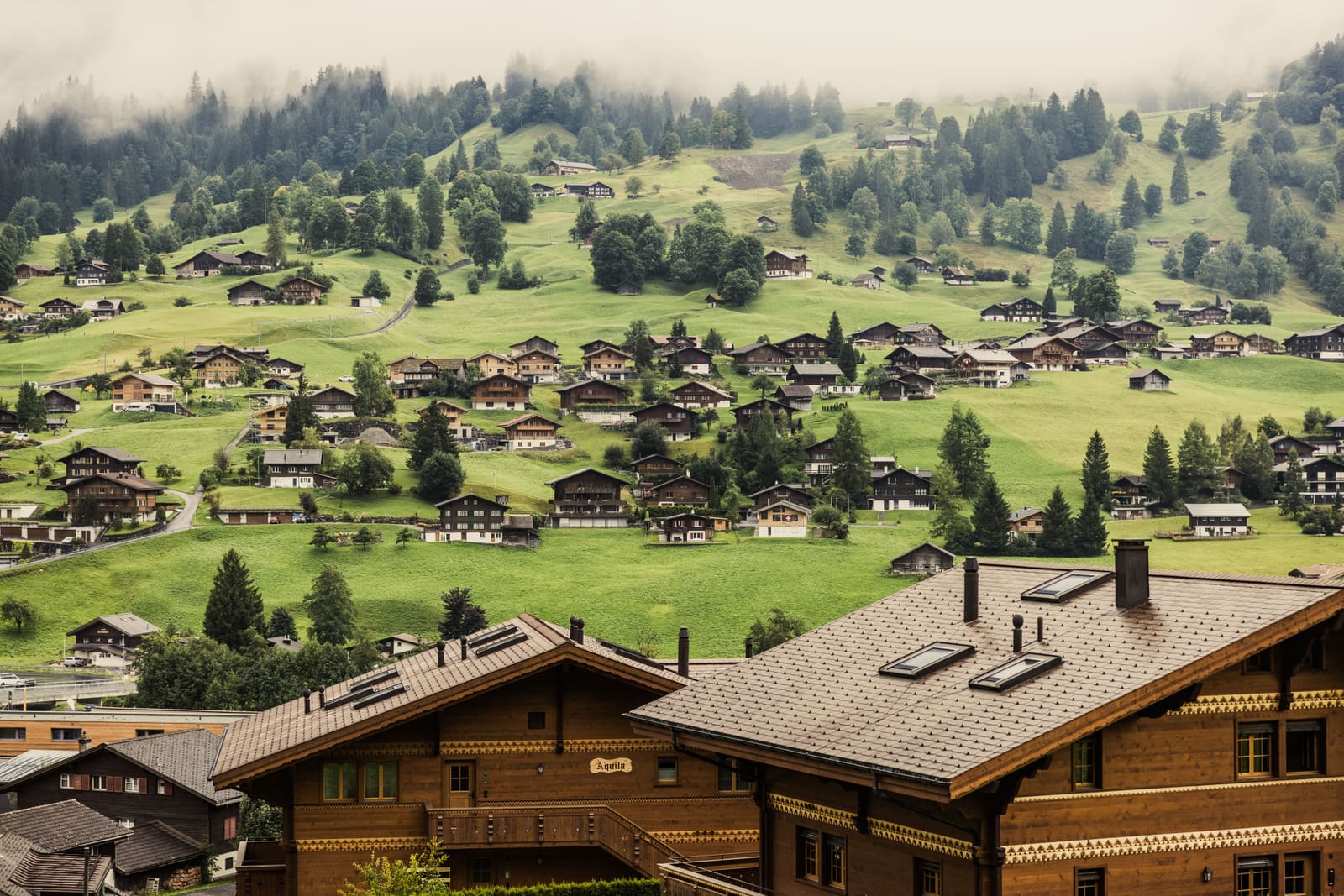
A Different Kind of Ski Town
Most purpose-built French ski resorts from the post-war era lean utilitarian. Megève does not. The Rothschild banking family commissioned it in the 1920s as a chocolate-box alternative to St Moritz, closer to Geneva and less monumental in scale. Baroness Noémie de Rothschild hired architect Henry-Jacques Le Même to design chalets modelled on regional farmhouses. That template became the global standard for ski chalet design.
A century later, the resort still feels remarkably true to its original brief. Horses and carts move through the central square, past Moncler boutiques and Aallard, a century-old alpine tailor. Hotels tend to be smaller than those in St Moritz, many run by local families. The Sibuet family built Les Fermes De Marie in 1989 and have expanded steadily since, creating a cluster of properties that blend traditional Savoyard style with modern comfort.
The clientele has shifted since the post-war days when Brigitte Bardot, Sophia Loren and Jean Cocteau spent winters here. Cocteau called Megève "the 21st arrondissement of Paris". Parisians and Genevans still take weekend chalets, but visitors from the Gulf and North America now make up a growing share. The West London crowd that dominates Val d'Isère and Verbier is less visible here.
Skiing That Knows Its Place
The Evasion Mont-Blanc Pass covers 435 kilometres of pistes, but the slopes here sit relatively low and favour beginners and intermediates over powder seekers. Mont d'Arbois, the area closest to the village, offers gentle tree-lined runs. One side descends to Saint-Gervais-Les-Bains, a spa town; across the valley, Rochbrune and Côte 2000 cater to intermediate skiers. Mont Joly, above Mont d'Arbois, reaches 2,355 metres and features slightly tougher terrain.
Snow is most reliable from mid-January to mid-February, though even then the focus leans towards leisurely lunches rather than all-day skiing. If high-altitude thrills are the priority, Chamonix sits nearby with more powder and vertical. Megève's appeal lies elsewhere: in long meals, well-appointed spas and a civilised pace that treats skiing as one activity among several, not the sole reason to be there.
The beginner slopes above Le Relais Des Fermes are perhaps the most style-conscious nursery runs in the Alps. Learners wobble past diners in silver Moncler jackets working through truffle macaroni and Angus ribeye on the restaurant terrace. People-watching is reliable entertainment.
Where Visitors Stay
L'Alpaga, operated by the Alpine-focused brand Beaumier, groups ten chalets on the western edge of town into a 33-room compound. Interior designer Vicky Charles, known for Soho Farmhouse and projects with the Clooneys and Beckhams, led the interiors with clean-lined alpine style and mid-century touches. A retro outdoor pool faces Mont Blanc; a barrel sauna sits nearby. Chef Alexander Baule, from the nearby Isère region, runs the Michelin-starred La Table de l'Alpaga, working with Savoyard chestnuts and Magland snails in winter.
Les Fermes De Marie links nine traditional-style chalets with underground tunnels. When Jocelyne and Jean-Louis Sibuet opened it in 1989, the haute rustic aesthetic was novel; it has since been widely copied. The property feels as though it has always been there. Le Carnotzet fondue restaurant features cheese-laden shelves; the wellness area uses the Sibuets' Pure Altitude beauty brand. The hotel attracts regulars and families in equal measure, with a children's club, treasure hunts and magic shows before everyone regroups for truffle macaroni at Le Restaurant Traditionnel.
The Four Seasons Resort Megève, owned by the Rothschild family, is the town's only palace-rated hotel and its only true ski-in, ski-out address. Interiors by Pierre-Yves Rochon fill 55 rooms and suites with Diptyque products; the pillared spa is the largest in town. Executive chef Armando Acquaviva is known for pop-up fondues in a mountaintop geodesic dome and for sole meunière at Brasserie Benjamin. Pastry chef Joseph Chapuy's desserts close meals at the hotel's three restaurants. Guests arrive by helicopter or hot-air balloon; this is Megève at its most openly upmarket.
Hôtel Mont-Blanc, in the heart of the village, hosted the cream of French society after the war. The Sibuet family has owned it since the mid-1990s. Portraits of actress Jeanne Moreau reference the filming of Roger Vadim's Les Liaisons Dangereuses here in 1959. Cocktail bar Les Enfants Terrible nods to Jean Cocteau, another former regular. Film posters hang in 38 rooms with light wood walls. The wood-panelled Le Relais Mont-Blanc serves truffled Savoyard pastries and eight-hour braised beef cheek, but the overall feel is urbane and Instagram-friendly. A stylish crowd comes for afternoon tea, hot chocolate and the igloo-style spa.
Lodge Park, the most recently renovated Sibuet property, evokes an Adirondacks hunting lodge. Marie Sibuet describes it as "living in a Ralph Lauren store". Antler heads and raw wood tables fill the Lodge Bar and Beef Lodge steakhouse, where a "bouchelier" presents cuts of beef on sequoia slabs. A 2025 renovation reduced room count from 49 to 28, creating larger suites with natural wood, Aztec upholstery and marble bathrooms. The new spa focuses on longevity treatments, including cryotherapy, Shiftwave vibration beds and pressotherapy body suits.
Hotel Saint-Georges leans into whimsy, with interiors by British designer Luke Edward Hall. Most of the 29 pattern-clashed rooms face the village bell tower or the mountains beyond the Chamois télécabine. Le Trappeur serves Burgundy snails and Savoyard crozets with truffle and Beaufort cheese. The Piano Bar sits behind green curtains, typical of what may be the town's most playful hotel.
Eating in Megève
Julien Gatillon runs twin establishments in the town centre. Vous seats 14 diners around an open kitchen for farmhouse veal with lovage emulsion or confit trout with hogweed mousseline. Anata seats 12 for wagyu okonomiyaki, yuzu soufflé and toro tuna sushi prepared by master chef Keiji Ishii, who previously worked with Gatillon at the Four Seasons. Gatillon also oversees Nous, a private table for up to 12 with a single booking at a time.
Le Relais Des Fermes sits beside the beginner slope, its terrace packed with diners in silver puffer jackets. The Sibuet-owned restaurant serves escargots, truffle macaroni and rôtisserie Angus ribeye. The dessert trolley derails afternoon ski plans as effectively as the people-watching does.
Le Vieux Megève has occupied a farmhouse-style space of wood, stone and stucco since 1964. Now owned by the Sibuet family, it draws a smart but relatively casual crowd for onion soup, comté fondues and truffle raclettes. Blueberry tarts and blueberry ice cream sundaes are house signatures.
Flocons de Sel holds three Michelin stars, awarded to chef Emmanuel Renaut in 2012. The light wood-panelled dining room enforces a smart-casual dress code. Renaut's eight-course menus draw heavily on foraged ingredients from the region's lakes, forests and mountains: smoked egg yolk with wild mushrooms and Beaufort crust, caviar with gentian roots. The restaurant is also a Relais & Châteaux hotel with a spa, but the dining room is the main draw.
Why It Works
Megève succeeds because it does not pretend to be something it is not. The skiing is pleasant but not world-class. The altitude is moderate. Snow cover can be patchy outside a six-week window in midwinter. None of that matters to the visitors who return season after season, because the resort was never designed around hardcore skiing in the first place.
It was built for people who want to ski a little, eat well, soak in a spa and watch other people do the same. That vision, articulated by the Rothschilds a century ago, remains intact. The architecture has held up. The hotels have stayed in local hands. The restaurants still serve eight-hour braised beef and truffle macaroni without irony.
In a ski industry increasingly dominated by mega-resorts and private equity, Megève's commitment to its original identity feels almost radical. It is not trying to compete with Chamonix for altitude or with Courchevel for oligarch money. It is simply doing what it has always done, in a town that still looks like the one Henry-Jacques Le Même designed in the 1920s, where horses pull carts through the square and lunch lasts three hours.