A Full Day Without Public Transit
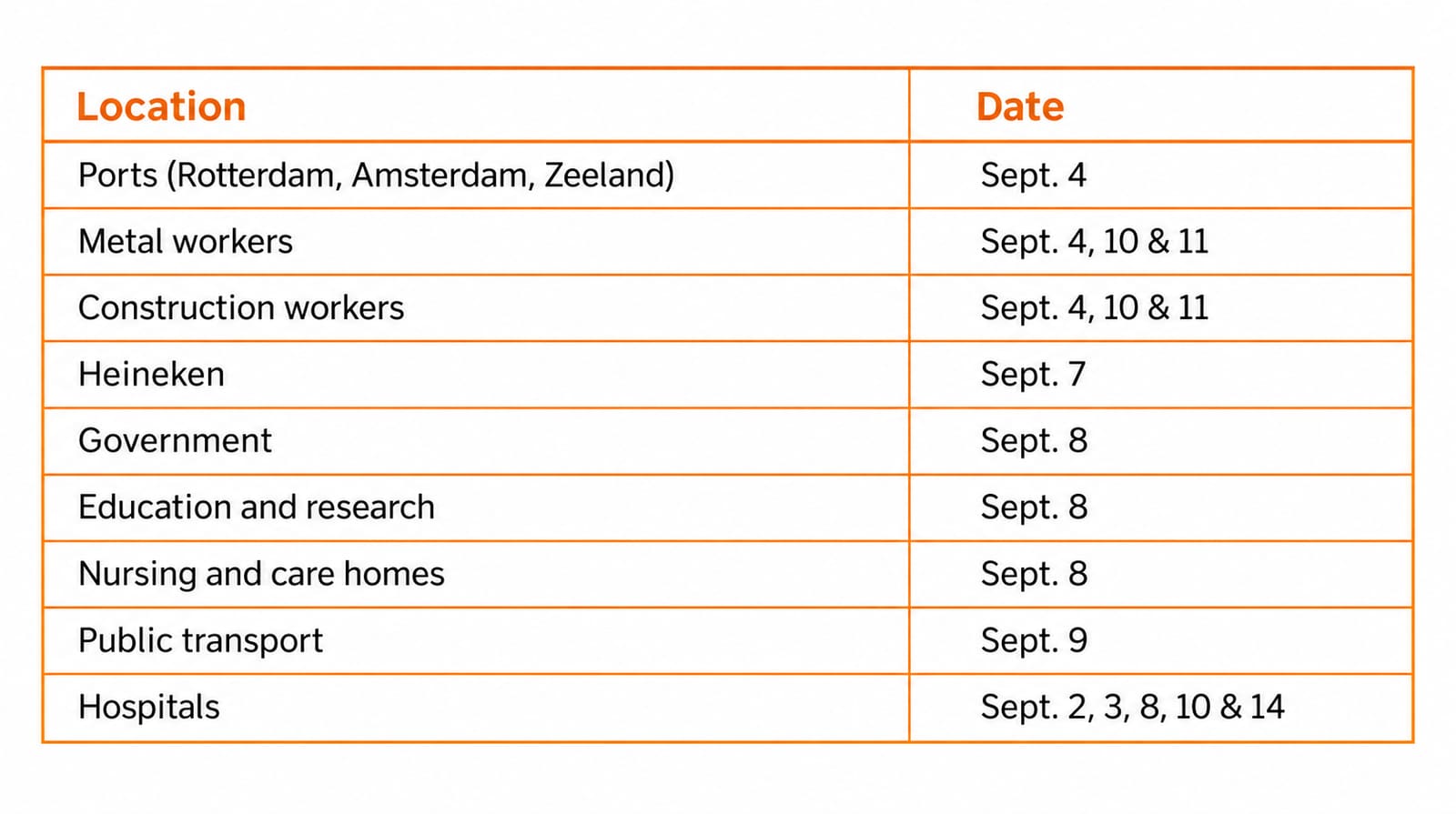
On 9 September, the Netherlands will see one of its most comprehensive transport stoppages in recent memory. Two major unions have called a 24-hour strike that will shut down nearly all buses, trams, metros and trains across the country. The action begins at 2am for national rail operator NS and infrastructure manager ProRail, with urban services joining shortly after.
The Federation of Dutch Trade Unions and the Christian National Trade Union Federation organised the strike to oppose government plans to reduce social security spending. The proposed cuts target unemployment and disability benefits, which unions argue would erode protections for workers who face job loss or ill health through no fault of their own.
Henri Janssen, a board member at FNV, said the measures threaten the livelihoods of millions of workers and their families. Edwin Kuiper, also from FNV, noted that transport workers face above-average risk of needing disability support because of the physical demands of their jobs.
What Runs and What Stops
Most of the network will be silent. International trains including Eurostar, EuroCity, ICE and Nightjet services will not operate on Dutch tracks during the stoppage. Cross-border regional trains between the Netherlands, Belgium and Germany will also be suspended, affecting routes such as Roosendaal to Antwerp and Liège to Aachen.
The one exception is airport access. Four Sprinter trains per hour will run between Amsterdam Central, Schiphol Airport and Hoofddorp. This minimal service exists because of an earlier court ruling that required rail operators to maintain airport connections during strikes. FNV has agreed not to treat the Schiphol route as strike work, allowing volunteers to staff those trains.
Travellers should brace for extremely crowded carriages and delays. Anyone heading to the airport will need to allow far more time than usual and should consider arriving with extra margin.
In Amsterdam, public transport operator GVB will halt all buses, trams, metros and ferries from 4am. Rotterdam and The Hague will see similar shutdowns. In smaller cities and towns, service will either vanish entirely or depend on whether individual staff choose to work, making schedules unpredictable at best.
No Replacement Buses, No Reimbursement for Alternatives
Because regional bus drivers are joining the strike, no replacement coaches will bridge the gaps left by cancelled trains. That leaves taxis and ride-hailing apps as the main fallback, but travellers will have to cover those costs themselves.
NS recently ended a policy that reimbursed passengers up to €25 for alternative transport during strikes. The change took effect on 4 September, just days before this action. Passengers who bought tickets in advance can still claim refunds through the Compensation for Delay scheme, but they will need to handle the paperwork themselves.
Planning Around the Stoppage
Anyone with travel plans on 9 September should check journey-planning apps such as 9292 or the NS app regularly for updates. Working from home or postponing trips are the safest bets. For those who must travel, leaving much earlier than normal and expecting disruption is the only realistic approach.
Normal service is scheduled to return on the morning of 10 September. Until then, the country's usually reliable public transport network will be largely offline, a reminder of how quickly mobility can vanish when the people who keep the system running decide they have had enough.