A Rocky Perch Above the Norwegian Sea
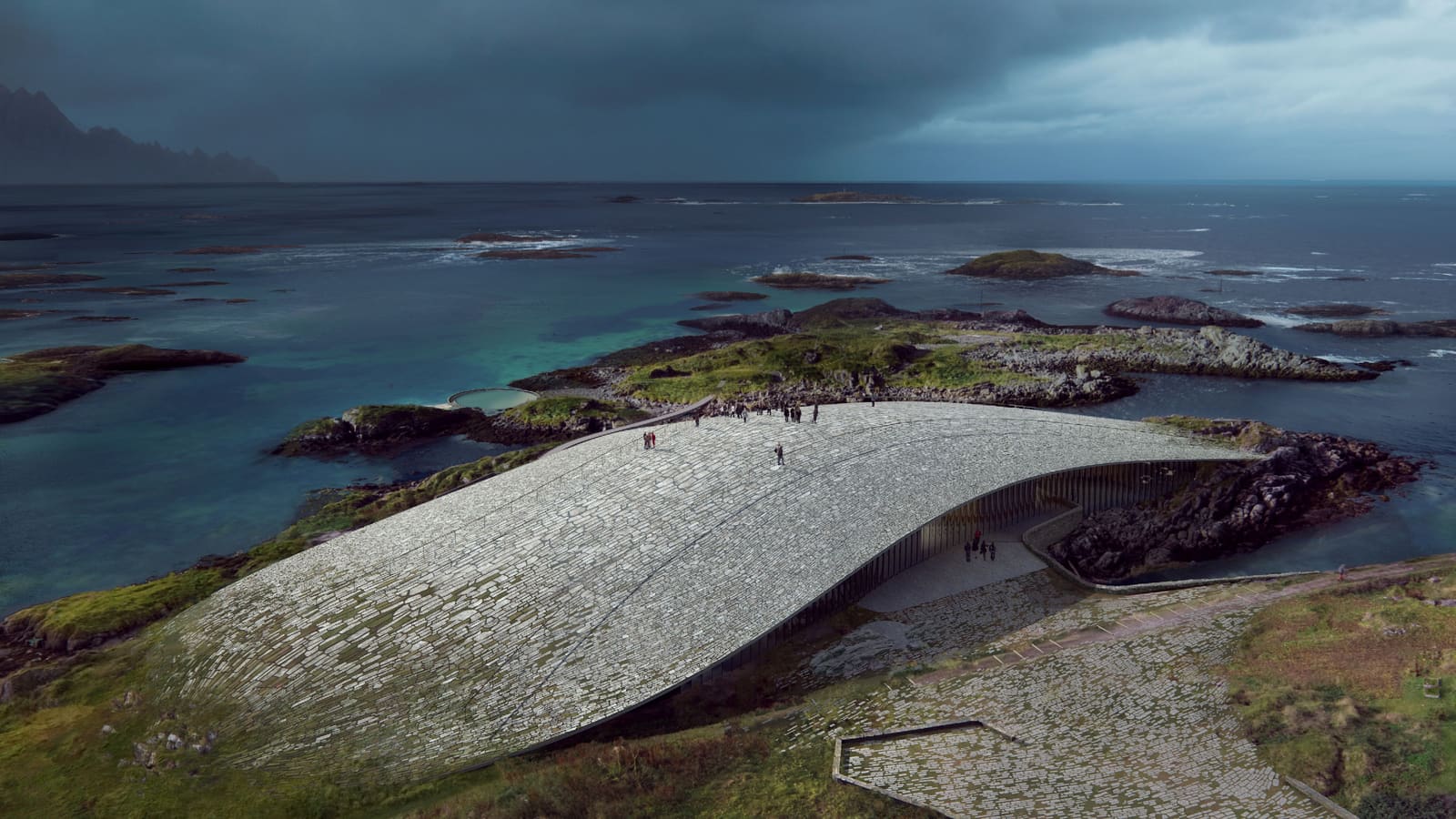
On a windswept outcrop in Andenes, a small town in northern Norway, a building shaped like a folded ribbon rises against the Arctic sky. The Whale, scheduled to open 4 June 2027, sits where the land meets the wild Norwegian coast, a fitting location for a museum dedicated to creatures that have traveled the world's oceans for millions of years.
The structure itself makes a statement. Designed by Danish architecture studio Dorte Mandrup, it won an international competition in 2019 that drew entries from around the globe. The building's form echoes the landscape around it, low and angular, as if the stone itself had shifted and cracked open to reveal something hidden beneath.
From Local Idea to International Project
The Whale started as a conversation among whale enthusiasts and tourism professionals in 2014. Andenes has long been a hub for whale watching, and the group wanted to create something beyond the usual boat trips, a place that could deepen understanding of these animals and their environment.
After Dorte Mandrup's design was selected, Norwegian contractor HENT came on board, followed by experiential designers Ralph Appelbaum Associates and Tamschick Media + Space, who developed the exhibition content. Funding came from a mix of public grants and private contributions, with the local community involved throughout through workshops and dialogue sessions.
The collaborative approach reflects a broader shift in how cultural institutions are built in smaller communities. Rather than imposing a vision from outside, The Whale has grown with input from residents who will live alongside it long after the opening celebrations end.
Galleries That Trace 50 Million Years
Inside, the museum takes visitors through whale evolution, migration patterns, and the sounds that fill the ocean. The Species Gallery examines how whales adapted to marine life roughly 50 million years ago, moving from land to sea in one of evolution's more dramatic transformations. An art installation brings together all modern whale species in a single visual experience, a way of seeing diversity and connection at once.
Soundscape, another key space, fills the room with whale songs. These are not background tracks but the actual frequencies whales use to communicate across vast distances. Standing inside, visitors can hear what the ocean sounds like to a humpback or a blue whale, a perspective shift that makes the abstract idea of marine life suddenly tangible.
The Horizon Room offers a different lens. Here, a projection shows the planet's oceans not as separate bodies but as a single, interconnected system. Migration routes and habitats overlap on this map, revealing patterns that standard geography often obscures. It is a reminder that whales do not recognize borders, and neither do the challenges they face.
Where Myth Meets Marine Biology
The Library of Relations moves from science into culture, tracing how humans have understood and interacted with whales over time. Ancient myths often cast whales as monsters or gods, creatures of awe and terror. Modern stories are more complicated, shaped by centuries of whaling, followed by conservation efforts and ongoing environmental threats.
This section does not shy away from difficult history. Whaling decimated populations, and while some species have recovered, others remain endangered. Climate change, ship strikes, fishing gear entanglement, and ocean noise pollution continue to threaten whales today. The museum presents these issues without prescription, leaving visitors to draw their own conclusions about what comes next.
Visiting Andenes
Andenes sits on the northern tip of Andøya, an island in the Vesterålen archipelago. The town is small, with a population under 3,000, but it punches above its weight in terms of natural attractions. The waters around Andenes are rich feeding grounds, especially in summer, when sperm whales, orcas, and humpbacks pass through.
The Whale is designed to complement, not replace, the whale-watching tours that have long drawn visitors here. Packages bundling museum admission with hotel stays and boat safaris are expected to go on sale in autumn 2026. Pricing details have not been announced, but general admission tickets will be available for those who prefer to visit the museum on its own.
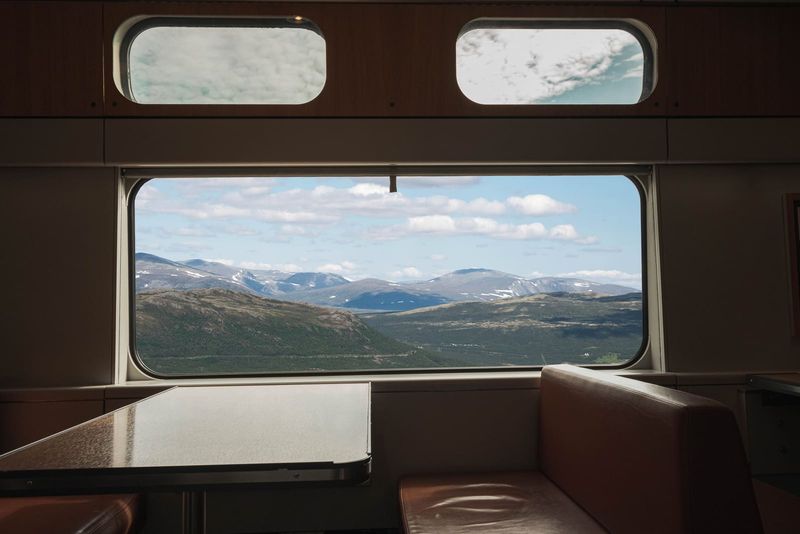
The museum's location is remote by most standards, but that remoteness is part of the appeal. Getting to Andenes requires either a flight to Andøya Airport or a longer drive from Harstad or Lofoten. The journey itself becomes part of the experience, a chance to see the stark beauty of northern Norway's coastline.
What It Adds to the Region
Northern Norway already has strong cultural infrastructure, from the Arctic Cathedral in Tromsø to the Lofotr Viking Museum in Borg. The Whale adds another layer, one focused on marine ecology and the relationship between humans and the natural world.
For Andenes, the museum represents an economic opportunity. Tourism is a major industry here, but it is heavily seasonal, concentrated in the summer months when the midnight sun draws visitors. A year-round attraction like The Whale could help smooth out that cycle, bringing visitors during shoulder seasons and providing stable employment for local residents.
There are risks, of course. Building a major cultural institution in a small, remote town is a gamble. Success depends on whether the museum can draw enough visitors to justify its operating costs, and whether those visitors will return or recommend it to others. Early interest has been strong, but the real test will come after opening day.
Immersive Design and Its Limits
The Whale leans heavily on immersive design, using projections, soundscapes, and art installations to create emotional experiences. This approach has become popular in museums worldwide, from the Smithsonian to smaller regional institutions. Done well, it can make abstract concepts visceral and memorable. Done poorly, it risks prioritizing spectacle over substance.
Ralph Appelbaum Associates has a track record that inspires confidence. The firm has designed exhibitions for the United States Holocaust Memorial Museum, the National Museum of African American History and Culture, and the Battery Maritime Building in New York. Tamschick Media + Space, based in Berlin, specializes in spatial media and has worked on projects across Europe and Asia.
The challenge for The Whale will be balancing the immersive elements with clear, accessible information. Whale songs are beautiful, but visitors should leave understanding why whales sing, how they navigate, and what threats they face. The museum's success will depend on whether it achieves that balance.
Opening Timeline
The Whale is set to open 4 June 2027. Construction is in its final stages, with the building's exterior largely complete and interior work ongoing. Ticket sales are expected to begin in autumn 2026, giving potential visitors several months to plan trips.
For those interested in visiting, the museum's website will be the primary source for booking information and updates. The site is expected to offer details on admission prices, package deals, and accessibility options as the opening date approaches.
Andenes is preparing for the influx. Local hotels and guesthouses are expanding capacity, and tour operators are developing new packages that combine museum visits with whale watching, hiking, and other activities. The town's infrastructure is small but functional, with restaurants, shops, and services geared toward travelers.
The Whale arrives at a moment when interest in sustainable tourism and environmental education is growing. Whether it becomes a landmark destination or a well-intentioned experiment will depend on execution, marketing, and a bit of luck. But for now, it represents something worth watching: a community betting on the power of culture and nature to draw the world to its doorstep.