From Thermal Baths to Bog in Twenty Minutes
Spa sits at just over 300 metres above sea level, known for Belle Époque architecture and thermal baths. Four kilometres away, the landscape climbs nearly 200 metres to the Fagne de Malchamps, a 365-hectare protected peatland that looks nothing like the elegant town below.
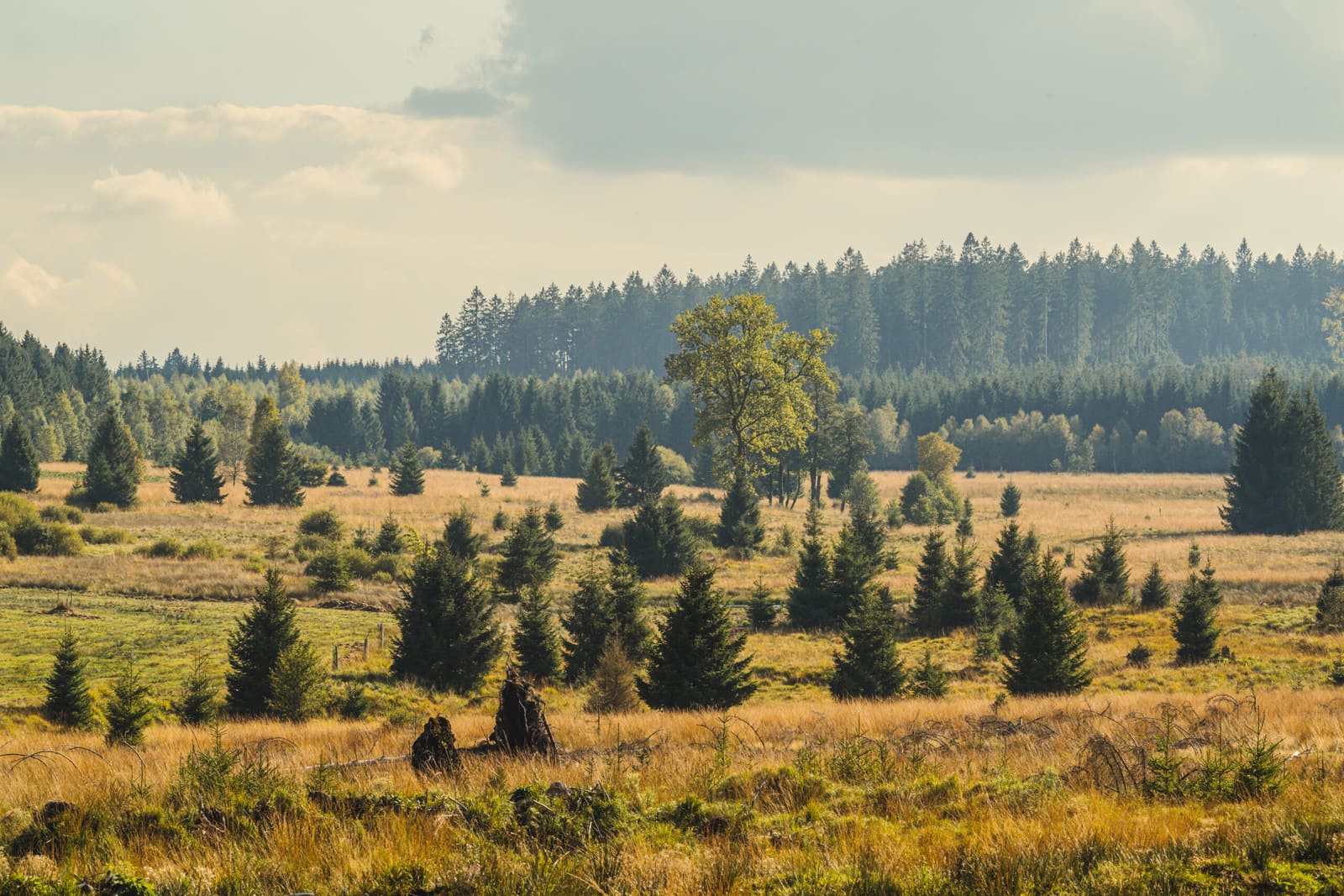
The contrast is immediate. Open heathland, acidic marshes, and wet forests replace spa pavilions. But water remains central to both places. The fagne is where Spa's mineral water begins its journey, filtering through layers of moss, peat, and rock before emerging at springs down the hill.
The site is part of the Natura 2000 network and sits within a much larger protected zone of 13,177 hectares, one of Europe's biggest water catchment areas. Agriculture, industry, pesticides, and fertilisers are banned across the entire zone to keep the water pure.
A Landscape Built One Centimetre at a Time
The word "fagne" describes wet, marshy ground. Malchamps translates roughly as "bad field," a name that reflects centuries of farmers finding the acidic soil unsuitable for crops. That failure to farm intensively is exactly what preserved the ecosystem.
Walking the shortest marked trail, a 4.1-kilometre loop that takes about an hour, the terrain shifts constantly. Heathland opens into forest, then bog, then back to heather. Blueberries, sedges, birches, and carnivorous sundews grow in soil too poor in nutrients for most plants.
The key species here is sphagnum moss. It has no roots and no vascular system, yet it thrives in wet, acidic conditions. It grows at a maximum of one centimetre per year. When it dies, it does not fully decompose. Instead, it accumulates beneath new growth, layer upon layer, forming peat over centuries.
That slow process creates the landscape underfoot and shapes the water that flows through it. Sphagnum retains moisture, maintains acidity, and helps store carbon. A handful of bright green moss, unremarkable to look at, is doing ecological work that extends far beyond the bog itself.
Why a Water Company Owns a Nature Reserve
The Domaine de Bérizenne, which includes the fagne, has belonged to Spadel since 1972. Spadel is the Belgian family-owned company behind Spa mineral water. The reason for ownership is straightforward: protecting the landscape protects the water.
Rain that falls on the plateau does not run off immediately. It moves slowly through vegetation, peat, and soil. Some water filters through upper layers and re-emerges at springs with low mineral content. Other water penetrates deeper through geological faults, interacting with mineral-rich rock before rising again. That deeper route produces the more heavily mineralised, naturally carbonated water found at springs like Marie-Henriette.
The connection is direct. Protecting the bog is not separate from protecting the springs. It is the same process. Any pollution or disruption on the plateau would eventually reach the water below.
The protected catchment now covers more than 13,000 hectares, expanded over generations as the company and local authorities recognised how far the water's origins extend. The scale is unusual, and it means large sections of the landscape around Spa remain undeveloped.
Three Walks, One Fragile Ecosystem
Three marked trails start from the Domaine de Bérizenne, ranging from 4.1 to 9.5 kilometres. The shortest, Les Caillebotis de Malchamps, is manageable for most visitors and takes around an hour at a steady pace. The longest, La Fagne de Malchamps par la Vecquée, extends to 9.5 kilometres and takes about two and a half hours.
Boardwalks cross the wettest sections, keeping visitors off unstable ground and away from sensitive vegetation. The boardwalks are not accessible to wheelchairs or pushchairs. Designated paths guide walkers through the fagne without damaging peatland that took millennia to form.
Guides are available and add considerable depth to the experience. Knowing why the ground is acidic, how peat forms, which plants are carnivorous, and where the water goes changes a short walk into something more substantial. The Maison de la Nature at the trailhead provides maps and information for those exploring independently.
A View from 22 Metres Up
A wooden observation tower, built from larch in the 1990s, rises 22 metres above the landscape. Eighty-eight steps lead to the top. From there, the fragmented terrain seen at ground level comes together. Heathland stretches toward forests, wetlands interrupt the vegetation, and on clear days the view extends east to the wider Hautes Fagnes and into Germany.
The tower also makes the ecosystem's vulnerability clearer. What looks hardy from below depends on a precise balance of water, temperature, and soil. Guides who have worked in the area for more than a decade report noticeable drought in recent years. Ponds that used to hold water year-round now dry up. Peatlands shrink. Flora and fauna adapted to wet conditions struggle.
This summer, devastating wildfires in the Hautes Fagnes demonstrated how landscapes associated with water can become combustible after prolonged heat and drought. Peat is especially dangerous because fire can burn underground, making it nearly impossible to extinguish. The ecological damage extends far beyond visible vegetation. Peat that took centuries to accumulate can be lost in hours. Rare plants and wildlife that depend on these habitats cannot simply return once the ground is destroyed.
Visiting Responsibly After the Fires
The fires should not discourage visitors from the region. The Fagne de Malchamps remains open, and the wider area around Spa still offers extraordinary landscapes. The key is to respect restrictions, stay on marked paths, and follow local guidance.
Responsible tourism matters more now, not less. Spa and surrounding communities depend on visitors, and supporting local guides, accommodation, restaurants, and attractions helps the region recover. Staying away does not help. Visiting thoughtfully does.
More Than Just a Walk
The Domaine de Bérizenne includes the Musée de la Forêt et des Eaux, which explores the region's forests, water, and ecosystems. The site also functions as an educational centre for schools and families.
Human history threads through the landscape. An old route crossing the fagne follows the path of a Roman road, later used in the Middle Ages to connect territories under the Prince-Bishops of Liège. An ancient elm linked to the Bérizenne estate has survived for centuries. The remains of a Second World War aircraft crash add another layer to the walk.
But the landscape itself tells the bigger story. A few kilometres downhill, Spa is defined by water that emerges from springs, fills thermal baths, and leaves town in millions of bottles. Up on the plateau, the fagne shows what precedes all of that: rain, moss, peat, rock, and a decades-long underground journey.
A short hike through one of Wallonia's most unusual natural areas ends up explaining another side of Spa entirely. The water people drink or bathe in does not begin at a spring. It begins in a bog, one centimetre of moss at a time.