The Real Risk Nobody Talks About
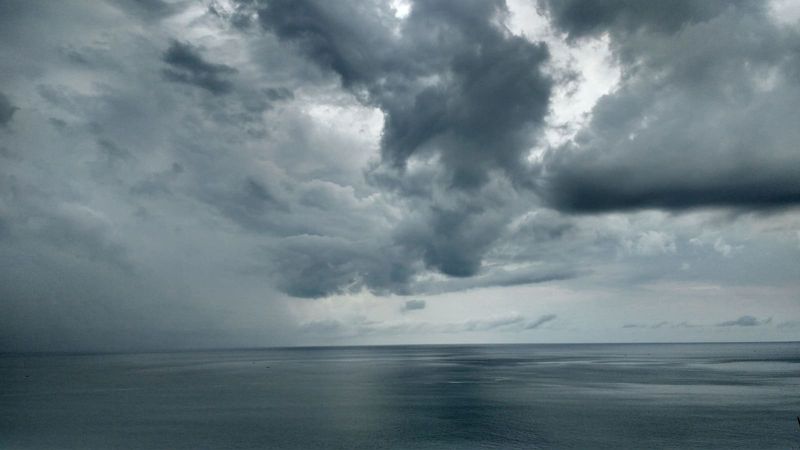
Six nights of solid cloud cover. That's the scenario that ruins most northern lights trips, and it happens more often than anyone wants to admit. You pick a location because it appeared on a top-ten list, you fly in with high expectations, and nature refuses to cooperate. The mistake isn't choosing the wrong spot. The mistake is treating auroras like an attraction you can visit on schedule.
They aren't. Solar activity follows patterns, but clouds don't care about your itinerary. What separates a wasted trip from a worthwhile one is whether you'd still be glad you came if the sky never lit up at all.
Timing Matters More Than Location
Solar cycles run eleven years long. The most recent peak happened in October 2024, which sounds like you've already missed the window. You haven't. Historically, some of the strongest geomagnetic disturbances occur during the decline phase, and elevated activity is forecast to continue through 2027 before tapering off toward the next decade.
Within any given year, March and late September offer the best odds. Earth's magnetic field tilts at an angle during the equinoxes that allows solar wind to slip through more easily. The broader season stretches from September through March, because darkness is as essential as solar weather. Summer trips are pointless no matter how far north you travel.
Distance from the pole also determines what you see. Viewers closer to the Arctic catch the full display, including the bright greens that appear at lower altitudes. Further south, Earth's curve blocks that layer entirely, leaving only the high-altitude reds and pale curtains that flicker near the horizon.
Svalbard: The Strangest Backup Plan
About 650 miles from the North Pole, Svalbard offers something unusual. The auroras here rank maybe fourth on the list of reasons to visit. The Svalbard Global Seed Vault sits buried in permafrost outside Longyearbyen, holding duplicate samples of crop diversity from around the world. It's not a theoretical project. During Syria's civil war, researchers withdrew tens of thousands of seeds for replanting elsewhere.
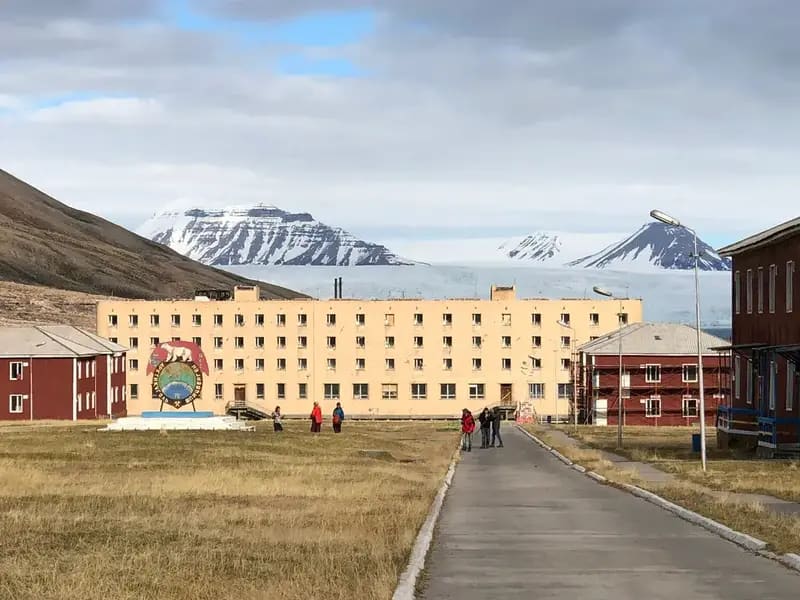
The vault attracts its share of conspiracy theories, mostly deflated by the fact that 2,700 people from fifty countries live nearby and commercial flights land daily. North of town lies Pyramiden, a Soviet coal settlement purchased from Sweden in 1927 and abandoned in 1998. What remains includes an Olympic pool slowly collapsing in the cold, stacks of film reels, and furniture left where people sat. The dry, freezing air preserves everything. Some researchers predict Pyramiden will outlast nearly every other modern human structure.
Longyearbyen itself has effectively banned burials. The ground stays too cold for decomposition. If the sky delivers nothing for a week, Svalbard still delivers plenty.
Iceland: Foregrounds That Matter
Most aurora photos fail because they're just pictures of sky. The memorable ones include something in the frame. Jökulsárlón, a glacial lagoon on Iceland's southern coast, does for aurora light what still water does for moonlight. Icebergs calved from Vatnajökull drift across the surface, doubling the display. Photographers arrive before sunset and stake out positions along the shore.
The lagoon has quadrupled in size since the 1970s as melting accelerates. The beauty is inseparable from the loss. Across the road, Diamond Beach collects icebergs that escape the lagoon and wash ashore on black volcanic sand, where they sit glittering until they melt.
If Jökulsárlón feels too crowded, Heinabergslón sits twenty-three miles away. It's glacier-fed rather than ocean-fed, more than 330 feet deep, and nearly empty of visitors. Colder water means its icebergs flip over less often, which matters if you're setting up a long exposure.
Iceland also solves the waiting problem better than most places. You can spend hours outdoors in geothermal water. The Blue Lagoon started as runoff from a power plant in the 1970s and became a spa by accident. There are 163 other sites worth visiting when clouds roll in.
Arctic Norway: Infrastructure That Works
Tromsø sits directly under the auroral oval and has built an entire industry around moving visitors to wherever the weather clears. That mobility matters more than latitude. Operators monitor forecasts in real time and drive groups to valleys and coastlines where cloud gaps open up. The trade-off is popularity. You won't be alone.
The Lofoten Islands offer the same latitude band with less congestion. Jagged peaks replace city lights, and photographers return here repeatedly for compositions that balance land and sky. During rare storms strong enough to excite oxygen atoms roughly 200 miles up, crimson displays appear over the sea stacks at Dyrhólaey in Iceland and similar formations along Norway's coast.
Norway holds 141 unusual sites beyond the auroras, which functions as reasonable insurance against bad weather.
Finnish Lapland: Watching From Warmth
The Kakslauttanen Arctic Resort near Finland's northern edge consists of geodesic glass domes arranged in a field. Nothing blocks the view upward. It looks like a research station built to survive collapse, and it's the most photographed aurora accommodation in existence. The design solves a real problem: staying awake and outdoors at 2 a.m. in February is harder than most people expect.
A less famous option is Arctic Guesthouse & Igloos in Ranua, where the glass structures run on their own engines in summer and get towed onto a frozen lake in winter. The lake location eliminates light pollution entirely.
Finland also hosts active amateur research. In 2018, an enthusiast group noticed pale green formations resembling sand dunes rippling across the sky. They flagged it to a space physicist, who confirmed it was a previously unidentified aurora type forming far lower in the atmosphere than expected. It's now called the dunes. Finland offers 96 other unusual sites while you wait for clear skies.
Scotland: The Option Lists Skip
You don't strictly need the Arctic Circle. During strong geomagnetic storms, the auroral oval expands south, and southern Scotland catches the edge. In especially powerful events, displays reach seventeen US states, appearing overhead in Minneapolis and low on the horizon as far south as Indianapolis and Cheyenne.
Galloway Forest Park was the first Dark Sky Park in the UK and Europe and holds Gold Tier status. Auroras appear over the hills there with reasonable regularity on clear nights. One complication: the Scottish Dark Sky Observatory, which anchored visits for a decade, burned down in June 2021. Police treated the fire as suspicious. A replacement is under construction at the former Clatteringshaws visitor centre inside the park, with two observing domes and a planetarium. Planning approval is in place, but opening estimates range from late 2026 into 2027. The park itself remains worth the trip whether the building is finished or not.
How to Stack the Odds
Stay at least five nights. Three is a coin flip. The single biggest factor in success is how many chances you give yourself. Choose a destination with road access to multiple valleys. Cloud cover is intensely local, and the ability to drive ninety minutes to a different sky is worth more than picking a spot one degree further north.
Learn the Kp index before departure and rely on NOAA's Space Weather Prediction Center rather than apps that just display a vague rating. Go near an equinox if your schedule allows any flexibility at all.
Most importantly, choose the place based on what else it contains. If the sky delivers nothing, you want to have spent the week somewhere already worthwhile. That's the only aurora advice that never disappoints.