A Different Kind of Migration
Most people associate Lodi with wine. The California town, tucked between Sacramento and the Bay Area, has built a reputation on relaxed tastings and approachable zinfandels. But every autumn, a seasonal shift happens that has nothing to do with harvest.
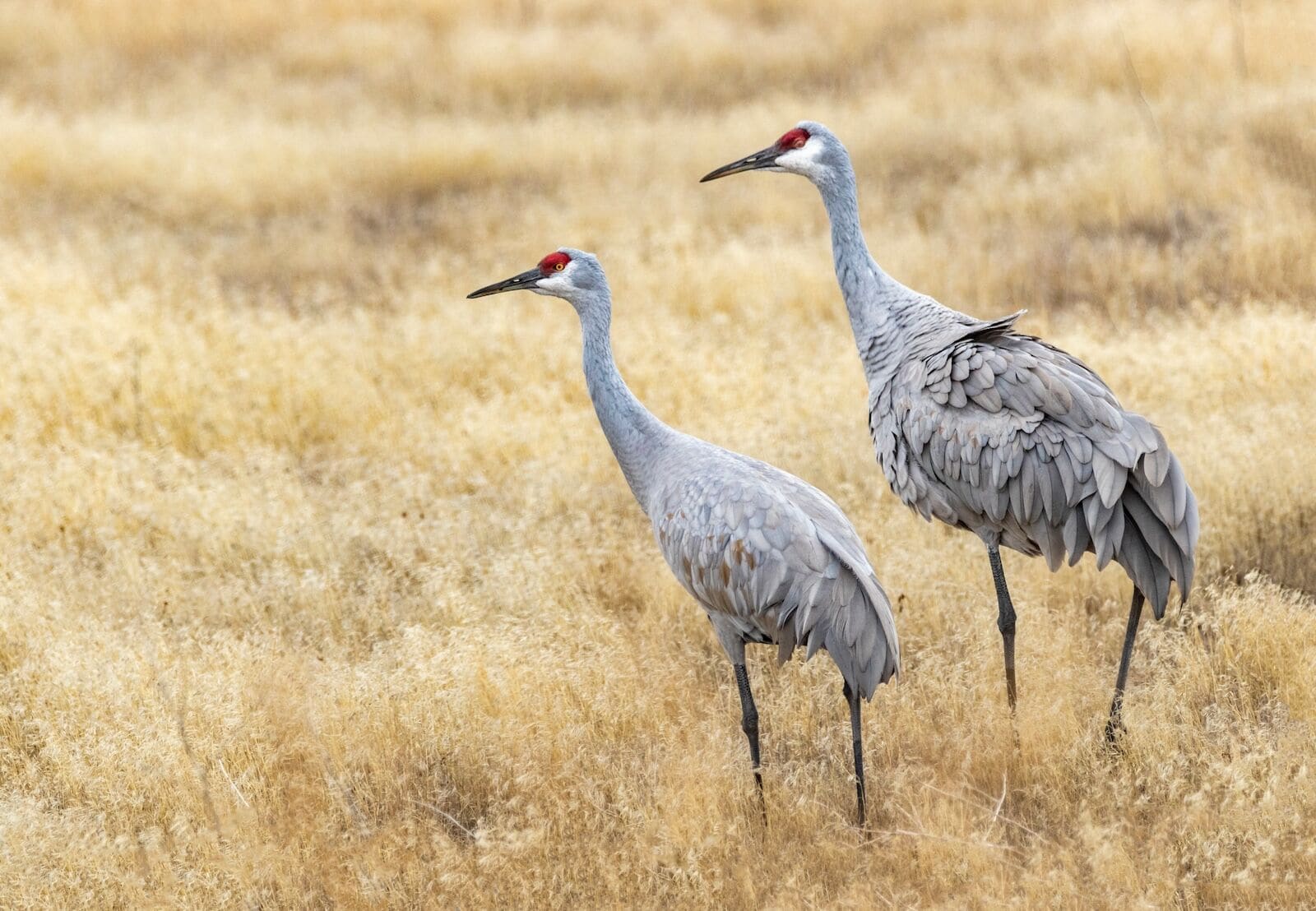
Starting in late September, sandhill cranes begin arriving in the wetlands and agricultural fields surrounding Lodi. By winter, their numbers swell into the thousands. These aren't subtle visitors. Standing four feet tall with wingspans that stretch over six feet, the birds are hard to miss. A patch of bright red skin on their heads makes them visible from a distance, though you often hear them first. Their calls, produced by oversized windpipes, carry for miles.
The phenomenon has become significant enough that Lodi now hosts an annual festival centered entirely on the cranes. The 28th edition runs November 6-8, 2026, with Hutchins Street Square serving as the base for workshops, wildlife talks, and excursions into crane territory. Entry to the main festival area is free.
Where Wine Country Meets Wetlands
The Sacramento-San Joaquin Delta provides the habitat these birds need. One study conducted by the US Geological Survey documented up to 27,000 cranes in the broader Sacramento region during peak winter months. They gather in groups that can range from a few hundred to several thousand at a time, typically arriving around dusk.
Woodbridge Ecological Reserve is one of the most reliable spots for viewing. The California Department of Fish and Wildlife runs guided public tours there from October through February, with registration opening in September. The reserve's South Site is accessible to independent visitors, while the North Site and viewing shelter require joining a guided tour.
During the festival, specialized excursions offer access to areas normally closed to the public. The "Crane Fly-In" tours on Staten Island reserve and walks along the Mokelumne River levee pair participants with naturalists who know where the birds congregate and how to approach without disturbing them.
More Than Just Watching
The festival schedule, released in early September with tickets going on sale September 8, goes beyond standard birdwatching. Recent years have included early morning photography sessions designed for capturing birds in fog and low light, sunset viewing tours, wetland walks, and even wildlife cruises on Lodi Lake.
Downtown, the event takes on the feel of a specialized art fair mixed with a wildlife conference. Biologists give talks, conservation groups set up exhibits, and artists display crane-focused work. Programming includes hands-on activities: bird drawing classes, wood carving clinics, origami workshops. Live animal displays bring in other species from the region.
Many guided outings and workshops are inexpensive or free, though they fill quickly and require advance booking. The festival format makes it accessible for families and serious birders alike.
Why They Dance
Sandhill cranes have behaviors that set them apart from most waterfowl. Their mating displays involve elaborate choreography: bowing, wing spreading, and vertical jumps. These "dances" happen throughout their time in the Delta, not just during breeding season. The birds are also unusually vocal, a trait linked to their ancient lineage. Their physiology resembles that of much older avian species, contributing to their somewhat prehistoric appearance and sound.
The cranes don't limit their stay to the festival weekend. They remain in the area through winter, meaning visitors have months to plan a trip without competing for space during the November event. Independent viewing requires patience and ideally a pair of binoculars, but the birds' size and noise make them easier to locate than many migratory species.
Building a Weekend Around It
Lodi sits about 40 miles south of Sacramento and 90 miles east of San Francisco, making it reachable for a weekend from much of Northern California. Sacramento International Airport is roughly 45 minutes away by car. Amtrak's Gold Runner line stops in downtown Lodi, though a vehicle becomes useful for reaching wineries and wildlife sites outside the town center.
The wine region includes more than 85 wineries, with zinfandel as the flagship varietal. Downtown Lodi offers a walkable cluster of tasting rooms, restaurants, and shops for visitors who prefer not to drive between vineyards. Lodi Lake provides another option, with nature trails and kayak access on the Mokelumne River.
The combination means a trip can layer wine, wildlife, and outdoor recreation without much logistical effort. The cranes give the region a draw that extends beyond its established wine tourism, attracting a different crowd and adding seasonal variety to what the area offers.
Timing and Practicalities
The crane season stretches from late September through February, peaking in the coldest months. Festival dates are fixed, but independent visits can happen anytime within that window. Guided tours through the California Department of Fish and Wildlife operate on a schedule separate from the festival, expanding options for those who can't make the November event.
Weather in the Delta during crane season tends toward cool mornings and mild afternoons, with fog common in early hours. Layers are practical, especially for dawn or dusk viewing when the birds are most active. The terrain around reserves and agricultural fields can be uneven, so sturdy footwear helps.
The festival's growth reflects broader interest in accessible wildlife tourism. Lodi offers a version that doesn't require expensive gear, remote travel, or expert knowledge. The infrastructure is in place, the birds are reliable, and the setting doubles as a wine destination. It's a model that works for weekend visitors and dedicated birders alike.