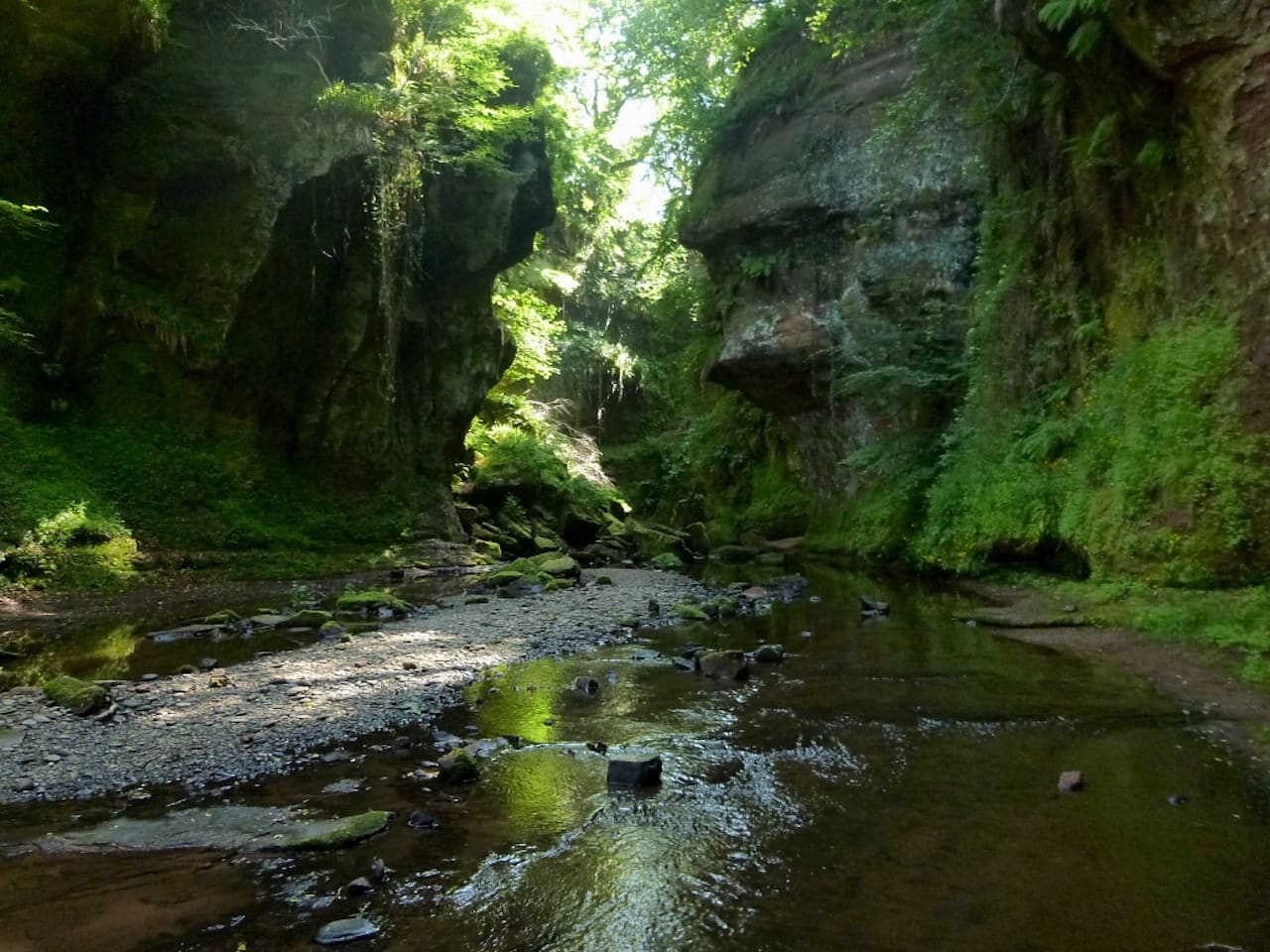
A Gorge With Screen Time and Baggage
Finnich Glen, a 23-acre tract of dramatic countryside north of Glasgow, is now on the market. The property includes a 24-meter-deep sandstone gorge carved by glacial meltwater more than ten millennia ago, a circular rock outcrop known as The Devil's Pulpit, and a steep staircase built in the 1860s. The site, sometimes called Scotland's "Grand Canyon," draws around 70,000 visitors each year.
It also has a screen presence. The gorge appeared as St Ninian's Spring in the television series Outlander and featured in Guy Ritchie's 2017 film King Arthur: Legend of the Sword. That visibility has brought crowds, but it has also exposed infrastructure gaps and safety risks that the current owners and local authorities hope new ownership might address.
Christie and Co, the real estate firm handling the sale, is marketing the property on a freehold basis. According to Mark Lavery, director of retail and leisure at the firm, the opportunity is aimed at buyers interested in building a commercial operation of national significance. The family that has owned the farmland since the 1940s says it wants to hand the project to someone with the vision to move it forward.
Planning Permission Already in Place
The sale comes with approved plans for a visitor center, café, event space, and a 150-space car park. If those plans are realized, visitor numbers are projected to climb to over 300,000 annually, an increase of more than 328 percent, according to estimates cited by Christie and Co.
That kind of growth would transform the site from a popular day trip into a major destination. It would also demand significant investment in facilities and staffing, as well as careful management of the environmental and social pressures that come with high foot traffic in a fragile natural setting.
The gorge sits about half an hour north of Glasgow by car, making it accessible to a large urban population and to tourists passing through the Loch Lomond area. But ease of access has not translated into ease of management. The site's current setup offers little in the way of formal parking, visitor services, or safety infrastructure.
Safety and Local Discontent
The lack of facilities has fueled local frustration. Visitors routinely park on roadsides, creating hazards and blocking emergency access. Litter has become a persistent problem. Some reviewers on Tripadvisor have described the site in unflattering terms, with one calling it a "glorified toilet."
More seriously, the gorge has been the scene of accidents and fatalities. Mountain rescue teams and local authorities have repeatedly warned people not to descend into the gorge, citing eroded staircases and dangerous currents. In summer 2025, a 21-year-old university student drowned after getting into difficulty in a deep section of the water while visiting with friends.
Limited emergency access compounds the risk. The gorge's topography makes it difficult for rescue teams to respond quickly, and the informal nature of the site means there is no on-site staff to monitor conditions or assist visitors in distress.
Stirling Council is reported to believe that the sale and subsequent development could help address some of these issues. A formal visitor center and car park would reduce roadside parking and provide a point of control. Event space and café facilities could generate revenue to fund ongoing maintenance and safety measures. But whether those improvements will be enough to balance the projected surge in visitor numbers remains an open question.
Balancing Ambition With Stewardship
The site's appeal is rooted in its natural drama and its cultural resonance. Finnich Glen is steeped in folklore and historic spirituality, and the gorge's moss-draped walls and narrow passages lend it an otherworldly quality that cameras capture well. That visual power has made it a magnet for social media content and film location scouts alike.
But the same qualities that make the site attractive also make it vulnerable. Sandstone erodes easily under foot traffic and weather, and the staircases that provide access are already deteriorating. The water that carved the gorge continues to shape it, and heavy use could accelerate damage to both the rock formations and the surrounding vegetation.
The challenge for any buyer will be to build a sustainable operation that can accommodate large crowds without degrading the landscape or alienating the local community. That will require more than planning permission and capital. It will require a clear understanding of the trade-offs involved in turning a natural site into a commercial attraction, and a willingness to invest in long-term stewardship rather than short-term returns.
The sale of Finnich Glen is a test case for how Scotland manages its natural and cultural assets in an era of rising tourism demand. The outcome will be closely watched by other communities facing similar pressures, and by anyone interested in the question of how much tourism a fragile site can bear.