The Trigger Was Analog
A photograph in a printed magazine set the wheels in motion. Pine forest, mirror-still water, mountains in the background. The caption read Kazakhstan. The image clashed with every preconception, and that friction was enough to start planning.
Within a month, Jessica Holmes had mapped a loose route across Kazakhstan and Uzbekistan. No packaged tours, few established itineraries, just fragments of information about a cross-border sleeper train and trails through national parks. She skipped the eSIM purchase deliberately, choosing intermittent Wi-Fi over constant connection.
Uzbekistan Offered Immersion Through Detail
Holmes flew into Tashkent and spent ten days moving between Samarkand and Bukhara. The Silk Road cities delivered intricate tilework and architectural layers that demanded attention. Standing before centuries-old mosaics made distractions irrelevant. The craftsmanship pulled focus in a way algorithms rarely do.
Without mobile data during the day, navigation became a question of asking locals and following instinct. Streets revealed themselves through wandering rather than routing. Meals at roadside spots involved pointing at dishes and accepting whatever arrived.
One memory: a small boy, perhaps four years old, who proudly guided diners to the outdoor toilet at a rural restaurant. His delight at receiving a tip stayed with her longer than many scripted experiences.
Crossing Into Kazakhstan by Rail
The sleeper train from Tashkent to Almaty became its own chapter. Holmes and her travel companion collected a hire car in Almaty and drove toward the landscapes that had first appeared in that magazine. Phone signal dropped quickly once they left the city. Google Maps froze. They relied on offline downloads and pre-saved routes.
The shift felt liberating rather than limiting. Directions grew vague. Choices became instinctive.
Kolsai Lakes Demanded Everything
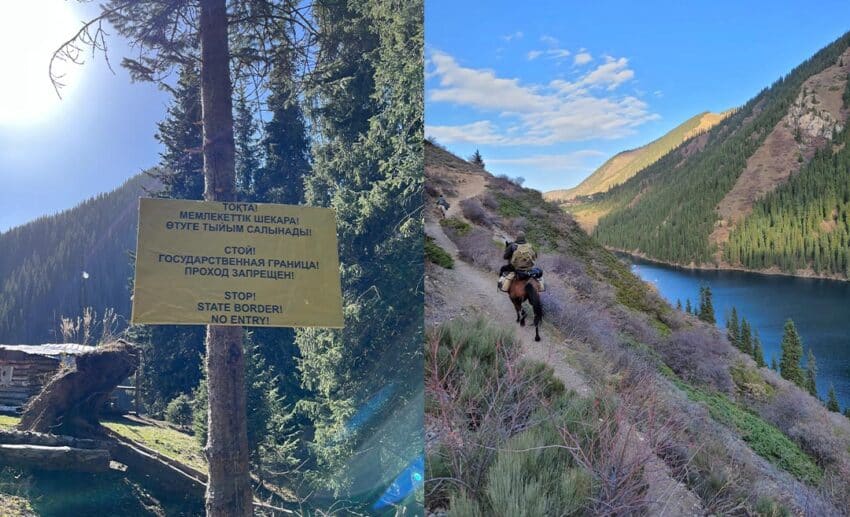
The hike from the visitor center at Kolsai Lakes National Park stretched over 21 kilometers with an elevation gain topping 1,200 meters. Holmes described it as one of the hardest walks she has attempted. They started before dawn and encountered almost no one except a lone horseman who passed without stopping.
At one point they veered off course and crossed into Kyrgyzstan without realizing it. A small border marker eventually appeared, instructing them to turn back. The alpine scenery around them resembled parts of Switzerland or the Canadian Rockies. Glacial blue water, dense pine coverage, dramatic ridgelines.
It looked nothing like the Central Asia of popular imagination, yet it matched exactly the photograph that had started everything.
Charyn Canyon and Unexpected Hospitality
At Charyn Canyon, often described as a smaller sibling to Arizona's Grand Canyon, Holmes camped overnight with minimal company. The rock formations shifted through shades of ochre and rust as the sun dropped. Temperature plummeted after dark.
That afternoon, a group of locals invited her and her companion to sit. They shared vodka and chocolate, and the conversation stretched for hours despite the language gap. Laughter filled in where words couldn't.
Earlier that same day, Holmes had stood meters from a golden eagle. The bird was enormous, almost unsettling in scale. Her phone stayed buried in her pack. She watched without interruption, aware that the moment existed only in memory and would never translate to a screen. That made it more valuable, not less.
What Drops Away Without Constant Signal
Traveling without reliable connectivity changes how you move. You notice more. You rely on judgment. You ask strangers for help. You take wrong turns because rerouting isn't an option.
In Kazakhstan, this meant ordering food without English menus and being surprised by what appeared. In Uzbekistan, it meant lingering in places that felt compelling without checking reviews or calculating optimal timing. Corners were turned because something looked interesting, not because it had been tagged or recommended.
Efficiency took a back seat. Richness filled the gap.
Navigating as a Woman in Less-Trafficked Territory
Central Asia doesn't top many lists for solo women travelers, though that perception is shifting. Holmes felt welcome throughout. People were curious, generous with time, and open to interaction even without shared language.
One exception: a local football match where she realized she was the only woman in the stands. The initial stares felt intense and lingering. But attention faded as the game progressed. Nearby spectators shared sunflower seeds. She joined in, chewing and spitting shells like everyone else.
The discomfort dissolved once she stayed present.
Space Beyond the Algorithm
Algorithms tend to reinforce the same destinations. Popularity breeds visibility, which breeds more popularity. The cycle tightens. Travel starts to feel predictable, optimized, pre-selected.
The most meaningful experiences often come from stepping outside that loop. From choosing places because something about them sparks curiosity, even if the reason isn't clear at first.
Holmes' trip began with a single image and unfolded through research, instinct, and a willingness to tolerate uncertainty. There were gaps in the plan. Moments of not knowing what came next. That ambiguity made it feel real.
Central Asia is gaining traction, but it still offers something increasingly rare: space. Physical space without crowds. Mental space without constant stimulation. Room to think, disconnect, and experience a place on your own terms.
Practical Notes from the Ground
Holmes flew London to Tashkent on Uzbekistan Airways, then booked trains via the Uzbekistan Railways website. In Uzbekistan, she moved between Tashkent, Samarkand, and Bukhara by rail and taxi arranged through accommodations. She recommends booking train tickets early, especially for high-speed routes or sleeper services, and carrying cash in Uzbekistani som for smaller vendors.
The sleeper train from Tashkent to Almaty crossed the border overnight. In Almaty, she collected a hire car through Vladex, which required an International Driver's License arranged before departure. Near Kolsai Lakes National Park, she stayed in an apartment booked via Booking.com with mountain views. At Charyn Canyon, she camped by the River Charyn and hired equipment from the visitor center for around GBP10 per person, including tent, sleeping bags, and ground mats. Toilet facilities stayed open all night.
She downloaded offline maps on Maps.me before leaving Almaty, which proved essential once signal dropped. Temperatures shifted quickly in the mountains, so layering was necessary.
What Sticks
For Holmes, the journey started with a photograph. For others, it might be a route never taken or a question that won't go away. The trigger matters less than the willingness to follow it without needing every answer in advance.
Sometimes the best travel stories begin not with a trending destination or a well-worn itinerary, but with a small spark of curiosity and the decision to see where it leads.