A Rare Formula
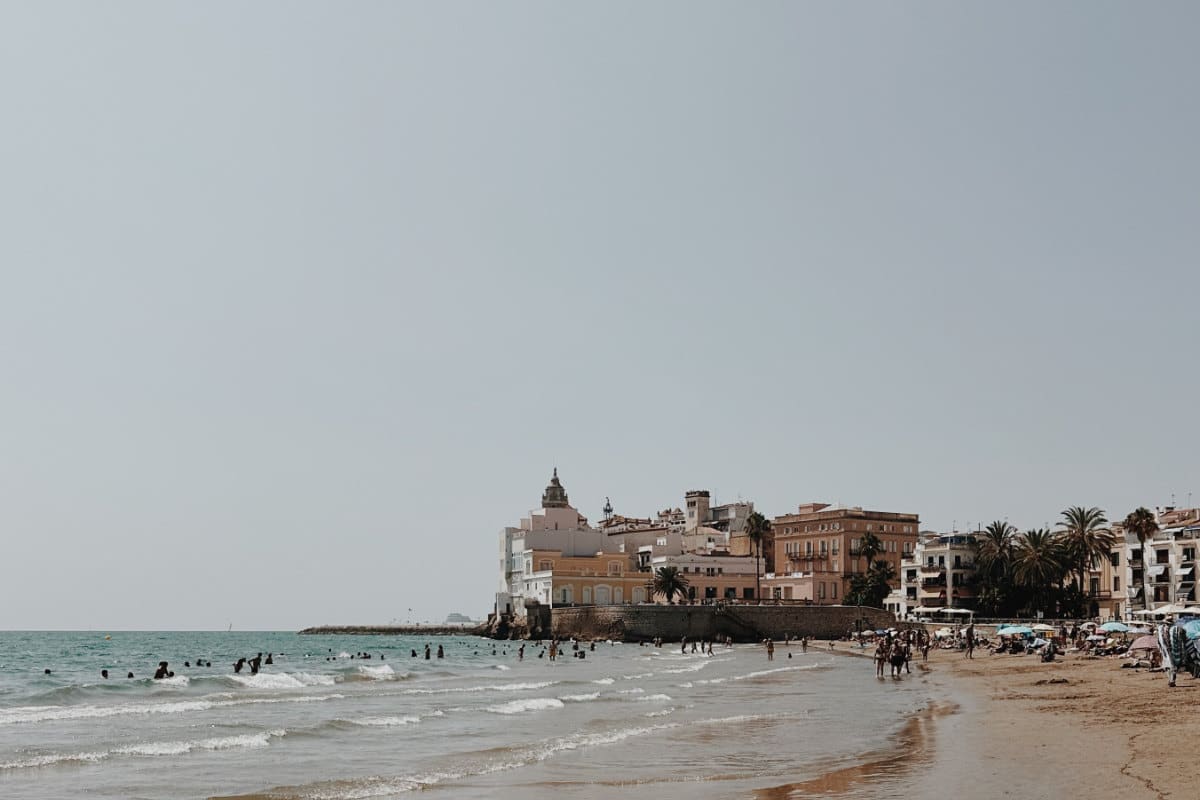
Finding a beach destination that balances culture, food, and coastline without tipping into overcrowded resort territory is harder than it sounds. Sitges, a small town on Catalonia's Costa del Garraf, might be one of the few places that manages it. The entire pedestrianized Old Town takes fifteen minutes to cross on foot, yet it holds seventeen beaches, wine bars focused on natural and biodynamic bottles, and a collection of early Modernisme architecture that predates Barcelona's most famous examples.
The town sits 40 minutes southwest of Barcelona by train or car, where the Garraf mountain range meets the Mediterranean. That geography creates what locals describe as a microclimate: reliably cooler summers than much of the Italian coast, paired with a luminosity that has drawn painters and architects since the 19th century. It's compact enough to skip a rental car entirely, but varied enough that two visitors could spend a week there and never overlap.
Morning Rhythm
Most travelers begin at one of the cafes near the waterfront. Federal Cafe, with its high-gloss crimson tile and folding windows that open to the sea breeze, serves a traditional Catalan cortado called a cafè tallat. From there, the town splits into two modes: cultural or coastal.
The Cau Ferrat Museum, housed in the former home of Santiago Rusiñol, a leader of Catalonia's Modernisme movement, holds five early Picasso drawings alongside tile mosaics and ironwork that defined the region's aesthetic a century ago. The building itself, perched above the water, demonstrates the natural curves and colorful detailing that would later become synonymous with Gaudí and his contemporaries.
The beaches divide along a similar axis. Southwest of the Church of Saint Bartholomew and Saint Thecla, the mile-and-a-half Passeig de la Ribera promenade offers sun loungers and chiringuitos, the beach bars that originated in Sitges over a century ago. These spots lean lively and accessible, with consistent crowds and easy amenities.
Northeast of the church, the tone shifts. Stone steps climb past the whitewashed core of the old town, opening onto a series of dramatic coves framed by limestone outcroppings. Platja de Sant Sebastià is the largest; Cala Fonda offers more seclusion. Platja dels Balmins, the furthest from town, is clothing-optional and draws visitors looking to avoid tan lines and crowds in equal measure.
Siesta Strategy
Between 2 and 5 p.m., many shops close for the traditional siesta. Summer afternoons on the Costa del Garraf are hot, despite the microclimate's reputation for cooler evenings. The most practical response is a retreat indoors.
Sitges Group Apartments operates eight buildings in the Old Town, three of them directly on the waterfront. The units retain original features like tiled patios and private sun loungers, but add full air conditioning, in-unit laundry, and rainfall showers. For travelers spending more than a night or two, the setup makes midday downtime viable without sacrificing proximity to the action.
Lunch in Sitges requires little effort. Bonpreu, a local grocery chain comparable to Whole Foods, stocks jamón ibérico de bellota, the highest grade of Iberian ham, alongside manchego, salted cod for esqueixada salad, and the ingredients for pan amb tomàquet, the Catalan staple of bread rubbed with tomato, garlic, and olive oil. A Zumex machine in the produce section dispenses freshly squeezed orange juice into empty bottles from the shelf, a small convenience that feels emblematic of the town's low-key efficiency.
Evening Cadence
By 8 p.m., the light softens and the streets fill again. El Cable, a family-run tapas bar, draws a crowd that spills onto the pavement. Inside, locals order vermouth poured over ice with an orange slice, an olive, and a splash of soda. The menu runs to patatas bravas, tuna tartare, and shredded duck confit finished in a malvasia wine reduction.
Across the street, Hibou functions as both natural wine bar and sit-down restaurant. The kitchen emphasizes organic vegetables and the sommelier curates a list of biodynamic Catalonian wines. A bottle of La Vinya del Sastre's Fet a Mida, a natural white made from xarel·lo grapes, carries the briny minerality of vines grown in porous limestone soil near the sea. That salinity cuts through richer dishes in a way that feels specific to the region's terroir.
For seafood, Can Laury sits on the port in the Aiguadolç neighborhood, a short walk along the coast. The restaurant is known for large-format rice dishes served on white linen, though the atmosphere remains casual. The signature seafood paella and paper-thin slices of jamón ibérico de bellota are both worth the trip.
Why It Works
Sitges succeeds because it resists sprawl. Everything a visitor might want exists within a small radius, which eliminates the need for taxis, rental cars, or the logistical friction that can flatten a beach holiday. The town offers variety without requiring a schedule: beaches for sun and seclusion, museums for cooler mornings, wine bars for long evenings. The scale encourages repetition rather than exhaustion.
Late at night, after the restaurants close, churro stands near Platja de la Ribera serve chocolate-dipped pastries to small groups lingering by the water. The rhythm is unhurried, the infrastructure unobtrusive. For travelers tired of beach destinations that feel either too developed or too remote, Sitges presents a middle path that few other Mediterranean towns manage to sustain.