A Lab That Opens Its Doors at Eleven
Sunday morning in the Peruvian Amazon usually belongs to the biologists. Aracely Yarasca, coordinator of the Wired Amazon Project, pins a moth specimen through its thorax with practised precision, while her colleague analyses audio recordings of primate vocalisations at the next desk. But at eleven o'clock, the lab at Tambopata Research Center transforms. Tourists file in, tweezers in hand, ready to mount their own Lepidoptera samples from the previous night's trapping session.
The lodge, tucked inside Peru's Tambopata Nature Reserve, operates as both a working research station and an ecotourism property. It is one of three lodges - soon to be four - run by Rainforest Expeditions, a Peruvian-owned operator that has threaded conservation into its business model since 1989, when the site began as a macaw study project. Today, the all-female team of resident biologists splits its time between fieldwork and guiding visitors through a suite of hands-on conservation activities collectively called Wired Amazon.
Yarasca, a Lima-born biologist with a master's degree in marine sciences and climate change, describes the guests not as spectators but as "change agents". Participants photograph insects for DNA barcoding, compile bioacoustic libraries of monkey calls, set up camera traps for jaguars, and log species that may turn out to be new to science. Every sample is tagged with the name of the guest who captured it; if a moth proves to be undescribed, that guest will be invited to name it.
Breakfast with Macaws, Dinner with Data
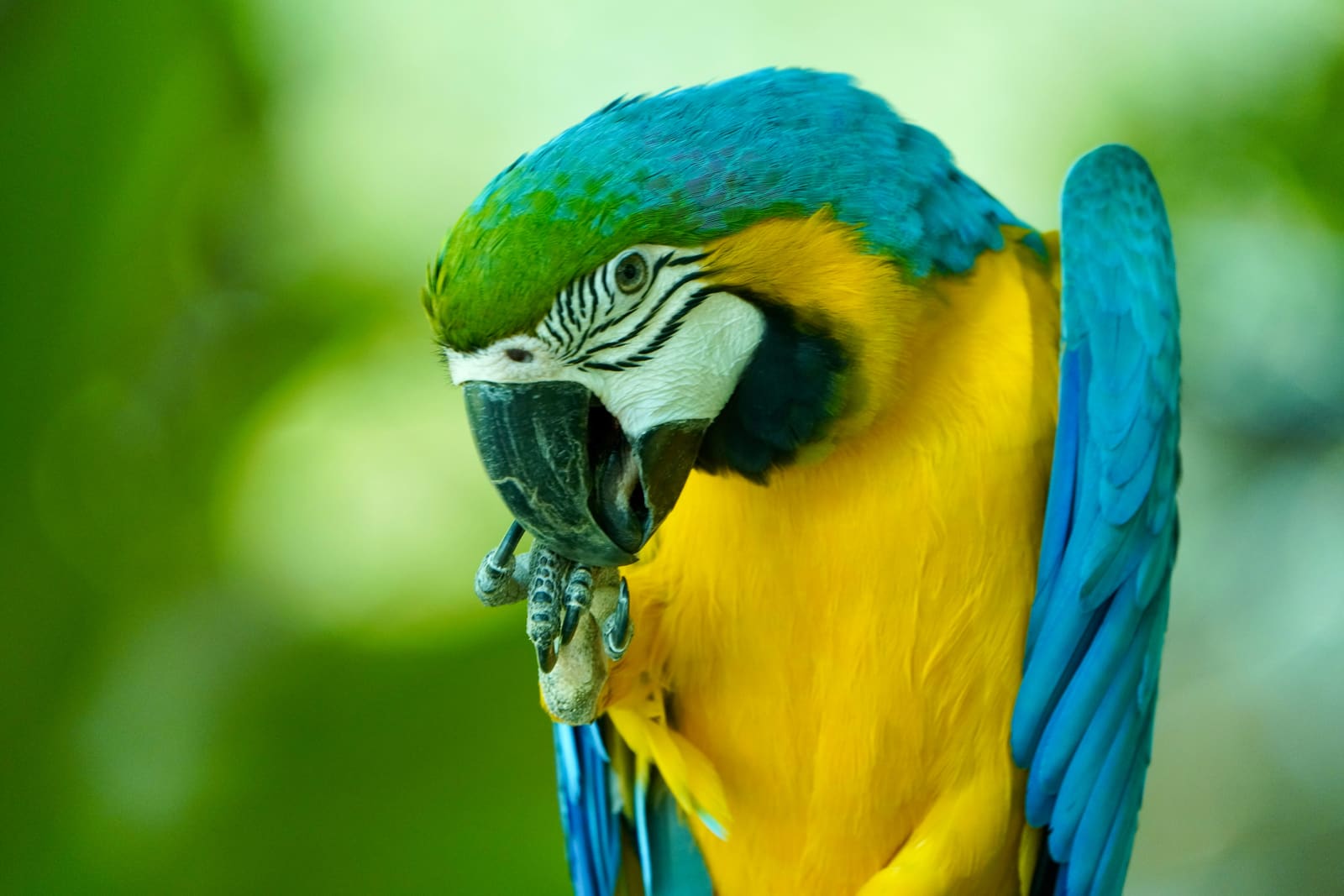
Each morning before dawn, boats slip down the Tambopata River under fading moonlight, heading for the Chuncho Clay Lick. Dozens of scarlet, blue-and-yellow, and red-and-green macaws descend on the mineral-rich clay face to ingest sodium, calcium, and magnesium - a nutritional supplement that offsets toxins in their diet of seeds and fruit. Guides liken the gathering to a nightclub: raucous, colourful, and intensely social.
The clay lick is the reason Tambopata Research Center exists. In 1989, photographer and architect Eduardo Nycander founded the lodge to support macaw conservation, recognising that these birds depend on large tree cavities for nesting - cavities that are disappearing as logging accelerates. The flagship Wired Amazon project now installs artificial nests high in the canopy, suspended deep enough to protect chicks from toucans and olingos. Internal cameras monitor development without human intervention; it takes at least three months for a chick to fledge and eventually make its way to the clay lick, where it will find a lifelong mate.
Back at the lodge each evening, the biologists deliver pre-dinner talks that do not gloss over the threats. Alejandra Chumbimune, who leads the 8 Primates project under the supervision of Dr Mark Bowler, speaks plainly about drought, illegal gold mining, and logging in the Madre de Dios department. Rainfall patterns are shifting, water temperatures are rising, and the researchers acknowledge they cannot halt destruction outright. What they can do is document and protect the species that remain.
Building a Library of Monkey Calls
Chumbimune's current focus is bioacoustics. The reserve is home to eight primate species, including spider monkeys, howler monkeys, and capuchins, each with distinct vocalisations. The 8 Primates project aims to compile a reference library of calls that can be used to detect and monitor populations across Peru, offering a non-invasive way to assess forest health.
Guests assist by recording short audio clips on their smartphones during forest walks. The data feeds into a broader effort to understand how habitat loss and ecological change affect species with long life cycles - primates and jaguars, for instance, which Chumbimune notes may take longer to recover than insects or smaller fauna. Seven individual jaguars are known to circuit the area around Tambopata Research Center, tracked through camera-trap footage that visitors help install and retrieve.
The work is painstaking. Yarasca emphasises that meaningful conservation data can take a decade to accumulate, a reality that underscores the patience science demands. But the model allows travellers to contribute in ways that extend beyond their stay, whether by funding equipment through their lodge fees or by uploading georeferenced recordings that expand the acoustic database.
Why Trap a Moth No One Has Named
Species discovery might seem like a luxury when so many known animals are sliding towards extinction. Yarasca argues the opposite. Documenting biodiversity - particularly of insects - is a strategic tool when applying for protected-area status or international conservation grants. A high count of native species strengthens the case for legal protection, and insects often serve as early indicators of environmental stress.
The Discovering New Species component of Wired Amazon currently focuses on tiger moths and pyralid moths. Guests jar specimens at dusk, then work with Yarasca the following morning to pin and photograph them. Images are sent to Dr Juan Grado, an entomologist collaborating on DNA barcoding. If a specimen is confirmed as undescribed, the guest who captured it is invited to propose a name.
Yarasca sees the activity as a way to shift perceptions. Insects are often dismissed or feared, yet they cycle nutrients back into the soil and form the base of countless food webs. She points to cockroaches - reviled in cities but essential decomposers that break down organic waste. After several days in the field, even sceptical visitors leave with a clearer sense of the role these creatures play.
A Room with No Wall
The 24 guest rooms at Tambopata Research Center, designed by Nycander, are elevated structures with one side open to the forest, separated from the canopy only by mosquito netting. Deluxe suites include soaking tubs and hammocks; nightly rates start around 800 US dollars and cover all meals, guided excursions, and citizen-science sessions.
At night, the soundtrack is a chorus of cicadas, katydids, and jumping sticks. The insects remain outside the netting, content with their nocturnal routines. During the day, guests can climb a canopy tower for panoramic views, take sunset river cruises, or trek deeper into the reserve with naturalist guides who point out capybaras, caimans, and the occasional tapir.
The lodge is a four-hour journey from Puerto Maldonado - first by bus, then by boat along the Tambopata River. Flights arrive in Puerto Maldonado from Lima and Cusco. Rainforest Expeditions also operates Refugio Amazonas, which offers aerobotany activities in Brazil-nut forests, and Posada Amazonas, a community-managed property closer to town that caters to families. A fourth lodge, Kuaii Amazonas, is scheduled to open in spring 2027 for travellers seeking a shorter Amazon immersion.
Tech in the Jungle
Staying at Tambopata Research Center involves a peculiar kind of disconnect. Visitors come to the Amazon to escape screens, yet the lodge immerses them in technology - live-stream cameras in macaw nests, bioacoustic recorders, camera traps with motion sensors. The tools are not distractions but instruments that reveal how the forest functions and what it needs to survive.
Chumbimune notes that the goal is to make conservation legible. Travellers leave with a clearer understanding of the data pipeline: how a single audio clip or camera-trap image contributes to population estimates, habitat assessments, and funding applications. The experience, she says, tends to stick in memory longer than a photograph alone.
Yarasca frames her role as translator. The Amazon affects global climate systems, yet its complexity can feel abstract to outsiders. By involving guests in the daily work of science - even tasks as modest as pinning a moth or labelling an audio file - the researchers hope to foster a sense of responsibility that extends beyond the visit.
"They are not just listeners," Yarasca says. "They are part of these projects, they are active participants."