A City Built on Vertical Transit
Valparaíso's funiculars have been climbing the city's steep hills since 1883. The boxy cabins, quiet and efficient, are painted on murals and printed on postcards. But for residents of this Chilean port city, they are more than symbols. They are lifelines.
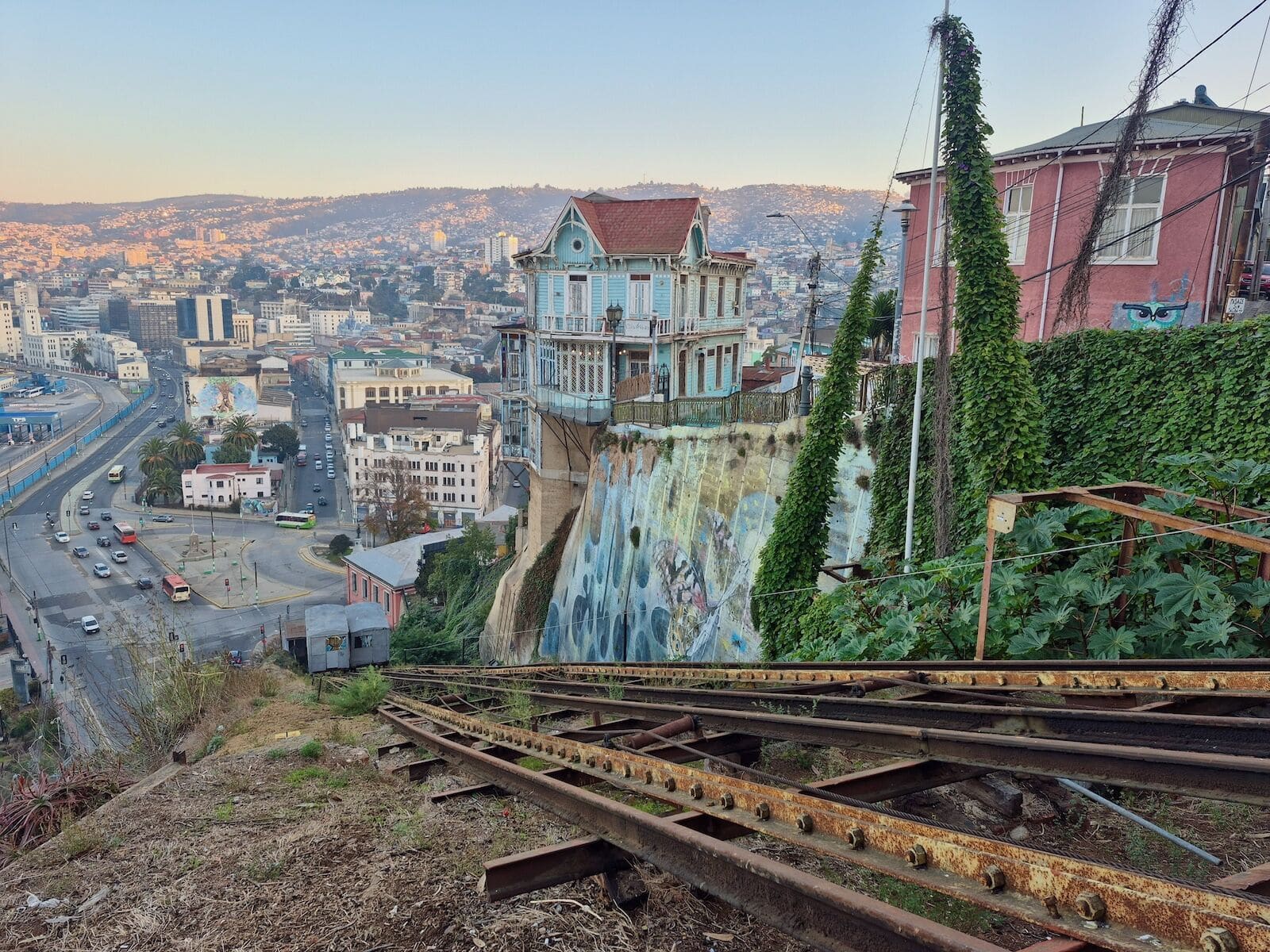
Or at least they used to be. Of the 19 funiculars still standing, fewer than 10 remain operational. Three sites are empty lots where tracks once ran. Others sit dormant, their machinery corroded or dismantled, their stations locked behind graffitied gates.
"For years, the ascensores were seen simply as tourist attractions," says Pilar Espinoza Figueroa, president of Ascenval, the Association of Elevator Users in Valparaíso. "But they are more than that. They are a form of public transport. They connect people, facilitate movement, and contribute to neighborhood life."
Founded in 2021, Ascenval is a citizen-led advocacy group working to keep the funiculars running. Its roughly 30 members, funded by their own contributions, lobby government agencies, monitor restoration contracts, and organize community events. They see the ascensores as a way to ease road congestion and prevent the social isolation that comes when entire hillside neighborhoods are cut off from the port below.
When a Port Needed to Move Fast
The funiculars were born out of necessity. In the late 19th century, Valparaíso's seaport was booming. Workers flooded in, settling on the cerros, the steep hills that ring the harbor. Getting from home to the docks meant a grueling climb, often hundreds of feet straight up.
The first ascensor opened in 1883. By the early 20th century, more than 30 funiculars crisscrossed the city. Many were privately owned, powered first by steam or water, then converted to electricity. The shift cut pollution and improved reliability.
Ascensor Barón, built in 1906, still operates today. It carries passengers up a near-vertical slope in under a minute, a journey that would take 20 minutes on foot.
But the funiculars' golden age did not last. The opening of the Panama Canal in 1914 rerouted global shipping and gutted Valparaíso's port economy. As the city's fortunes declined, so did its elevators. Improved roads offered alternatives, and private operators abandoned unprofitable lines. Ownership of the surviving ascensores passed to local and regional governments, which struggled to maintain them.
UNESCO recognized Valparaíso's historic quarter in 2003, a nod to the city's cultural significance. But the designation does not guarantee funding or restoration. That gap is where Ascenval steps in.
What Happens When the Lifts Stop
Andrés Rodrigo Valenzuela Ormeño, a web developer and Ascenval's treasurer, grew up riding Ascensor El Peral in Cerro Alegre. Figueroa relied on Ascensor Artillería, now out of service. Both have watched their neighbors struggle as transport options vanish.
"Mobility is restricted, which has an economic impact on neighborhoods and local businesses," Figueroa says. "Not having access to transport and being unable to get home safely takes a toll on mental health. It brings an entire community to a standstill."
The closures hit older residents and people with disabilities hardest. Walking down a hillside might be manageable. Walking back up, especially with groceries or small children, is another matter. Some neighborhoods on Playa Ancha, a densely populated hill, have been without reliable funicular service for years. The Artillería and Villaseca ascensores, which once linked the area to the port, remain stalled by funding gaps and bureaucratic delays.
Ormeño joined Ascenval after seeing a video on social media. "I felt that the lifts were an important issue worth championing to prevent them from disappearing," he says. He now spends much of his free time attending government meetings, drafting policy proposals, and coordinating with residents' associations.
Ascenval's work includes organizing community inspections of abandoned elevators, where locals can hear about the technical and financial obstacles blocking restoration. During a recent Heritage Day, Ascensor Mariposa was converted into an outdoor movie theater. Families paint miniature funicular carriages at awareness workshops.
The Dual Role of Tourism
Ascenval's focus is on residents, but tourism plays a role. The funiculars in the most visited areas, El Peral and Concepción, carry more passengers and generate more revenue. Both are located within the UNESCO-designated quarter and operate reliably from roughly 7:00 AM to 9:30 PM. A ride costs 1,000 Chilean pesos, about one US dollar, payable in cash.
Figueroa envisions a model where visitors experience neighborhood life, not just the postcard views. "Where they can take the lift up and then make their way down through the magical passageways and staircases of this port city," she says.
Ormeño is more cautious. "Tourism is beneficial for Valparaíso as long as visitors respect its residents and appreciate and look after the city," he notes.
He recommends seeking out the out-of-service funiculars as well. Ascensor Polanco, the city's only fully vertical elevator, is accessible from the lower level via an underground passageway. Though closed, its gate offers a glimpse of the shaft. San Agustín, an unassuming working ascensor, is used mainly by residents. There is no sea view, just a practical ride home.
Ascenval publishes operational updates on its website. Pindoor, a mapping platform, charts all locations, active or not.
What Comes Next
The four board members of Ascenval are not historians or engineers. They are residents who saw a piece of their city disappearing and decided to act. Their work is slow. Restoration projects are put out to tender, often stalling because of funding shortfalls, a lack of technical expertise, or drawn-out approval processes. Ascenval monitors these tenders, pushes for transparency, and advocates for a sustainable public management model.
"Our work includes organizing meetings with authorities and representing Ascenval before ministries, public services, and members of parliament," Figueroa says. "We develop and put forward proposals to influence public policy relating to the lifts."
The funiculars are more than heritage. They are infrastructure. They reduce pressure on roads, cut emissions, and keep neighborhoods connected. They are also a reminder that cities are shaped by the needs of the people who live in them, not just the visitors who pass through.
Whether the ascensores survive depends on whether that lesson takes hold.