A Fabric Timeline Stretched Across Three Venues
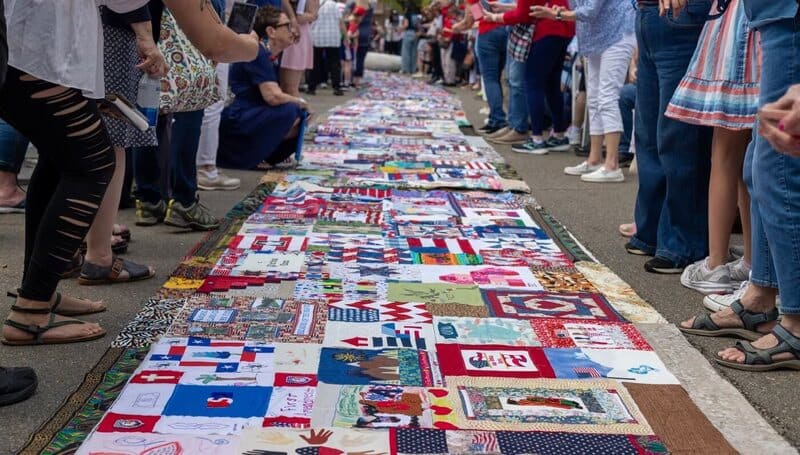
America's 250th anniversary inspired an unusual artwork: a textile measuring 1,000 feet in length, stitched together from contributions sent in by residents nationwide. The Great American Birthday Quilt gathers individual squares made by families, students, military members, and community organizations into a single sprawling display. Artist Steve Prince from the Muscarelle Museum of Art at William & Mary helped coordinate the effort, which invited participants to reflect on their personal relationship with the country's narrative. Throughout 2026, rotating portions appear at the Colonial Williamsburg Regional Visitor Center, the Greater Williamsburg Sports and Events Center, and the Muscarelle Museum itself.
The quilt represents an attempt to build collective memory through craft. Each square carries its own symbols and stories, creating a patchwork that shifts as viewers move along its length. Unlike a single artist's vision, this project distributes authorship across thousands of hands.
Breakfast Crawls and Competitive Eating
Williamsburg has declared itself the Pancake Capital of the World, a claim backed by the sheer density of restaurants dedicated to griddle cakes. Capitol Pancake, Colonial Pancake House, and Mama Steve's are just a few stops on the city's self-guided Pancake Trail, an informal route connecting the establishments most committed to batter and syrup.
The dish itself has colonial precedent. Frank Clark, who studies historic food practices at Colonial Williamsburg, noted to Garden & Gun in 2025 that pancakes enjoyed widespread popularity during the 18th century as a straightforward preparation: cake cooked in a pan. Modern versions have evolved into towering stacks made from buttermilk and buckwheat, far removed from the simple hoecakes of earlier eras.
Each year, the city organizes a festival around this culinary identity, featuring breakfast gatherings, eating contests, and the trail itself, which encourages visitors to sample multiple interpretations of the same basic recipe.
Winter Weekends Built Around Music and Laughter
Every Martin Luther King Jr. weekend since 2015, Williamsburg has hosted a jazz festival that pulls from the Tidewater region's overlapping traditions of blues, gospel, and church music. The Winter Blues Jazz Fest has brought in six-time Grammy winners like the Blind Boys of Alabama, Chicago guitarist Wayne Baker Brooks, vocalist Tahira Clayton, and local swing ensemble Good Shot Judy. Concerts take place at the William & Mary Alumni House, Historic First Baptist Church, and other venues, supplemented by workshops and late-night jam sessions that extend the festival beyond formal performances.
A few weeks later, the Last Word Comedy Festival fills downtown venues with improvisers, sketch acts, and stand-up performers. The lineup has included "Whose Live Anyway?" featuring Ryan Stiles, Greg Proops, Jeff B. Davis, Joel Murray, and Laura Hall, as well as Bluebird Improv with Tim Meadows from "Saturday Night Live" and Matt Walsh from "Veep." The festival spreads performances across theaters and breweries, allowing audiences to move between shows throughout the evening. Collegiate groups from William & Mary and neighboring universities join nationally recognized acts, creating a mix of polished routines and experimental formats like fully improvised musicals.
Both festivals share a similar approach: they use the city's infrastructure to create multi-day events that feel less like packaged entertainment and more like extended celebrations.
Independent Film and Historical Reckoning
Each February, the Virginia Black Film Festival brings together filmmakers, actors, and audiences for screenings and industry discussions. Bryan G. Thompson founded the festival to expand opportunities for Black storytellers and connect emerging directors with established professionals. The event includes panels, masterclasses, and conversations covering topics from performance technique to distribution strategy. Past guests have included Keith David, Daphne Maxwell Reid, Clifton Powell, and Tim Reid.
Williamsburg's setting adds context to many of the films shown. First Baptist Church of Williamsburg, established in 1776 by free and enslaved Black congregants, is among the oldest African American historical sites in the country. "History Half Told Is Untold," which won Best Historical Feature at the 2024 festival, examines the church's story through archival material and interviews, demonstrating how local history can inform contemporary documentary work.
Oysters and Wine Along the Riverbank
Every October, the Yorktown Wine & Oyster Festival pairs two regional products with deep roots. Indigenous communities harvested oysters from the Chesapeake Bay long before European contact. By the colonial period, oysters had become a dietary staple, and by the 1800s they supported a major commercial industry. After decades of population decline, restoration projects and aquaculture have revived Virginia's oyster sector, with modern farmers emphasizing the distinct flavors shaped by different waterways.
Virginia's wine industry also traces its origins to early colonial experiments with grape cultivation near Jamestown. Today, the state's vineyards produce viognier, cabernet franc, sparkling wines, and other varieties. Producers like Williamsburg Winery and other Chesapeake Bay-area operations showcase the ongoing evolution of agricultural traditions.
The festival takes place along Yorktown's historic waterfront, where both industries converge in a single afternoon of tastings and pairings.
Siege Lines and Illuminated Boats
Yorktown Victory Weekend in October marks the 1781 siege that ended major fighting in the Revolutionary War. The event unfolds on one of the best-preserved battlefields in the United States, with encampments, artillery demonstrations, and interpreters explaining the movements that led to British General Charles Cornwallis's surrender. Visitors can walk the terrain where American and French forces constructed siege lines, and musicians perform pieces from the 18th century.
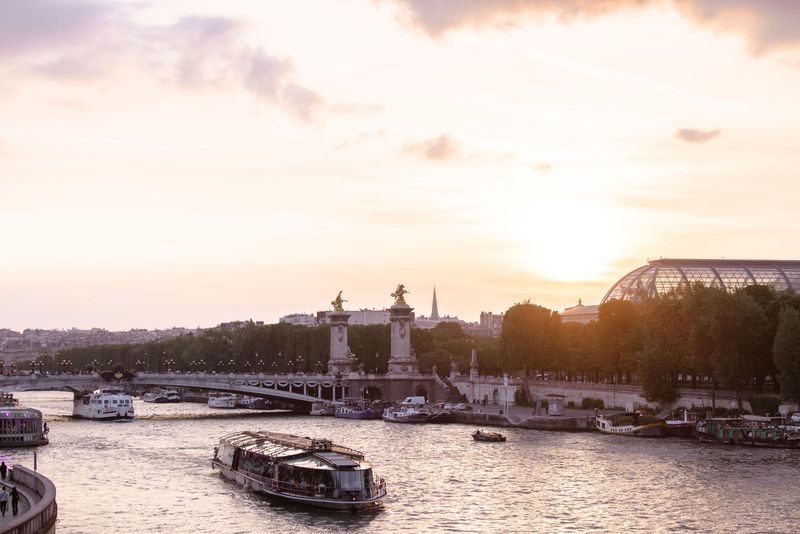
Two months later, on the first Saturday of December, the same waterfront hosts a very different kind of spectacle. The Yorktown Lighted Boat Parade features sailboats, fishing vessels, and recreational craft decorated with thousands of lights. Owners outfit their boats with glowing masts, illuminated hulls, wreaths, and nautical decorations, creating a floating procession that drifts past Riverwalk Landing. The river that once served as a vital colonial port and later played a strategic role in the Revolution now carries a holiday parade.
The same weekend, Historic Yorktown holds its Christmas Market on Main, a European-style gathering of local artisans, seasonal foods, live music, and handcrafted goods. Visitors wander between stalls, examine handmade ornaments and artwork, and warm up with hot cocoa or mulled wine.
Candlelight and Fireworks
Each Saturday in December, Colonial Williamsburg recreates an 18th-century illumination, a public celebration marked by candlelight, fire, and fireworks. In the colonial era, communities used these displays to commemorate military victories and other significant events. The modern version, called Grand Illumination, lights up the Historic Area with candles in windows and cressets along the streets. Musical performances lead into fireworks above the Governor's Palace and the Capitol, and the area remains decorated with wreaths and garlands throughout the holiday season.
The tradition draws on historical precedent but adapts it for contemporary visitors, blending period aesthetics with the expectations of a seasonal festival.
Theme Park as Culinary Itinerary
From April through June, Busch Gardens shifts focus from roller coasters to food. The park's Food & Wine Festival distributes more than 135 international dishes across 17 themed stations. The menu includes Virginia specialties like Chesapeake-style crab cake sliders and jalapeño-cheddar hushpuppies alongside Ghanaian kelewele, Brazilian churrasco, Turkish döner kebabs, Polish pierogi, Hawaiian kālua pork sliders, and Puerto Rican mofongo and ceviche.
Beverages come from Virginia producers, including beers from Alewerks Brewing Company and The Virginia Beer Company, and wines like viognier from The Williamsburg Winery and chardonnay from Barboursville Vineyards. Specialty cocktails, international beers and wines, and exclusive tastings turn a day at the park into a progressive meal that winds through the grounds.
The festival demonstrates how a theme park can function as a venue for regional and international culinary exploration, offering visitors a reason to visit beyond the usual attractions.