A Museum That Might Not Last
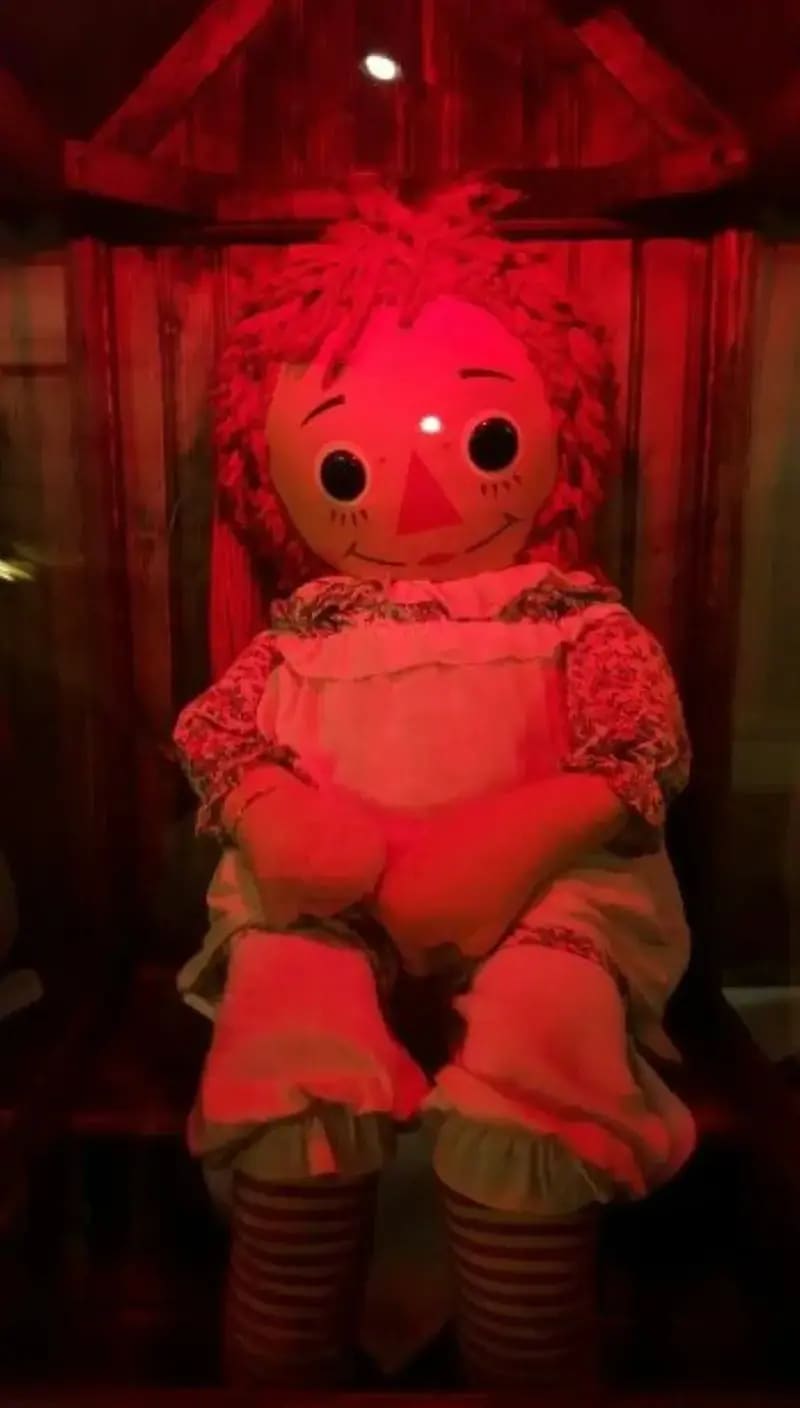
Something unusual is happening in Salem, Massachusetts this autumn. For the first time in six years, the public can see the Warren collection - hundreds of objects that paranormal investigators Ed and Lorraine Warren spent decades gathering. After sitting locked in their Monroe, Connecticut basement since 2019, the artifacts are now on display at 259 Essex Street.
The timing matters. According to those managing the collection, there's no commitment to keep it in Salem past late December. Comedian Matt Rife and YouTuber Elton Castee purchased the Monroe property in 2025 and currently hold guardianship of what's inside. They've opened the Connecticut house for overnight stays - eight people maximum, flat fee, paranormal equipment included - but only after guests sign two liability forms. The second waiver addresses non-physical risks: possession, levitation, and outcomes the hosts won't take responsibility for.
Meanwhile, the Salem installation runs as a self-guided flashlight tour through thirteen rooms. It's a temporary arrangement while a permanent location is sorted out elsewhere. For anyone drawn to this particular slice of American occult history, the window is narrow.
Where Documentation Replaces Legend
Not every frightening place needs a ghost attached to it. Taunton State Hospital in Massachusetts has a reputation built entirely on how it treated psychiatric patients - information available in medical records and institutional logs. The building's history doesn't require embellishment.
The same applies to Outagamie County in Wisconsin, where an old asylum cemetery holds at least 133 people. Most graves carry no names. The absence itself is the story.
Occasionally, though, belief systems produce their own kind of dread. In West Virginia, a historical marker honors Zona Heaster Shue, a woman whose mother claimed her murdered daughter's ghost revealed the killer's identity. The court allowed the testimony. The jury convicted the husband. Whether you accept the supernatural element or not, the legal record is real.
In Taos, New Mexico, three unmarked concrete graves supposedly contain the bodies of witches. The deliberate anonymity was the point - an attempt to prevent any return. In Easton, Massachusetts, a roadside sign marks where an eighteenth-century sawmill once stood. Local residents believed its owner used demonic help to run the operation. Someone thought that warranted a metal plaque.
Cemeteries That Earn Their Strangeness
Burial grounds work best as destinations when they offer more than atmosphere. Highgate Cemetery in London opened in 1839, declined into overgrowth after World War II, and then became the center of a bizarre public dispute in the 1970s. Two occultists each claimed a vampire was living in the grounds. Amateur hunters showed up at night. Tombs were pried open. Bodies were staked. One of the men went to jail in 1974 for tampering with remains. Karl Marx is buried there, along with author Douglas Adams - a range that says something about the place.
In Florida, Merritt Island's Georgiana Cemetery includes the grave of Ethel Allen, killed at nineteen in the early 1900s. Her murder was never solved. Her headstone, unlike every other marker, was made by hand. Fresh decorations still appear, and no one knows who brings them.
Philadelphia holds the grave of Joseph Augustus Zarelli, a boy who remained unidentified for sixty-five years. He has a name now, given after forensic genealogy work in 2022. In Hillside, Illinois, a headstone reportedly spins on its base - an ordinary couple's grave in a cemetery otherwise filled with clergy and organized crime figures.
North Carolina has a tradition of building small wooden structures over graves, meant to shelter spirits rather than trap them. The intention matters.
A House You Can Sleep In
The Lizzie Borden house in Fall River, Massachusetts operates as a bed and breakfast. The 1892 murders happened in those rooms. People book stays there regularly, including couples on romantic weekends. At least one engagement has resulted from a visit, according to guest accounts.
It's not a re-creation or a themed hotel. It's the actual building, furnished to period, with guest rooms available for rent. Breakfast is included.
When the Myth Is Wrong and the Truth Is Better
Some stories improve when you strip away the fabrication. The internet has spent years building a mythology around Helltown, Ohio - tales of satanic churches, murdered children on an abandoned bus, mutant animals in the woods. What actually occurred is more interesting: the federal government bought out the village of Boston, Ohio to create a national park. Residents relocated. Houses were marked for demolition and eventually torn down in 2016.
A town erased by bureaucracy and eminent domain carries its own weight. The site is closed now, but the record remains.
The reverse case exists too. The Bolton Strid in Yorkshire looks harmless - a narrow section of stream you might think you could step across. What it actually is: the River Wharfe turned vertical, carving down through rock with hidden voids beneath the banks. Local accounts claim no one who has fallen in has come out. There are no confirmed numbers, which is part of the problem.
Objects With Reputations
Key West's Fort East Martello Museum holds Robert the Doll, a figure that has generated over a century of superstition. Visitors who photograph him without asking permission often write apology letters afterward. The museum keeps the correspondence.
Whether the doll does anything is beside the point. The belief that it might - and the behavior that belief generates - is the real phenomenon.
Doing It Right
Every location mentioned here is somewhere people lived, worked, or died. The difference between curiosity and exploitation comes down to approach.
Read the actual history before you go. Many of these sites are private property, closed to visitors, or restricted for legitimate safety reasons. Trespassing doesn't make the experience more authentic; it just makes you a problem.
Take folklore seriously as folklore. When a West Virginia court admitted ghost testimony in a murder trial, that wasn't a joke or a novelty. It reflected genuine belief held by real people navigating real grief. That's more compelling than any haunting - and considerably more unsettling when you think about what it meant for everyone involved.
The places that unsettle us most are rarely the ones designed to do so. They're the ones where something actually happened, and where the documented record is worse than any story someone could invent. Court files, medical logs, and parish records don't need embellishment. They just need to be read.