A Franchise Built on Geography
Few film series have shaped travel aspirations quite like the Bond franchise. Since 1962, the films have used real places as both stage and character, threading action sequences through bazaars, mountain passes, and coastal towns that existed long before cameras arrived. The result is a global trail that blurs fiction with accessible geography.
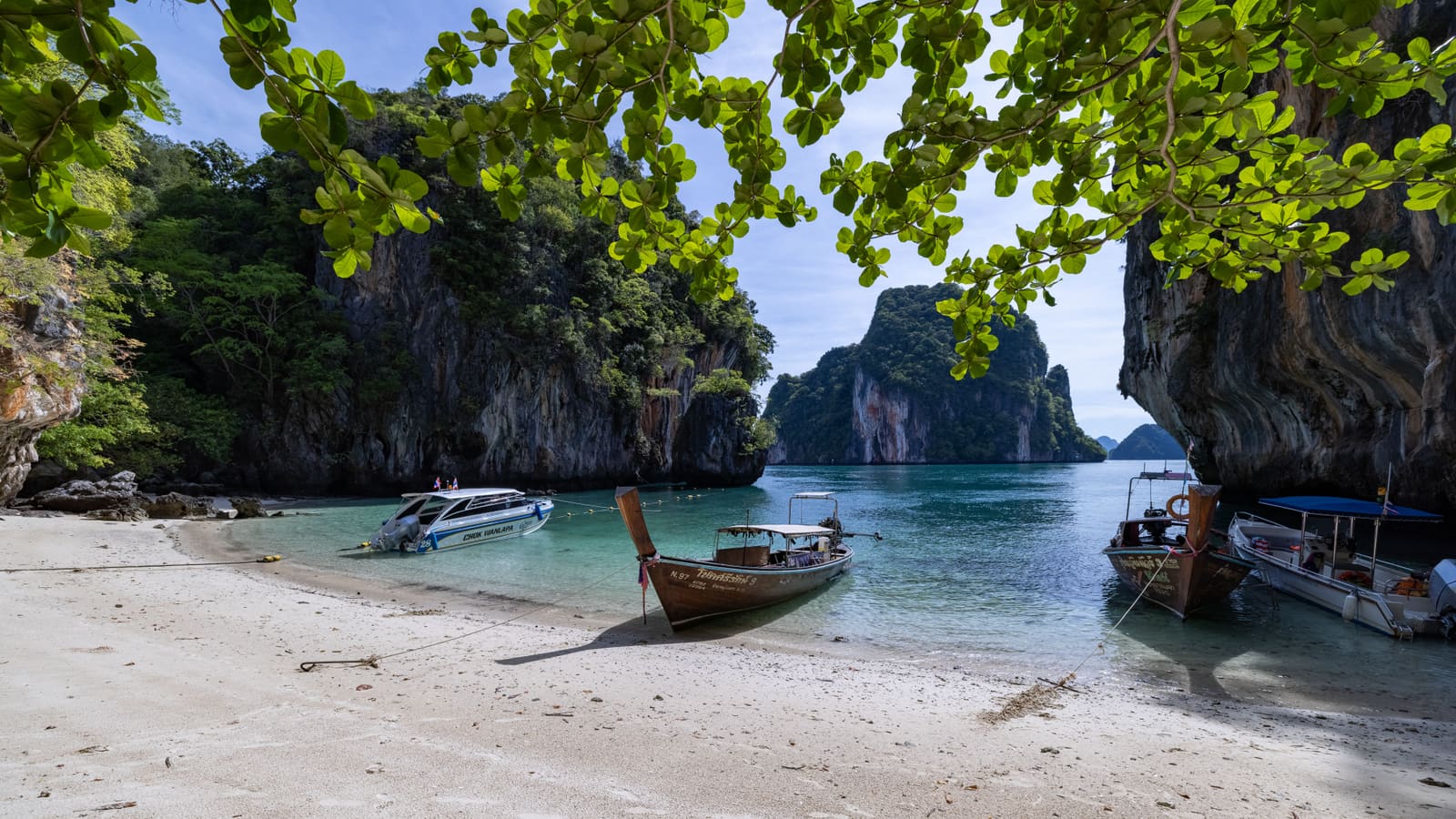
Thailand's Phang Nga Bay carries the unofficial nickname "James Bond Island" after its appearance in The Man with the Golden Gun. Norway's Atlantic Ocean Road saw a surge in road-trippers after No Time to Die. These locations share a common trait: they were striking before Hollywood, but the films amplified awareness in ways tourism boards rarely manage alone.
For travellers interested in retracing those routes, the destinations below represent some of the most visually distinct and practically reachable sites from six decades of production.
Mexico City's Street Theatre
The opening sequence of Spectre placed Daniel Craig's Bond inside Mexico City's Day of the Dead celebrations, weaving through crowds of costumed participants and towering skeleton puppets. The parade itself was a scripted invention for the film, but it resonated so strongly that Mexico City launched an actual annual Day of the Dead parade in November 2016, months after the movie's release.
Beyond that event, the capital offers layered appeal: over 150 museums, the pre-Columbian pyramids at Teotihuacán an hour north, lucha libre wrestling, and neighbourhoods dense with street food and murals. The city functions as both a cultural hub and a logistical base for exploring central Mexico.
License to Kill also filmed here in 1989, though the franchise has used Mexican locations intermittently compared to European staples.
Istanbul's Layered History
Bond has returned to Istanbul three times, across From Russia with Love, The World Is Not Enough, and Skyfall. The 2012 film staged a motorcycle chase across rooftops near the Grand Bazaar, a sprawling covered market that has operated since the 15th century.
Other scenes used the Basilica Cistern, an underground water reservoir from the Byzantine era, and exteriors of Hagia Sophia, the mosque and former cathedral that has stood for nearly 1,500 years. These sites anchor a city where Roman, Byzantine, and Ottoman layers overlap visibly in architecture and street layout.
Istanbul's hammam baths, Bosphorus ferry crossings, and contemporary art galleries offer reasons to visit beyond film tourism. The city's position as a bridge between Europe and Asia gives it a geographic and cultural duality that the franchise has mined repeatedly.
Matera's Ancient Caves
For No Time to Die, production moved to Matera in southern Italy, a town built into limestone hillsides and known for its sassi, cave dwellings carved directly from rock. The settlement has been continuously inhabited for approximately 9,000 years, making it one of the world's oldest.
Matera was named a European Capital of Culture in 2019, two years before the film's pandemic-delayed release. The town's winding alleys and stone facades provided the backdrop for a car chase in an Aston Martin DB5, the franchise's signature vehicle.
The region surrounding Matera includes other cave churches and rupestrian architecture, plus vineyards producing Aglianico del Vulture wines. Summer temperatures can exceed 35 degrees Celsius, so spring and autumn visits are more comfortable.
Tangier's Coastal Position
Tangier appears in Spectre and The Living Daylights, the latter marking Timothy Dalton's first turn as Bond in 1987. The Moroccan port city sits at the Strait of Gibraltar, where the Mediterranean meets the Atlantic, and has long served as a crossroads for trade and migration.
Historically, Tangier operated under international administration from 1923 to 1956, a period that attracted writers, artists, and reportedly actual intelligence operatives. Today, the medina retains shuttered houses painted in white and blue, while the Cinéma Rif, an Art Deco theatre from the 1930s, hosts film festivals and cultural programming.
Beaches extend west from the city centre, and ferries connect Tangier to southern Spain in roughly an hour, making it a practical starting point for exploring northern Morocco or a quick detour from Andalusia.
Cairo's Monuments and Museums
Roger Moore's The Spy Who Loved Me filmed in Cairo in 1977, using the Gayer-Anderson Museum, a 17th-century house adjacent to the Ibn Tulun Mosque, and sections of Al-Muizz Street, a thoroughfare in the medieval Islamic quarter lined with restored Mamluk and Fatimid buildings.
Cairo's density can overwhelm first-time visitors: the Egyptian Museum holds over 120,000 artefacts, the Pyramids of Giza sit on the city's western edge, and the Khan el-Khalili bazaar sprawls across narrow lanes filled with metalwork, textiles, and spice vendors.
Tour operators now offer Bond-themed itineraries that trace Moore's route, though the city's broader historical draw far exceeds any single film's footprint. Traffic congestion is significant, and hiring a guide or driver can simplify navigation.
The Scottish Highlands' Dramatic Terrain
Skyfall placed Bond's fictional family estate in the Scottish Highlands, filming along the A82 road through Glencoe and Glen Etive. The peaks of Buachaille Etive Mòr and Buachaille Etive Beag frame the valley, and the climax unfolds at a lodge built specifically for the production, then dismantled after shooting.
Eilean Donan Castle, a 13th-century fortress on an island where three lochs converge, appeared in The World Is Not Enough as a stand-in for MI6's Scottish headquarters. The castle is one of Scotland's most photographed structures and remains open to visitors most of the year.
The Highlands offer hiking routes of varying difficulty, whisky distilleries concentrated in Speyside, and villages accessible by narrow single-track roads. Weather shifts quickly, and waterproof layers are advisable even in summer.
Jamaica's Coastal Origins
Ian Fleming wrote the Bond novels at Goldeneye, his estate on Jamaica's north coast, and the franchise returned to the island for Dr. No, Live and Let Die, and No Time to Die. The latter film constructed a beach house on a bay near Port Antonio for Craig's final scenes as the character.
Ocho Rios, featured in Dr. No, remains a cruise port and gateway to Dunn's River Falls, a terraced waterfall that visitors can climb. The Goldeneye estate now operates as a resort, preserving Fleming's villa alongside newer villas and beach cottages.
Jamaica's music, cuisine, and cultural output extend well beyond Bond associations. Kingston, the capital, holds the Bob Marley Museum and a thriving contemporary art scene, while the Blue Mountains offer cooler temperatures and coffee plantation tours.
Switzerland's High-Altitude Villain Lair
The revolving Piz Gloria restaurant atop Schilthorn, a peak in the Bernese Alps, doubled as the lair of villain Ernst Stavro Blofeld in On Her Majesty's Secret Service. At 2,970 metres, the summit station is reached by cable car from the village of Mürren.
The restaurant maintains Bond theming, including a walk of fame for cast and crew, and serves Swiss staples like fondue and rösti. On clear days, visibility extends to the Eiger, Mönch, and Jungfrau peaks.
Goldfinger also filmed in Switzerland, using the Furka Pass for the iconic Aston Martin DB5 scene. The pass, which crosses the central Alps, opens seasonally from June to October depending on snow conditions.
Practical Considerations for Bond Pilgrims
Not all filming sites remain accessible or recognisable. Sets are often temporary, and locations change with development. Checking current conditions and opening hours before travelling avoids disappointment.
Some destinations, particularly in the Highlands or Swiss Alps, require specific planning around weather and transport. Others, like Istanbul or Mexico City, function as major urban centres with year-round accessibility but their own logistical challenges related to size and congestion.
The films romanticise their settings, but the real places offer depth that two hours of screen time can't capture. The bazaars, mountains, and coastlines existed long before Bond arrived, and they'll outlast the franchise's next casting debate.