On Wednesday afternoon, the moon will slide between Earth and the sun in a total solar eclipse that sweeps across Greenland, Iceland, and northern Spain. Viewers in the UK and Ireland won't see totality, but they will catch a partial eclipse with up to 95 per cent of the sun obscured - the most coverage Britain has witnessed since the total solar eclipse of 1999, according to Royal Museums Greenwich.
The next total solar eclipse visible from the UK won't arrive until 2090, making this week's event a rare opportunity for a generation of sky watchers.
How It Works
A solar eclipse happens when the moon passes directly between Earth and the sun, casting a shadow on our planet. The alignment has to be precise: the moon blocks the sun's light, carving out a path of totality where the shadow falls completely, and creating a partial eclipse in surrounding regions.
For those in the UK and Ireland, the moon will cover most - but not all - of the sun's disk, creating a crescent of light that narrows and then widens over the course of the event.
Timing and Geography
The eclipse begins just after 6pm and wraps up by around 8.10pm, with exact timings shifting by a few minutes depending on location. The further southwest you are, the more of the sun will be blocked.
In Scotland, first contact occurs around 6.08pm; in Cornwall, it starts closer to 6.18pm. Maximum coverage happens between 7.05pm and 7.15pm across the country, with the moon beginning to pull away shortly after.
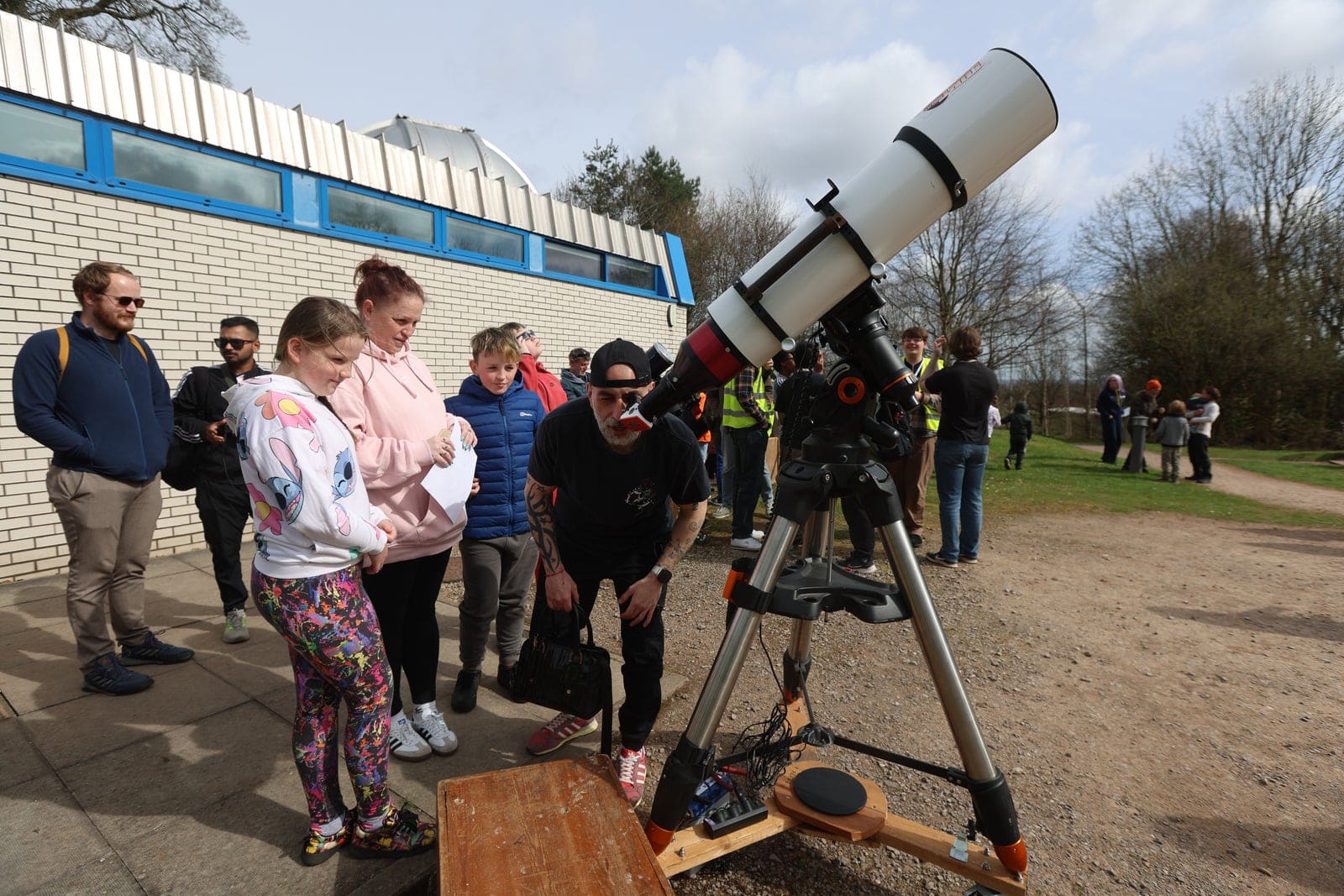
Weather permitting, viewers will need a clear western horizon and eclipse glasses - standard sunglasses won't protect your eyes. Royal Museums Greenwich and the Royal Astronomical Society both recommend certified eclipse viewers or DIY pinhole projectors made from household materials.
Eclipse glasses have largely sold out in shops and online in the days leading up to the event, though some retailers may still have stock.
Best Viewing Spots
Cornwall offers the highest coverage in England, with up to 95 per cent of the sun blocked from 6.18pm onward. Maximum eclipse arrives at 7.16pm. Open-sky locations along the Lizard peninsula and Land's End provide unobstructed views, though crowds are expected.
Pembrokeshire in Wales will see around 94 per cent coverage. Dark Sky Discovery Sites, including Poppit Sands, are well-suited for the event, combining low light pollution with expansive horizons.
Eryri National Park (Snowdonia) and other parts of Wales will see roughly 90 per cent coverage - still a striking sight, with the sun reduced to a thin arc.
London will experience 90 per cent coverage starting around 6.17pm, reaching maximum at 7.12pm. Primrose Hill and Greenwich Park are popular vantage points with clear western sight lines, though both will be busy.
Edinburgh and other Scottish cities will see about 91 per cent coverage. Scotland last witnessed a partial eclipse with up to 98 per cent coverage in March 2015, when the path of totality crossed the Faroe Islands and Svalbard.
Mizen Head in Ireland, one of the island's most southwesterly points, is positioned for nearly 97.5 per cent coverage - the highest figure in the region.
What to Expect
Even at 90 per cent coverage, the sky won't go dark. A partial eclipse dims the light but doesn't trigger the eerie twilight of totality. The temperature may drop slightly, and shadows may look sharper, but the effect is subtle compared to the full event happening further north.
Still, the sight of the sun reduced to a sliver is striking, and the rarity makes it worth the effort. The last time the UK saw a total solar eclipse was 11 August 1999, when the path of totality crossed Cornwall and Devon. Clouds obscured the view for many, but those who saw it described the experience as unforgettable.
This week's partial eclipse won't match that drama, but it's the closest Britain will come for another 64 years. For anyone who missed 1999 or wasn't born yet, it's a chance to see something most people never will.