The Numbers Behind the Crowds
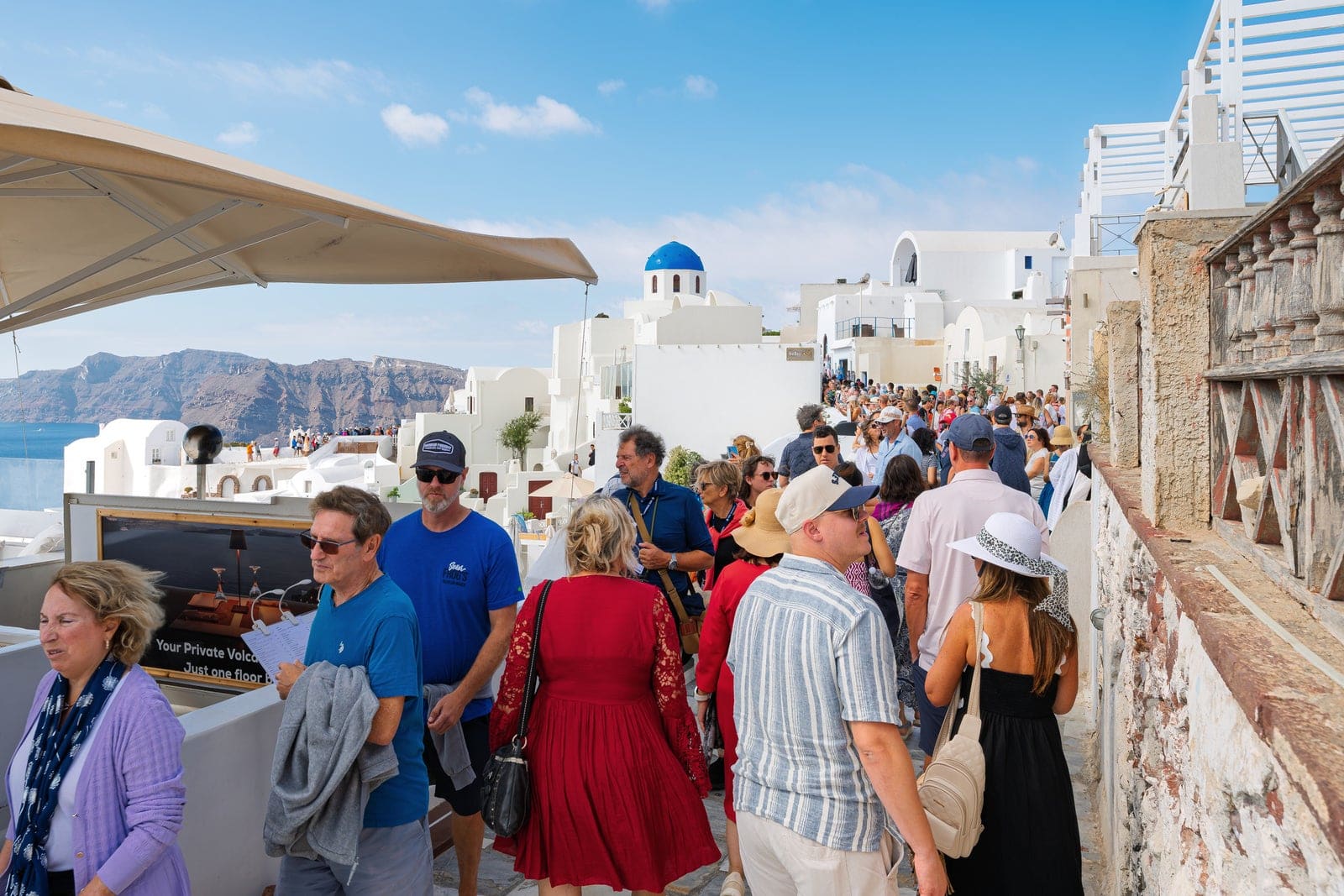
The Southern Aegean in Greece recorded the widest gap between visitors and residents of any small region in the European Union, according to 2024 data from Eurostat. Tourists logged roughly 127 overnight stays per resident across the Cyclades and Dodecanese islands, which include Santorini and Rhodes. With 41.5 million overnight stays against a population hovering around 327,000, the region's tourism density outpaced anywhere else on the continent.
Close behind came the Ionian Islands, where Corfu and Zante attracted more than 20.5 million overnight stays for a population of approximately 200,000. That works out to 103 nights per resident. Both island groups benefit from white-sand beaches, Mediterranean cuisine, and dependable summer sun that draw holidaymakers year after year.
Greece as a whole has seen a sharp uptick in arrivals. The Bank of Greece reported a 15.4 percent rise in visitors during the first half of 2026 compared to the same period in 2025, underscoring the country's growing appeal.
Alpine and Adriatic Hotspots
Italy's South Tyrol claimed third place, with nearly 69 tourist nights per resident. The province serves as a gateway to the Dolomites and hosts Bolzano, a city where Italian and Austrian cultures blend. Skiers and mountain enthusiasts flock to the area, especially during winter months.
Croatia's Adriatic coast followed closely with 67 nights per resident. The shoreline's crystal-clear waters and historic cities such as Dubrovnik and Split have turned it into a magnet for beachgoers and culture seekers alike. Resort towns dot the coast, offering easy access to both relaxation and exploration.
Rounding out the top five were Spain's Balearic Islands, which recorded almost 60 tourist nights per resident in 2024. Mallorca's sandy beaches and Ibiza's nightlife have long made the archipelago a summer staple. Yet the region has also become a flashpoint for anti-tourism sentiment. Thousands of residents took to the streets of Palma and Soller this past summer, protesting the strain that visitor numbers place on infrastructure and daily life.
What the Data Measures
Eurostat's analysis focuses on small regions, defined as areas with populations between 150,000 and 800,000. The figures count nights spent at registered tourist accommodation establishments, including hotels, guesthouses, and short-term rentals, then divide that total by the resident population. The result is a snapshot of how heavily tourism weighs on a given community.
Crete, another Greek destination, ranked sixth with significant overnight stays relative to its population. Austria's Tyrol and Salzburg also appeared high on the list, benefiting from winter sports and cultural festivals. Portugal's Algarve and Spain's Canary Islands rounded out the top ten, both relying on year-round sunshine and coastal appeal.
The Quiet End of the Spectrum
At the opposite end, Mayotte, a French overseas territory in the Indian Ocean, recorded just half a night's stay per resident. With fewer than 167,000 total overnight stays, the island remains far removed from the intense visitor flows seen in the Mediterranean and Alpine regions.
The disparity between Mayotte and the Southern Aegean illustrates the uneven distribution of tourism across Europe. While some places struggle with overcrowding, others see minimal tourist activity, highlighting the challenge of balancing economic benefits with quality of life for local communities.
Implications for Communities
High tourist density can bring revenue and jobs, but it also strains housing markets, public services, and the environment. In the Balearics, residents have voiced concerns about rising rents, overcrowded beaches, and the conversion of residential neighborhoods into tourist zones. Similar frustrations have surfaced in other densely visited areas, prompting local governments to explore measures such as visitor caps, tourist taxes, and stricter regulations on short-term rentals.
The Eurostat data offers a clear picture of where the pressure is greatest. For travelers, it serves as a reminder that popular destinations often grapple with the consequences of their own success. For policymakers and residents, the figures underscore the need for sustainable tourism strategies that protect local communities while still welcoming visitors.