A Six-Minute Window That Won't Come Again
When the moon blocks the sun over southern Egypt on August 2, 2027, the darkness will hold for six minutes and twenty-three seconds. That figure alone explains why accommodation in Luxor has been disappearing since last year. Most total eclipses deliver two to three minutes of totality. The widely watched 2024 event across North America peaked at four and a half. This duration won't be matched on reachable terrain until 2114, placing it beyond the lifespan of nearly everyone reading this.
The numbers stack up beyond duration. Cloud probability in Luxor during August hovers between one and twenty percent, among the clearest odds available anywhere for eclipse viewing. The corridor of totality stretches roughly 250 kilometres across central Egypt. And the shadow sweeps directly over monuments constructed by people who structured their entire belief system around solar cycles.
Where the Path Falls
The eclipse track crosses ten countries, but only a handful offer practical options for travellers. Luxor emerges as the clear frontrunner. It sits near the centreline of the path, capturing nearly the full duration available. Unlike much of the route, it has an international airport, established hotel infrastructure, and systems designed to handle visitor volume.
The eclipse reaches its peak around 1:05 in the afternoon local time, with the sun positioned 82 degrees above the horizon, nearly straight overhead. This timing matters for photography and for the quality of the experience itself.
Cairo, despite being Egypt's capital and main gateway, lies outside the totality zone. This remains the most frequent planning mistake. Standing in Cairo on that afternoon will yield a partial eclipse, which bears roughly the same relationship to totality as looking at a menu does to eating. Aswan, farther south, captures four to five minutes. Luxor gets the full six.
Ancient Architecture Built for Solar Observation
The civilisation that left these monuments organised much of its religious life around the sun's movements. Some of those structures still function as intended. At Abu Simbel, completed around 1244 BCE under Rameses the Great, four colossal statues each stand twenty metres high. The temple's hidden achievement lies in its alignment. On two specific days each year, sunlight travels the full length of the interior corridor and illuminates three of the four seated figures in the innermost chamber: Ra, Amun, and Rameses himself. Only Ptah, associated with creation, remains in shadow.
The entire temple was dismantled and relocated in the 1960s to save it from flooding behind the Aswan High Dam. Each statue was cut into three-ton blocks and reassembled. The mountain it was carved from was moved along with it. The effort led directly to the creation of UNESCO's World Heritage Convention. The solar alignment still works. Every February 22nd and October 22nd, at dawn, the light arrives on schedule.
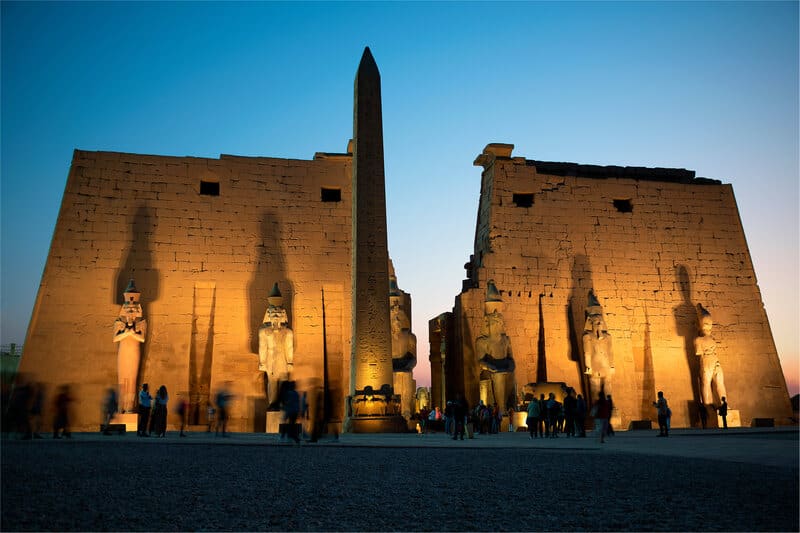
In Luxor itself, the Colossi of Memnon have stood for 3,400 years. For centuries, the northern statue was known throughout the Roman Empire for a sound it produced at dawn, drawing visitors from across the Mediterranean. The city also holds the tomb of Nefertari, often compared to the Sistine Chapel for the quality of its paintings, and Deir el-Medina, the village where the workers who carved the royal tombs lived. The site preserves one of the most complete records of daily life from the ancient world.
The Trade-Offs Elsewhere on the Path
The shadow first touches land in southern Spain. Both Cádiz and Gibraltar fall within the totality zone, as does Tangier in Morocco. These locations offer real advantages for European travellers: shorter flights, simpler logistics, and cities that justify a visit independent of the eclipse. The cost is duration. Totality at the western end of the path measures a fraction of what Luxor receives. Cloud risk along the Atlantic coast in August also runs higher than in the Egyptian desert.
If duration drives the decision, Egypt is the answer. If the goal is simply to witness one total eclipse with minimal complexity, Spain presents a far more straightforward option.
The path also crosses Algeria, Tunisia, Libya, Saudi Arabia, Yemen, and Somalia. Several of these countries are subject to serious travel warnings, and some are effectively closed to leisure visitors. Before planning anything, check current guidance from your own government. Any operator selling packages to a destination your foreign ministry advises against deserves serious scepticism. An eclipse lasts six minutes. No celestial event is worth disregarding safety advisories.
Planning from Twelve Months Out
Hotels along the Egyptian section of the path have been booking since 2024, and prices continue to rise. This is one trip where reserving eighteen months ahead is justified, not excessive. Look for flexible cancellation terms wherever possible.
Decide early whether you want the city or the desert. Luxor offers crowds, infrastructure, and monuments. The point of greatest duration falls just southeast of the city, in open desert between the Nile Valley and the Red Sea. A few seconds more totality, and considerably fewer people.
Proper eclipse glasses are essential. They come off only during totality and go back on the instant the sun reappears. Staring at any portion of the sun outside those few minutes of complete coverage can cause permanent eye damage.
Build in days on either side. August in Upper Egypt is extremely hot, and the monuments deserve more than a rushed morning squeezed around a six-minute event. The eclipse is the anchor, not the entire itinerary.
The Insurance Against Cloud
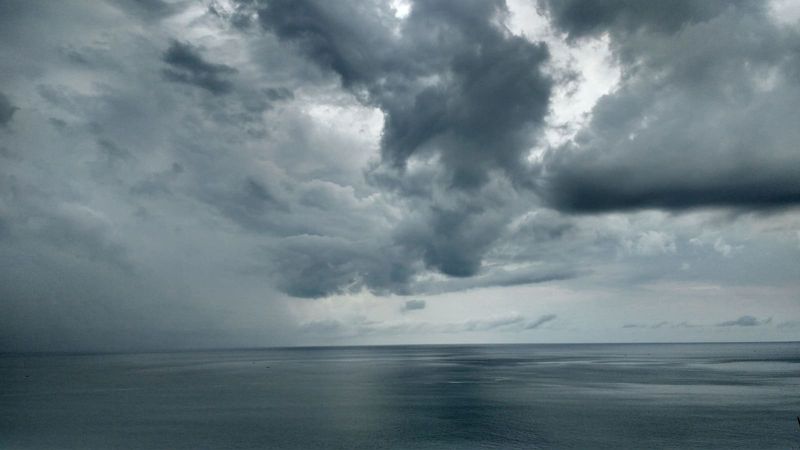
Cloud cover in Luxor during August is statistically unlikely, but not impossible. The only real insurance against an eclipse obscured by weather is choosing a destination worth the journey regardless of what happens in the sky. On this particular path, that problem largely solves itself. Whether the moon cooperates or not, Luxor remains one of the most significant archaeological concentrations on the planet, built by a culture that watched the same sky and tried to make sense of what they saw.
The next comparable opportunity on accessible land won't arrive for another eighty-seven years. For most people, this is the one.