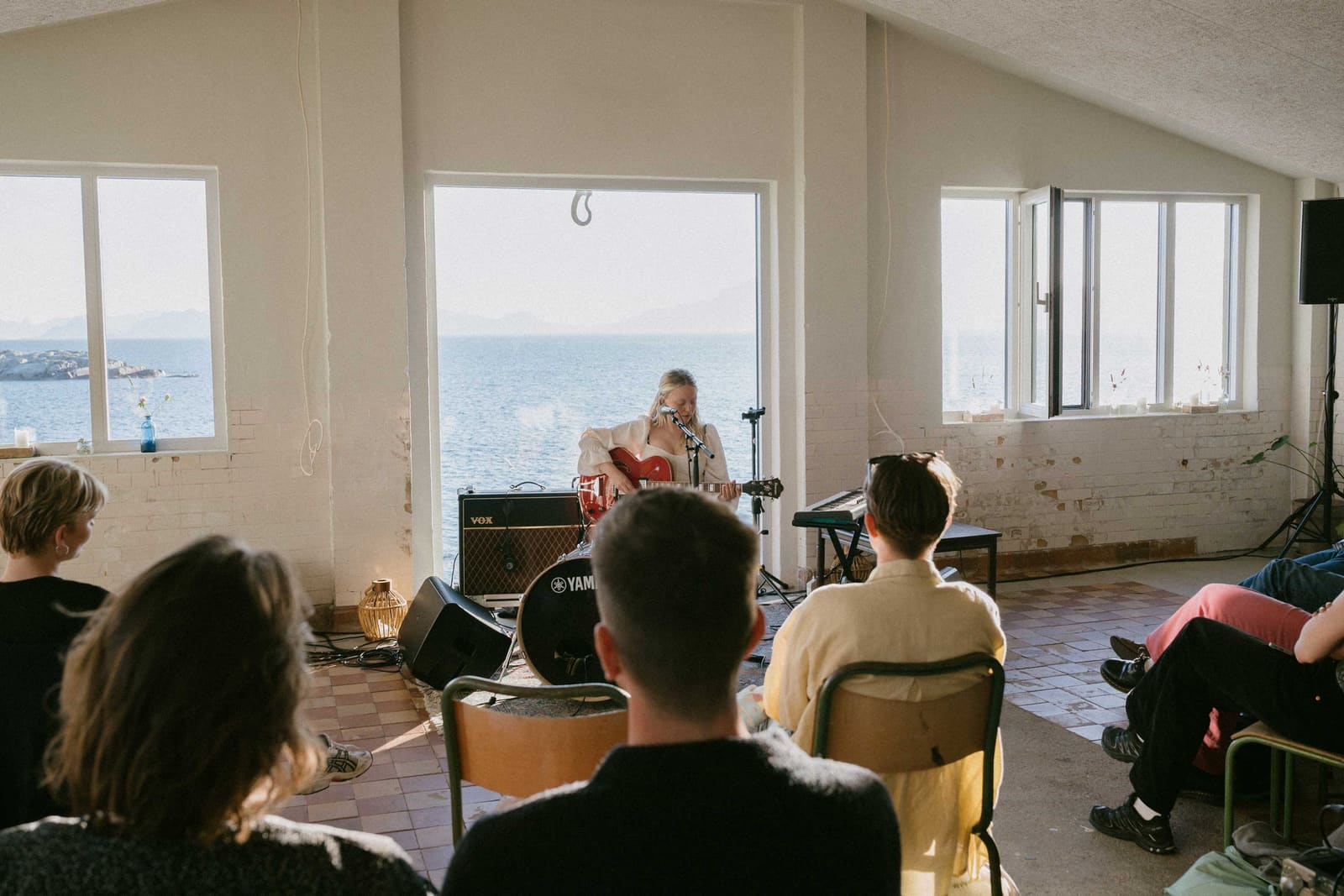
Trivia at 10pm in Permanent Daylight
The scene sounds improbable: a packed room in a village of 500 people, Arctic summer sun still bright at ten in the evening, teams competing over pop music questions while eating wood-fired pizza. But in Henningsvær, a fishing settlement in Norway's Lofoten Islands, this is a regular Wednesday night at Trevarefabrikken, a hotel that doubles as the community's unlikely social headquarters.
The building started life in the 1940s as a cod liver oil factory and carpentry workshop. By the early 2000s, it sat empty and deteriorating. In 2015, four brothers from Bergen bought the structure and turned it into something that feels more Copenhagen than remote Arctic archipelago: a ten-room hotel with a full events calendar that includes flea markets, yoga classes, wine tastings, live music, and those trivia nights under the midnight sun.
Industrial Bones, Warm Interiors
London-based Tuckey Design Studio handled the renovation, keeping the building's factory character intact. Original machinery remains in place as sculptural elements. Guest rooms have concrete floors and walls of reclaimed brick, softened by timber paneling and muted green textiles. Window recesses are deep enough to feel sheltered from the weather, which in this part of Norway means wind and waves even in summer.
The ground floor is open to anyone, not just hotel guests. A lounge and bar area serves pizza and natural wine, with raw concrete columns and large windows looking out toward the fjord. A separate café offers coffee, pastries, and sandwiches. On the waterfront, a minimalist sauna is available for booking, either privately or for group sessions. Throughout the year, the property hosts ski and yoga retreats. The biggest draw is Trevarefest, a three-day music and culture festival held each July.
A Creative Pocket in a Quiet Archipelago
Henningsvær itself is something of an outlier in Lofoten. While much of the archipelago caters to hikers, photographers, and travelers chasing dramatic coastal scenery, this village has developed a small creative economy. Independent cafés like Klatrekaféen and Lysstøperi sit alongside artist studios at Engelskmannsbrygga and a vintage shop called Min. The KaviarFactory, a contemporary art space, occupies another former fish processing plant nearby. Cold-water surfers paddle out year-round.
For a place this remote, the infrastructure to get there is surprisingly straightforward, if time-consuming. From Oslo, it requires either two flights or one flight followed by a three-hour boat ride. Once you arrive, though, the isolation is part of the appeal. Trevarefabrikken manages to feel both like a destination and a genuine gathering place for the people who live there, which is rare for hotels in small, tourist-visited communities.
A Hybrid Model That Works for Both Sides
The model here is worth paying attention to. By opening most of its space to locals and programming events that appeal to residents as much as visitors, Trevarefabrikken has avoided the tension that often arises when new accommodation arrives in a small town. For Henningsvær's 500 permanent residents, the hotel represents the revival of a historic building that had been abandoned for more than a decade. For guests, it offers a way to participate in the social life of a place rather than simply pass through it.
This approach has limits, of course. It works in part because the village already had a small creative community and because the owners invested in a calendar of free and low-cost events, not just premium experiences for hotel guests. It also works because the building's industrial scale allows for multiple uses at once: a couple can check in for a quiet weekend while a DJ set happens downstairs and locals book the sauna for an evening session.
The result is a rare thing in remote destinations: a hotel that feels less like a retreat from the world and more like a portal into a specific corner of it, trivia questions and all.