Hidden in Plain Sight
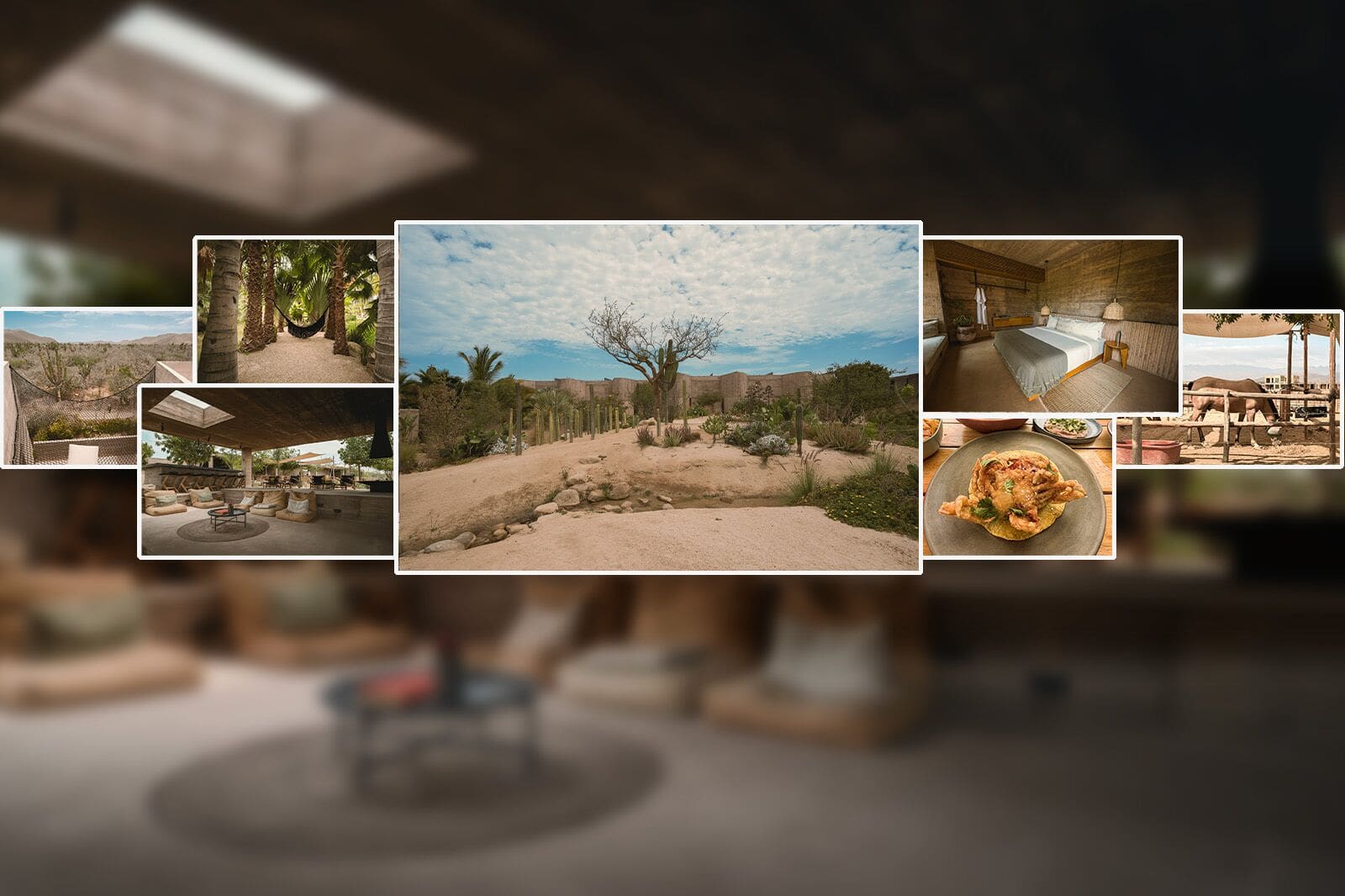
The approach to Paradero Todos Santos feels more like a wrong turn than an arrival. A small wooden sign points down a dirt road through scattered farmlands south of town, with nothing visible beyond desert scrub and distant mountains. The landscape shifts suddenly into desert gardens thick with cacti and native torote trees, then past stables and into a parking area. From there, guests walk through a curved concrete tunnel, greeted by the scent of copal incense and a cold towel, emerging into a courtyard anchored by a towering cardón cactus. The hotel itself remains difficult to spot, its low profile deliberate.
That restraint extends to how Paradero frames luxury. The property's most comprehensive package, called Unbound, does not promise unlimited consumption within resort boundaries. Instead, it structures a stay around experiences that define the region: outdoor activities, wellness practices, local food, and the town of Todos Santos itself. The convenience remains, but the focus shifts outward.
Building a Hotel That Looks Like the Ground
Paradero's design works to minimize its own presence. The architects behind the project prioritized reducing visual noise, using materials and colors that mirror the surrounding soil. Buildings appear to rise from the earth rather than sit on top of it. Frederic Cappello, the property's general manager, described the approach as making the hotel feel like part of the desert rather than an interruption of it.
Rooms follow the same logic. Guests enter through a curved passage that opens into a private patio and garden, framed by concrete walls in muted earth tones. Ground-floor suites include outdoor tubs or hammocks, while upper-level suites feature observation nets overlooking cactus gardens or the Sierra de la Laguna mountains. The interiors are spare but warm, combining concrete, wood, metal, and textiles. There are no televisions. Guests are encouraged, though not required, to leave phones with staff after check-in. Wi-Fi remains available, which softens the gesture without diluting the message: pay attention to the desert, the silence, the wildlife, the light.
Redefining What Gets Included
Surfboards lean against the wall behind the front desk. A daily activity board lists options that extend well beyond the property: surfing, hiking, horseback riding, cooking classes, tours of Todos Santos. All of these are included in the Unbound package, along with meals and drinks at TENOCH, the property's Michelin-recognized restaurant, spa access, wellness sessions, and airport transfers.
Traditional all-inclusive resorts rely on abundance as their core appeal. More restaurants, more bars, more entertainment, more reasons to stay inside. Paradero's version is built around disconnection. It does not add more to consume. It removes friction between guests and the place they traveled to experience.
Uriel, a guide at the property, put it plainly: "It's mind-blowing to me that people from all around the world come here to experience all the things I used to do as a kid. Go up the mountains, ride a bike through the fields, or stay out at night to see the stars." The activities bundled into Unbound translate local experiences into a format accessible to luxury travelers, without requiring guests to plan logistics themselves.
Food That Anchors the Package
Because Paradero has only one restaurant, TENOCH carries significant weight. The menu draws on local seafood and produce from the property's garden, while incorporating ingredients and techniques from other regions of Mexico. Signature dishes include a tempura-battered whole crab taco on a homemade blue-corn tortilla, with smoky depth, and a green apple aguachile that balances sweet acidity with fresh seafood. The menu changes with the seasons and helps connect what guests eat to what grows nearby, on the property, and around Todos Santos.
TENOCH is one of several restaurants in the area to appear in the latest Michelin Guide, part of a broader food corridor south of town that includes Cocina de Campo by Agricole, Benno, Oystera, and DŪM. Farm-to-table dining and agrotourism have become central to how this part of Baja California Sur presents itself.
A Different Baja
Todos Santos sits close enough to Los Cabos to share a travel conversation, but it does not feel like a smaller version of Cabo San Lucas or San José del Cabo. The area has developed around nature, outdoor activities, wellness, and connection to local communities. New properties here are building their appeal around those elements rather than polished beachfront resorts, golf courses, or large-scale developments.
The contrast with traditional all-inclusive resorts is structural. Those properties often make the destination feel optional. Guests can eat, drink, and be entertained without needing to understand much about the place beyond the resort gates. Paradero's Unbound package offers the same ease and comfort of having everything arranged, but the structure points outward rather than inward.
This version of simplicity is highly designed, staffed, and priced. The sense of remoteness is intentional, and it comes with Wi-Fi, attentive service, and Michelin-recognized food. Paradero gives travelers access to the slower, more rural side of Baja without asking them to sacrifice the comforts that brought them to a luxury property in the first place. The all-inclusive package is not designed to keep guests inside. It is meant to make the surroundings easier to reach.