A City Built on Acceptance
Brighton has spent decades perfecting something most places only perform during Pride month: daily, unglamorous acceptance. The English seaside city feeds on authenticity, but that sanctuary isn't distributed evenly. Walk into the wrong hotel and you might find yourself instinctively lowering your voice, editing pronouns, measuring affection against an invisible thermometer of acceptable queerness.
That calculation exhausts. Which is why a handful of Brighton accommodations have built reputations not on amenities alone, but on something harder to quantify: the ability to make LGBTQ+ guests feel fully seen. These aren't hotels that discovered diversity marketing last year. Many have been quietly practicing radical hospitality for decades, rooted in neighborhoods where queer life has flourished long before it became a tourism talking point.
Brighton Pride returns in early August 2026, with a community parade winding from Hove Lawns to Preston Park, where Raye and Diana Ross headline festival stages. But the city's queer infrastructure operates year-round, concentrated in Kemptown's network of bars, clubs, and businesses along St James's Street. Where you stay shapes how deeply you can access that world.
Location as Philosophy
Several hotels plant themselves within minutes of St James's Street for a reason. The New Steine Hotel sits at the edge of Kemptown like a lighthouse, close enough that morning coffee runs turn into impromptu conversations about last night's drag show. Red Brighton Blue positions itself two minutes from the same strip, a five-minute walk from Legends Bar, Charles Street Tap, and Revenge. This proximity isn't convenience. It's a statement about whose comfort matters.
The White House takes a similar approach, placing 10 rooms just 100 meters from the seafront and within easy reach of Brighton Sauna, the Bulldog, and other community mainstays. These hotels understand that queer joy often concentrates in specific pockets, where references don't require translation and shared history creates instant shorthand.
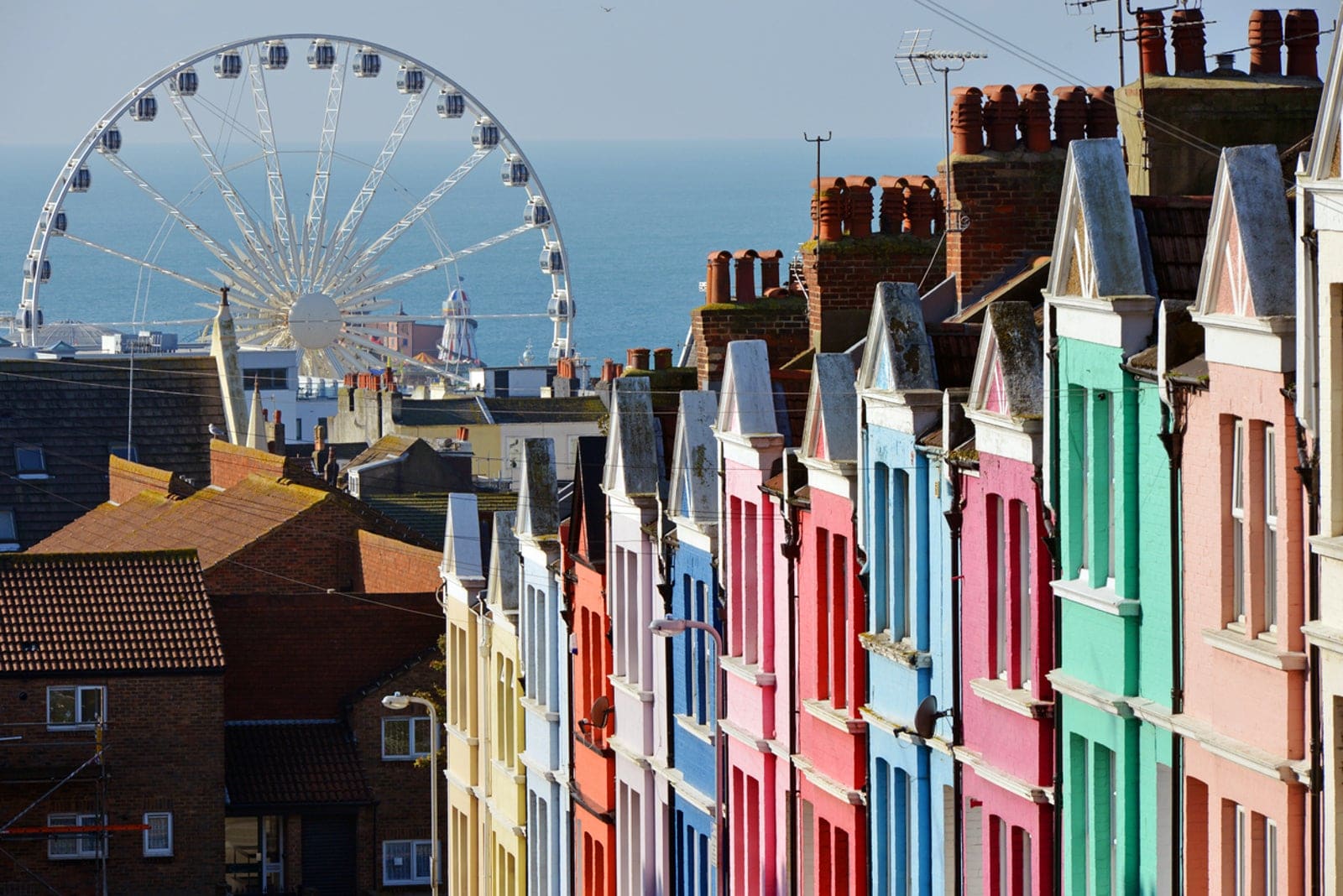
Seafront properties offer a different calculus. The Amsterdam Hotel, gay-run and positioned opposite Palace Pier, provides front-row seats to Brighton's daily theatre: joggers, lovers, and evening revelers sharing the same stretch of pebbles without performance. The Old Ship Hotel, with roots dating to 1559, combines centuries of hospitality with a contemporary commitment to inclusion, less than five minutes from Kemptown's core. Drakes, a 20-room boutique set in Regency townhouses, overlooks Brighton Pier with design-forward interiors and Dilsk, a fine dining restaurant that consistently ranks among the city's best.
Beyond the Rainbow Flag
The Queens Hotel, located on the seafront between gay nightlife and the city centre, offers a spa that functions as more than amenity. For travelers accustomed to hypervigilance in unwelcoming spaces, the luxury of dropping your guard during a massage or facial carries weight. Bodies that spend energy monitoring safety deserve particular gentleness.
Hotel Nineteen, one of Brighton's first boutique hotels on Broad Street, pioneered inclusivity as business practice before it became trendy. Its six themed rooms foster the kind of easy conversation that emerges when guests don't have to edit themselves. The hotel recognized early that queer travelers aren't seeking tolerance - they're seeking celebration.
Scale matters, too. Smaller properties like the Amsterdam's 24 rooms or Drakes' 20 bedrooms allow for personalized attention that larger chains struggle to replicate. Staff at these hotels often understand the unspoken: that being welcomed isn't the same as being celebrated, and that genuine queer hospitality requires more than a pride flag in the lobby.
What Makes a Hotel Safe
According to Brighton and Hove City Council, around 11 percent of the city's population identifies as lesbian, gay, or bisexual - over 25,000 people. That critical mass shapes the city's infrastructure in tangible ways. Kemptown's concentration of LGBTQ+ venues along St James's Street and St George's Road creates a neighborhood where queerness is default, not deviation. Hotels that position themselves within or adjacent to this geography signal an understanding of what safety actually means.
The Old Ship doesn't announce its LGBTQ+ friendliness with fanfare. It demonstrates inclusion through consistent respect, a model that resonates more deeply than corporate diversity campaigns. The Amsterdam Hotel, award-winning and gay-owned, translates its philosophy into every interaction - not as performance, but as foundation.
The Architecture of Belonging
Brighton Pride's 2026 programming spans multiple days: the LGBTQ+ Community Parade on August 1, drawing over 300,000 participants, flows into the Pride on the Park festival featuring Raye, Jessie J, and a DJ set from RuPaul. August 2 continues with Diana Ross, Paris Hilton, and Five, while a seafront Pride Street Party hosts stages with Gok Wan, Bimini, and Bailey J Mills.
But hotels like The New Steine, Red Brighton Blue, and The White House matter most in the margins - the Tuesday morning in March, the rainy October afternoon - when Pride's infrastructure recedes and daily life reasserts itself. These properties understand that queer hospitality isn't seasonal. It's a daily practice of seeing guests completely, without requiring them to shrink or explain.
Drakes offers light wood paneling, curved walls, and freestanding bathtubs overlooking the sea. The Queens Hotel provides easy access to both nightlife and spa treatments. Hotel Nineteen creates intimate spaces where laughter flows freely. Each property solves the same problem differently: how to build rooms that function as guaranteed safe space, not just shelter.
Summer Remains Peak Season
The best time to visit Brighton remains summer, when the seafront comes alive and Pride draws international crowds. But the city's queer infrastructure operates year-round, sustained by local community rather than tourism cycles. Hotels that have embedded themselves in that ecosystem - through location, ownership, or decades of consistent practice - offer something chain properties rarely can: access to authentic queer culture, where every street corner holds stories of resistance and celebration.
The Marine Tavern and Revenge rank among Kemptown's most popular bars and clubs. Prowler, a gay fashion store on St James's Street, doubles as community gathering space. These businesses exist in relationship with hotels that understand their value, creating an interconnected network where accommodation becomes portal rather than just pillow.
Choosing where to sleep shapes how you dream. In Brighton, that choice carries particular weight. Hotels that recognize queer hospitality as practice rather than marketing send guests into each day feeling invincible. The wrong accommodation leaves you measuring laughter and second-guessing affection. The right one lets you drop that vigilance entirely.
Brighton's radical acceptance isn't automatic. It's built, sustained, and practiced daily by businesses that understand sanctuary requires intention. These hotels have been doing that work long enough that it no longer looks like work - just the natural order of a city where difference isn't tolerated, it's fundamental.