Edinburgh's Five Percent Experiment
Edinburgh became the first British destination to charge a city-wide accommodation levy last week. The five percent tax applies to the first five consecutive nights in any paid lodging: hotels, rental apartments, bed and breakfasts, campervans, hostels, and even stationary boats.
The math is straightforward in principle. A £100-per-night hotel room incurs a £5 nightly surcharge, capping at five nights. A week-long stay costs £725 instead of £700. But the calculation gets trickier when accommodation bundles other services. If that £100 rate includes breakfast, operators must subtract the meal cost before applying the levy. The tax covers lodging only, not food, transport, or ancillary services rolled into the rate.
According to the City of Edinburgh Council, the levy aims to fund infrastructure improvements and manage the strain that 4.9 million annual visitors place on local resources. Revenue projections estimate £50 million in the first year.
Other Cities Queue Up
Glasgow plans to introduce its own five percent levy in January 2027, while Aberdeen is considering a seven percent rate starting April 2027. Wales passed enabling legislation last year that gives councils discretion to impose levies after consulting residents and businesses. Cardiff is expected to become the first Welsh city to activate the power in April 2027, charging £1.30 per person per night in standard rooms and 75p in shared accommodation such as hostel dormitories or tent pitches.
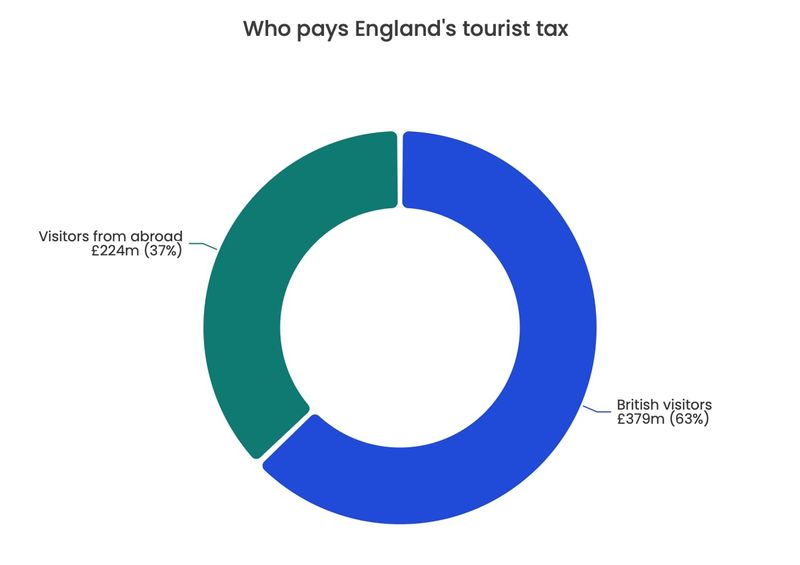
England has no formal tourist tax framework yet, but proposed legislation would grant mayors and local leaders the authority to implement one. Liverpool and Manchester already collect modest fees through a legal workaround called an Accommodation Business Improvement District. Liverpool charges £2 plus VAT per room per night within its ABID zone; Manchester collects £1 plus VAT in its designated area. These are voluntary schemes funded by member properties, not statutory taxes, but they function similarly.
Compliance Concerns and Black Markets
Holiday rental operators in Edinburgh have raised concerns about the administrative burden. One owner described the scheme as highly complicated, noting that hosts must calculate the levy themselves and account for bundled services. Licensed properties bear the full compliance cost, while unlicensed rentals, which already operate outside regulatory frameworks, can sidestep the charge entirely.
The worry is that the levy widens the competitive gap between compliant and non-compliant operators. Edinburgh requires short-term rental hosts to hold a license, but enforcement has been patchy. If unlicensed properties advertise without adding the levy, they undercut legal competitors by at least five percent, plus the cost of licensing.
Small operators also point out that the tax lands on their shoulders during a period of rising costs. Property insurance, energy bills, and licensing fees have all climbed in the past two years. The levy adds another layer of expense and paperwork, even though guests technically pay it.
What the Money Funds
Proponents argue that tourism imposes real costs on host cities: crowded pavements, strained public transport, wear on historic sites, and upward pressure on housing. Edinburgh's Old Town, a UNESCO World Heritage Site, sees foot traffic that accelerates erosion on centuries-old cobblestones. Public bins overflow during festival season. The levy is designed to capture a share of visitor spending and redirect it toward maintenance, sanitation, and resident services.
Critics counter that tourist taxes rarely solve overtourism. They generate revenue, but they do not reduce visitor numbers unless set prohibitively high. A five percent surcharge is unlikely to deter travelers choosing Edinburgh over other European capitals. Venice introduced a day-tripper fee earlier this year, and visitor counts have barely shifted. Barcelona's levy has been in place since 2012, and the city still grapples with overcrowding in the Gothic Quarter and Park Güell.
The question is whether the revenue offsets the administrative friction and potential for evasion. Cardiff's per-person model may be easier to audit than Edinburgh's percentage-based system, since it does not require dissecting bundled rates. But it also means hostels and campsites must track individual guests rather than room bookings.
What Travelers Should Know
If you are planning a trip to Edinburgh, budget an extra five percent on accommodation for the first five nights. Most booking platforms now display the levy separately at checkout, though some smaller properties may fold it into the total and break it out on arrival.
For Glasgow, expect the same five percent rate starting early next year. Aberdeen's seven percent levy, if approved, will be the highest in the UK. Cardiff's per-person charge will be simpler to calculate but may add up quickly for families or groups sharing budget accommodation.
Liverpool and Manchester's existing fees are modest and unlikely to affect booking decisions. The proposed English legislation would give other cities, including Brighton, Bristol, and Birmingham, the option to follow suit. No timeline has been announced.
A Wider Shift
The UK is joining a broader European trend. Amsterdam charges up to €12.50 per person per night in hotels, and the city is considering further increases. Barcelona's levy varies by accommodation type and reaches €4 per night in four-star hotels. Venice's day-tripper fee, introduced in April 2026, charges €5 for same-day visitors during peak periods.
The rationale is similar across cities: tourism generates economic benefits but also imposes costs that fall disproportionately on residents. A levy shifts part of that burden back to visitors. Whether it changes behavior or simply raises revenue remains an open question.
For now, British travelers face a fragmented landscape. Edinburgh, Glasgow, and Aberdeen will have different rates. Cardiff will charge per person rather than per room. England may eventually join in, but the timing and structure are uncertain. The result is a patchwork that complicates trip budgeting and adds friction for both travelers and small operators trying to comply.